
Few things interrupt your day quite like a sudden, sharp pain when biting down. One moment you are eating normally. The next, a jolt of pain shoots through a tooth — intense enough to make you stop chewing immediately. It catches you off guard, and it demands attention.
This kind of pain is your body's warning signal. Something inside or around the tooth is under stress. The cause might be a tiny crack invisible to the naked eye, a cavity that has reached deeper than expected, an infection building beneath the surface, or a filling that no longer fits properly. Whatever the reason, tooth pain when eating is not something to push through or ignore.
Understanding what triggers bite pain — and what it could mean — helps you take the right action at the right time. Early assessment almost always leads to simpler, less expensive treatment. Waiting rarely improves things.
Experiencing these symptoms?
Delaying treatment can lead to tooth loss. We have slots available today.
This guide walks through the most common reasons behind sharp pain when biting down, the symptoms to watch for, and when professional help is needed. If you are in pain right now and need to be seen today, same-day appointments are available through our emergency dental treatment services in London.
What Causes Sharp Pain When Biting Down?
Sharp pain when biting down is usually caused by a cracked tooth, deep decay, a dental abscess, a loose or damaged filling, or inflammation of the tooth nerve. The biting force pushes damaged or weakened parts of the tooth together, triggering a sudden burst of pain that stops when the pressure is released. Prompt dental assessment identifies the exact cause.
Several conditions produce this pattern of pain. Each has its own characteristics, but the common thread is that biting pressure reveals a problem the tooth cannot handle on its own.
Meet Dr. Yasha Shirazi
Principal Dentist at Emergency Dentist London
"We treat hundreds of dental emergencies every month. The sooner you come in, the easier the fix usually is."
Book an appointment with our team →Structural damage. Cracks, fractures, and chips weaken the tooth. Chewing forces flex the damaged sections, irritating the nerve underneath.
Infection. An abscess or deep infection creates pressure inside the tooth or at the root tip. Biting adds external pressure to an already pressurised area, producing intense pain.
Tooth sensitivity to pressure. Worn enamel or exposed dentine allows force to transmit directly to sensitive inner layers. What should be a painless bite becomes uncomfortable or sharp.
Restoration issues. Old fillings can crack, loosen, or develop gaps. Crowns may shift slightly or develop cement failure. Both create points where pressure concentrates abnormally.
Identifying which category your pain falls into is the first step towards the right treatment. For immediate advice on managing severe tooth pain, our guide on treatment options for severe toothache relief covers the essentials.
Cracked Tooth Symptoms and Bite Pain
A cracked tooth is one of the most common causes of sharp pain when biting down. The pain is distinctive — it appears suddenly during chewing and disappears the moment you release the bite. This on-off pattern is highly characteristic of a crack.
Cracks can develop for many reasons. Years of chewing, grinding, or clenching wear teeth down. A hard bite on an unexpected object — a popcorn kernel, an olive pit, ice — can split weakened enamel. Large fillings that have been in place for years can undermine the remaining tooth walls, making them vulnerable.
Cracked tooth symptoms often include:
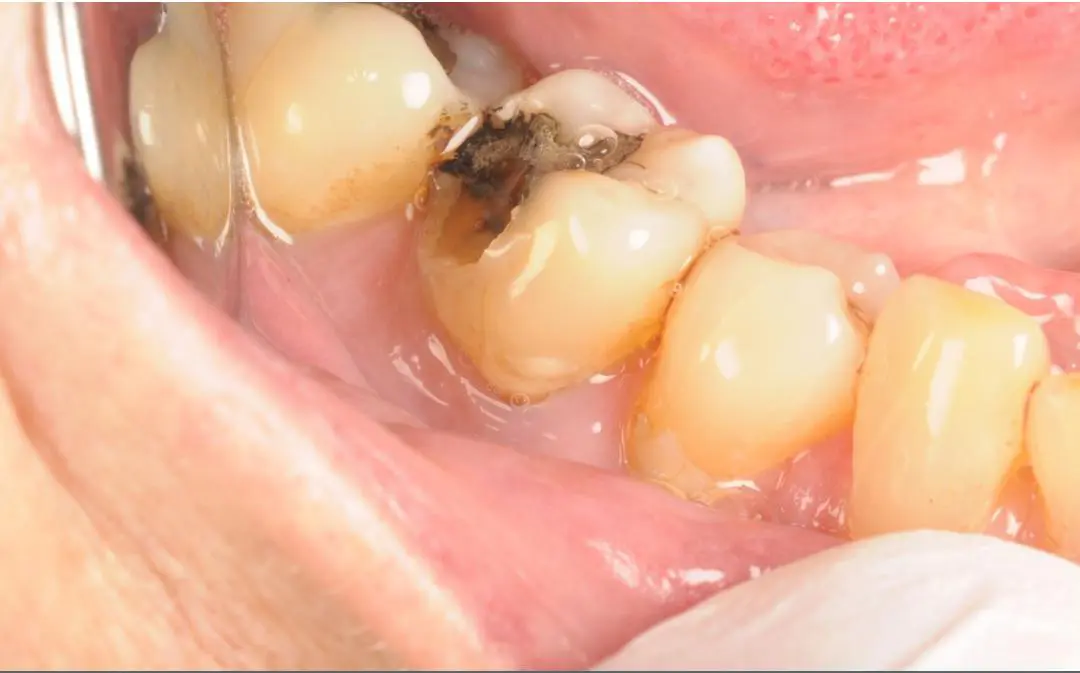
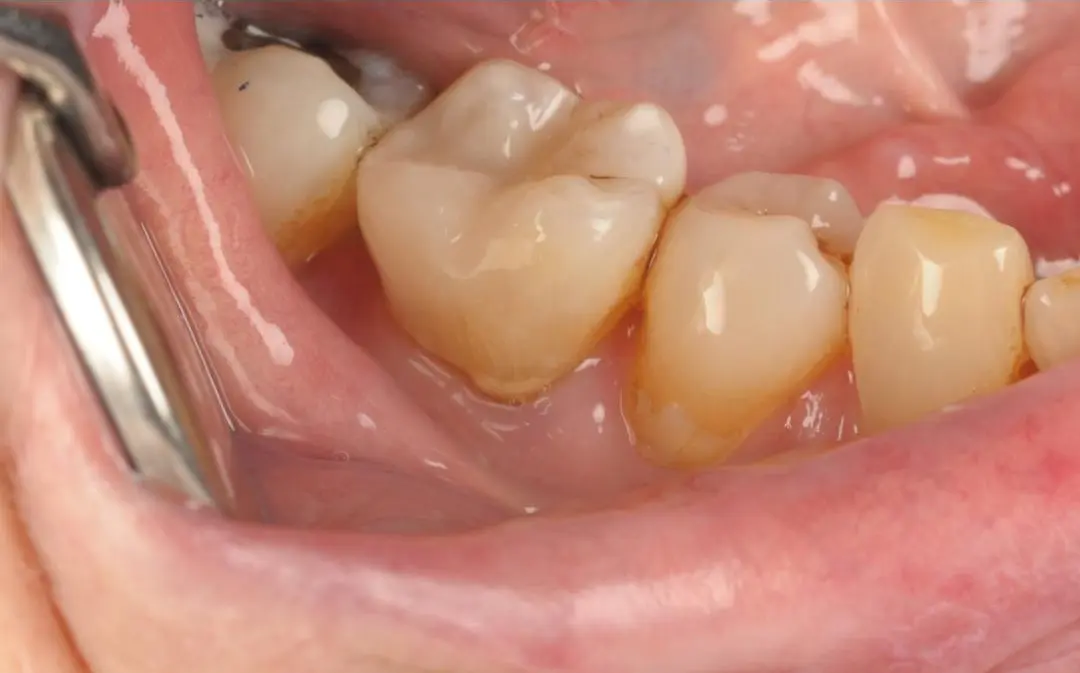
Real Patient Result: Emergency White Filling
Treatment by Dr Kamran
Sharp, fleeting pain that occurs only while chewing
Pain when biting in a specific direction or on a particular part of the tooth
Sensitivity to cold or sweet foods and drinks
Discomfort that is difficult to pinpoint to one exact tooth
The tricky part is that cracks do not always show up on standard X-rays. Small fracture lines through enamel and dentine can be invisible to imaging. Your dentist may use a combination of bite tests, transillumination, and magnification to locate the crack. The earlier a crack is found, the more likely the tooth can be saved with a crown rather than requiring extraction.
Dental crown pain when biting can also occur if a crowned tooth develops a new crack beneath the restoration. This is less common but does happen — particularly in teeth that bear heavy grinding forces.
For detailed information about tooth fractures, visit our page on broken tooth repair treatment. Our article on understanding tooth fractures and treatment options explains the different types of cracks and how each is managed.
Dental Abscess Symptoms Causing Bite Pain
When infection takes hold inside a tooth or at the root tip, pressure builds in a confined space. Biting down compresses the tooth into inflamed tissue, producing a deep, throbbing pain that can be severe. Unlike a crack — where pain is brief — abscess-related bite pain tends to linger after the pressure is released.
Dental abscess symptoms that commonly accompany bite pain include:
Constant dull ache that intensifies with pressure
Swelling in the gum near the affected tooth
A visible bump or blister on the gum (a sinus tract)
Bad taste in the mouth from draining infection
Facial swelling on the affected side
Feeling generally unwell or feverish
Exposed tooth nerve pain caused by deep decay can escalate into a full abscess if bacteria reach the pulp and spread beyond the root tip. What starts as occasional sensitivity can progress to constant, debilitating pain over days or weeks.
Abscesses are very unlikely to resolve on their own. The infection typically needs to be drained and the source treated — typically through root canal therapy or extraction. Antibiotics alone are unlikely to fully resolve the infection on a permanent basis. For a full explanation, see our dental abscess treatment options page. Our detailed guide on what is a dental abscess — symptoms and treatment covers this condition in depth.
Loose Dental Filling or Crown Problems
Fillings and crowns do not last forever. Over time, the bond between a restoration and the tooth can break down. Edges lift. Cement washes out. Tiny gaps develop. When this happens, chewing forces are no longer distributed evenly across the tooth — and pain follows.
Loose dental filling pain typically presents as a sharp sensation when you bite directly on the affected tooth. You may also notice that food gets trapped around the filling more easily than before, or that the filling feels slightly rough or raised when you run your tongue over it.
Dental crown pain when biting suggests the crown may have loosened, the cement seal has failed, or decay has developed underneath the restoration. A crown that rocks slightly when you press on it needs attention — bacteria entering the gap between crown and tooth can cause rapid decay and infection.
Replacing a loose filling or re-cementing a crown is a straightforward procedure. The key is to act before the underlying tooth structure suffers further damage. Visit our lost filling or crown replacement treatment page for more information on how these issues are resolved.
Tooth Sensitivity to Pressure
Not all bite pain indicates a serious problem — but it always deserves investigation. Tooth sensitivity to pressure can develop gradually as enamel wears thin, gum recession exposes root surfaces, or dentine becomes exposed through erosion or abrasion.
Healthy enamel acts as armour for the sensitive layers beneath. When that protective layer is compromised, stimuli that should be painless — like biting pressure, cold air, or sweet food — reach the nerve endings in the dentine. The result is a sharp, short-lived pain that disappears quickly.
Common causes of pressure sensitivity include:
Enamel erosion from acidic food and drink
Aggressive brushing that wears down enamel and gum tissue
Gum recession exposing the softer root surface
Recent dental treatment (sensitivity after a new filling is normal for a few weeks)
Teeth grinding or clenching, which wears enamel and fatigues teeth
Treatment for sensitive teeth depends on the cause. Desensitising toothpaste, fluoride applications, bonding agents, and in some cases gum grafts or crowns can all reduce sensitivity. Exposed tooth nerve pain that persists despite these measures may indicate a deeper problem requiring further investigation.
Our article on sensitive teeth causes and cures provides a comprehensive overview of what you can do.
Gum Disease Signs That Cause Pain While Chewing
Gum disease is often thought of as a condition that causes bleeding gums — and it does. But advanced gum disease can also cause significant discomfort when chewing, particularly when the infection has affected the bone supporting the teeth.
Early gum disease (gingivitis) causes red, swollen gums that bleed easily. It is usually painless. But when gingivitis progresses to periodontitis, the infection reaches deeper. Pockets form between the teeth and gums. Bone support is gradually lost. Teeth may become slightly mobile.
Gum disease signs that can cause bite pain include:
Teeth that feel slightly loose or shift position
Gums that are tender, swollen, or receding
Persistent bad breath
Jaw pain when chewing, particularly on harder foods
A change in how your teeth fit together when you bite
If your bite pain is accompanied by any of these symptoms, gum disease may be a contributing factor. Treatment involves professional cleaning to remove bacterial deposits above and below the gum line, followed by an ongoing maintenance programme. Our guide on why gums bleed — gingivitis explained is a useful starting point.
Tooth Decay Treatment for Bite Pain
Cavities are progressive. They start in the outer enamel and work their way inward. A small cavity might cause no symptoms at all. But once decay reaches the dentine — the softer, more sensitive layer beneath the enamel — biting pressure can produce a noticeable ache or sharp twinge.
Deep cavities that approach the nerve of the tooth produce sharper, more persistent pain. At this stage, tooth decay treatment typically involves a larger filling, an inlay, or a crown to restore the tooth's shape and strength. If decay has reached the pulp, root canal treatment may be necessary to save the tooth.
The relationship between cavities and bite pain is straightforward. The bigger the cavity, the more structural support the tooth has lost, and the more it flexes under pressure. Treating cavities when they are small avoids this progression entirely.
Wondering whether an emergency dentist can place a filling? Our article on can you get a filling at an emergency dentist answers this common question.
Root Canal Treatment London for Severe Bite Pain
When the nerve inside a tooth becomes irreversibly inflamed or infected, the pain can be intense — and it often worsens with biting pressure. This is the point where root canal treatment becomes necessary to save the tooth.
Root canal treatment London patients receive involves removing the damaged pulp tissue, cleaning and disinfecting the internal canal system, and sealing the tooth to prevent reinfection. The procedure is carried out under local anaesthetic and is designed to eliminate pain, not cause it.
Signs that root canal treatment may be needed include:
Severe, prolonged pain that throbs or radiates to the jaw
A tooth that is extremely tender to touch or bite pressure
Lingering sensitivity to hot stimuli (more than a few seconds)
Darkening of the tooth
Gum swelling near the painful tooth
The goal of root canal therapy is to keep the natural tooth in place, avoiding the need for extraction and replacement. Most root-treated teeth are then protected with a crown to restore strength and function.
Visit our root canal treatment service in London page for details on the procedure. For pricing information, read our guide on how much root canal treatment costs in the UK.
When to See an Emergency Dentist London
Mild, occasional sensitivity when biting does not always require an emergency appointment. But certain symptoms indicate that something more serious is happening — and prompt assessment is important.
You should consider seeing an emergency dentist London if you experience:
Severe bite pain that prevents you from eating or drinking normally
Swelling in the gum, cheek, or face near a painful tooth
Fever or feeling unwell alongside dental pain — a sign the body is fighting infection
Difficulty chewing that has lasted more than a day or two
A tooth that feels loose or has visibly moved
Pain that wakes you at night or does not respond to over-the-counter painkillers
These symptoms suggest the problem has progressed beyond what will settle on its own. The sooner it is assessed, the more treatment options remain available.
Our walk-in dentist London service accepts patients without prior registration. Weekend emergency dentist London appointments are available for those who cannot attend during the working week. For evening and late appointments, see our out-of-hours dentist London page.
Preventing Tooth Pain When Eating
Most causes of bite pain are preventable — or at least manageable — when caught early. Building a few habits into your routine makes a genuine difference.
Brush effectively, not aggressively. A soft-bristled toothbrush and fluoride toothpaste, used twice daily, cleans teeth without damaging enamel or gums. Hard brushing wears enamel and causes gum recession, both of which increase sensitivity.
Do not skip dental check-ups. A private dental checkup UK allows your dentist to identify developing problems — early cavities, hairline cracks, early gum disease — before they cause pain. Prevention is generally simpler and less costly than treatment.
Treat problems early. A small filling is quicker, cheaper, and more comfortable than a root canal. A crack caught early can often be stabilised with a crown. Waiting for pain to become unbearable usually means the treatment needed is more complex.
Wear a night guard if you grind. Bruxism — habitual teeth grinding — is a major contributor to cracked teeth, worn enamel, and jaw pain when chewing. A custom-made night guard protects your teeth while you sleep and reduces the cumulative damage.
Watch what you bite. Ice, hard sweets, pen caps, and opening packaging with your teeth are common causes of cracks and chips. Your teeth are strong, but they are not tools.
Our complete guide to dental emergencies in London covers a wide range of urgent dental situations and what to do about them.
Frequently Asked Questions
Why do I feel sharp pain when biting down?
Sharp pain when biting down is usually caused by a crack in the tooth, a loose or damaged filling, deep decay, or an infection at the root tip. The biting force puts pressure on the damaged area, triggering a sudden pain response from the nerve.
Cracked teeth are one of the most common causes. The crack may be too small to see, but chewing forces flex the two sides of the fracture apart, irritating the nerve underneath. Infections create pressure inside the tooth that is amplified when you bite. A loose filling allows the tooth to flex abnormally under load.
The pattern of pain — when it occurs, how long it lasts, and what triggers it — helps your dentist narrow down the cause during examination.
Can a cracked tooth cause pain while chewing?
Yes. A cracked tooth is one of the most common reasons for pain that appears only during chewing. When you bite down, the force causes the cracked sections of the tooth to move slightly. This flexing action irritates the nerve inside the tooth, producing a sharp, sudden pain.
The pain typically stops the moment you release the bite. It may not occur with every chew — only when pressure hits the crack at a certain angle. This inconsistency can make the problem difficult to identify without professional assessment.
Is tooth sensitivity to pressure normal?
Mild, occasional sensitivity can be normal — particularly after recent dental treatment such as a new filling or crown. This type of sensitivity usually resolves within a few weeks as the tooth settles.
However, persistent or worsening sensitivity to pressure is not normal and should be investigated. It may indicate worn enamel, gum recession exposing root surfaces, a developing crack, or early nerve inflammation. Identifying the cause early allows for simpler treatment and prevents the problem from escalating.
When should I see an emergency dentist for tooth pain?
You should see an emergency dentist if bite pain is severe enough to prevent eating, if it is accompanied by swelling or fever, if a tooth feels loose, or if pain wakes you at night and does not respond to painkillers. These are signs that the underlying problem needs prompt professional treatment.
Mild sensitivity that comes and goes can usually wait for a routine appointment. But any pain that is worsening, spreading, or accompanied by visible swelling warrants urgent assessment. Our guide on 10 warning signs you need an emergency dentist immediately helps you decide whether your situation is urgent.
Can a dental abscess cause pain when biting?
Yes. A dental abscess creates a pocket of infection at the root tip of the tooth. This infection produces pressure and inflammation in the surrounding bone and tissue. When you bite down, you push the tooth into this inflamed area, which intensifies the pain significantly.
Unlike a cracked tooth — where pain is brief and sharp — abscess pain tends to be deeper, more constant, and may throb between bites. Swelling, a bad taste, and feeling unwell are common accompanying symptoms. An abscess requires professional treatment to drain the infection and address the underlying cause.
Disclaimer
This article is for general educational purposes only and does not constitute professional dental advice, diagnosis, or treatment. Every patient's circumstances are unique; dental symptoms and treatment options should always be assessed during a clinical examination by a qualified dental professional. No specific outcomes are guaranteed. This content has been prepared in line with GDC, CQC, ASA CAP Code, and GMC communication standards. If you have concerns about your oral health, please contact a registered dentist.