
If you have an older filling, crown, or dental restoration and have recently noticed tooth pain, sensitivity, or swelling around your gum, you are not alone in wondering whether the two might be connected. Many people search online after noticing that a tooth that was previously treated is now causing discomfort — particularly when they are unsure whether the original restoration is still doing its job.
The relationship between failing dental restorations and dental abscesses is a topic that deserves careful explanation. When a restoration such as a filling or crown begins to deteriorate, it can allow bacteria to enter the tooth structure, potentially leading to infection. In some cases, this process may eventually contribute to the formation of a dental abscess — a pocket of infection that requires prompt professional attention.
This article aims to explain how and why this connection occurs, what symptoms may indicate a problem, and when seeking professional dental assessment is the most appropriate course of action.
Experiencing these symptoms?
Delaying treatment can lead to tooth loss. We have slots available today.
Can a Failing Dental Restoration Cause a Dental Abscess?
Yes. When a dental restoration such as a filling or crown begins to fail, the seal protecting the inner tooth structure can break down. This allows bacteria to penetrate the dentine or pulp, potentially causing infection. If left unaddressed, this bacterial activity may lead to a dental abscess — a collection of pus caused by bacterial infection.
What Is a Dental Restoration and How Can It Fail?
A dental restoration refers to any material or structure used to repair, rebuild, or protect a damaged or decayed tooth. Common examples include composite fillings, amalgam fillings, dental crowns, inlays, onlays, and root canal-treated teeth covered with a protective crown.
Restorations are designed to be durable, but they do not last indefinitely. Over time, a variety of factors can cause a restoration to weaken, crack, or lose its seal against the tooth structure. These factors may include:
Meet Dr. Yasha Shirazi
Principal Dentist at Emergency Dentist London
"We treat hundreds of dental emergencies every month. The sooner you come in, the easier the fix usually is."
Book an appointment with our team →- Normal wear and tear from daily biting and chewing forces
- Secondary decay developing around or beneath an existing restoration
- Micro-cracking due to changes in bite or teeth grinding (bruxism)
- Material shrinkage in older composite restorations
- Poor marginal seal resulting from the natural ageing of dental cements or adhesives
- Trauma from an impact or accidental bite on a hard object
When any of these circumstances cause a restoration to fail even partially, a gap may form between the restoration and the natural tooth. This gap, even when microscopic, can harbour bacteria — setting the stage for infection beneath or around the restoration.
It is important to note that a restoration may begin to fail without causing immediate noticeable symptoms, which is why routine dental check-ups play such an important role in identifying problems at an early stage.
How a Failing Restoration May Contribute to a Dental Abscess
The Pathway from Restoration Failure to Infection
Understanding this connection requires a brief look at tooth anatomy. The outer layer of a tooth is enamel — the hardest tissue in the human body. Beneath it lies dentine, a softer, more porous layer that contains tiny tubules leading to the dental pulp. The pulp is the innermost part of the tooth, containing blood vessels, nerves, and connective tissue.
When a dental restoration remains intact, it acts as a barrier protecting the dentine and pulp from the oral environment. However, once a restoration begins to fail, bacteria from the mouth can enter the gap and travel through the dentine tubules towards the pulp.
As bacteria colonise the pulp tissue, the body mounts an immune response. This can cause inflammation within the confined space of the pulp chamber, leading to pulpitis — inflammation of the pulp. If the infection progresses further, it can spread beyond the root tip into the surrounding bone, creating a periapical abscess.
In some cases, bacteria may also collect around the margin of the restoration at gum level, contributing to a periodontal abscess — an infection of the gum and supporting tissue rather than the tooth root itself.
Both types of abscess are distinct in origin but can result from a restoration that no longer provides adequate protection for the tooth.
Recognising the Symptoms of a Failing Restoration or Dental Abscess
Symptoms can vary considerably between individuals, and some people may experience minimal discomfort in the early stages. However, the following signs may indicate that a restoration is failing or that an infection has developed:
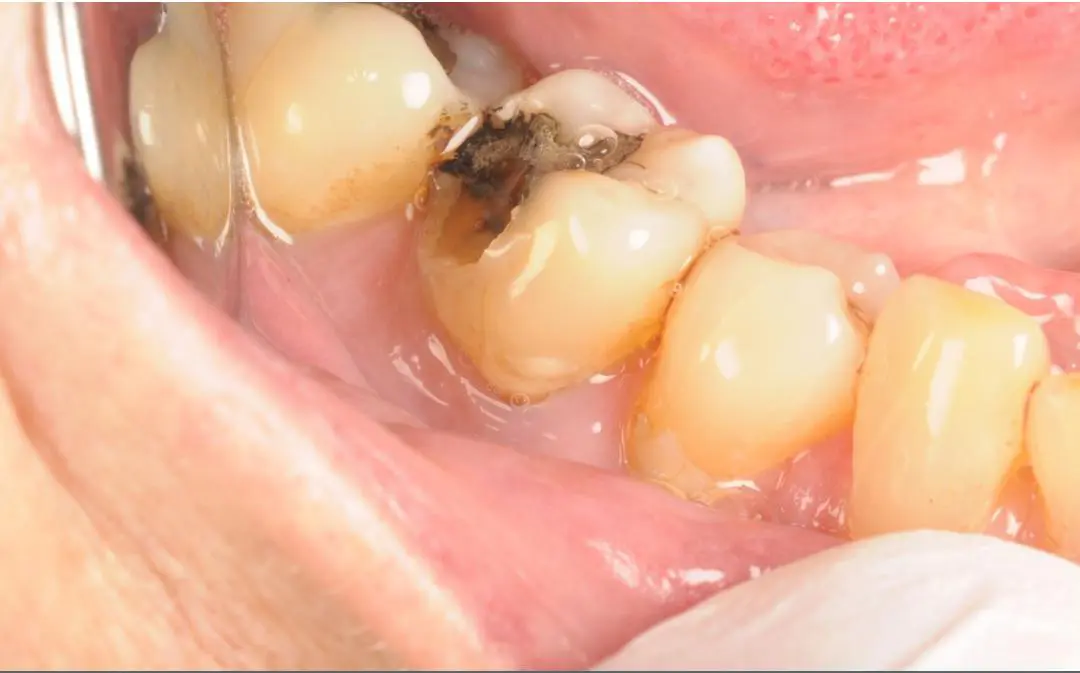
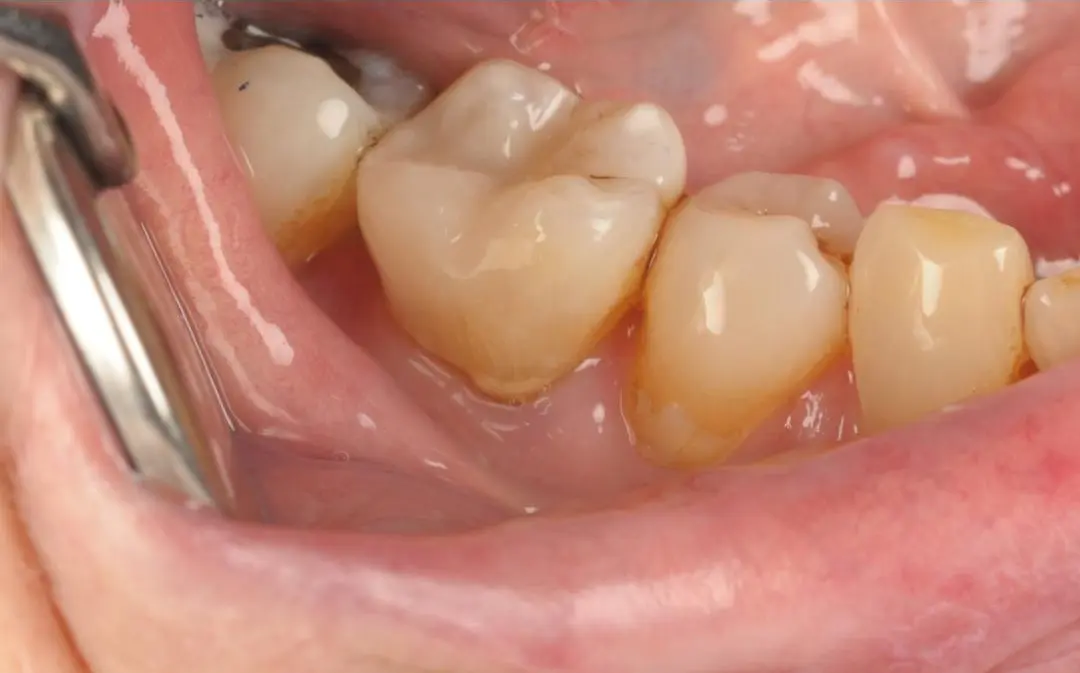
Real Patient Result: Emergency White Filling
Treatment by Dr Kamran
Possible Signs of a Failing Restoration
- A noticeable crack, chip, or visible gap around a filling or crown
- Sensitivity to hot or cold that lingers after the stimulus is removed
- Pain when biting or chewing on the restored tooth
- A rough or uneven texture when running the tongue over the restoration
- Discolouration or darkening around the edges of a filling or crown
Possible Signs of a Dental Abscess
- A persistent, throbbing toothache that may radiate to the jaw, ear, or neck
- Swelling of the face, cheek, or gum
- A raised, pimple-like swelling on the gum near the affected tooth (sometimes called a dental sinus or fistula)
- An unpleasant taste in the mouth, which may indicate that pus is draining
- Sensitivity to pressure, temperature, or touch
- In some individuals, a general feeling of being unwell
It is important to emphasise that these symptoms do not automatically confirm a dental abscess or restoration failure — they may have other causes. Only a clinical examination, and in many cases an X-ray, can confirm what is happening with a specific tooth.
The Clinical Science Behind Restoration Breakdown and Bacterial Infection
To appreciate why failing restorations are considered a potential risk factor for dental abscesses, it helps to understand the biology involved at a microscopic level.
The human mouth contains hundreds of species of bacteria. Most of these are harmless or even beneficial, but a subset — including Streptococcus mutans and Lactobacillus species — are known to be particularly involved in dental decay. These bacteria metabolise sugars and produce acids that can demineralise tooth structure and, when given access to the inner tooth, cause pulpal infection.
When a restoration fails, even a hairline gap between the filling material and the cavity wall — known as microleakage — is sufficient to allow bacteria and their by-products to penetrate. Over time, this microbial activity can progress through the dentine towards the pulp.
Additionally, older restorations made with amalgam or early composite materials may undergo changes in dimension over the years. Metal fillings can corrode at their margins; composite materials can undergo polymerisation shrinkage or surface degradation. All of these phenomena reduce the quality of the seal and may ultimately create conditions that are more conducive to bacterial infiltration.
This is why dentists routinely assess restorations at check-up appointments — not only to check the visible surface but also to identify any radiographic signs of decay or infection forming beneath or around an existing restoration.
Treatment Approaches That May Be Considered
If a failing restoration or dental abscess is identified during a clinical examination, a dentist will recommend treatment based on the individual clinical findings. Treatment options vary depending on the extent of the damage, the health of the surrounding tooth structure, and whether the pulp or surrounding bone is involved.
It is important to understand that no single treatment pathway is universally appropriate — all recommendations should be based on a thorough clinical assessment and, where relevant, dental radiographs.
Possible treatment approaches may include:
Restoration Replacement
If a filling or crown has failed but the pulp remains healthy, replacing the restoration — after removing any secondary decay — may be sufficient to protect the tooth and prevent further bacterial ingress. This approach is most appropriate when the failure is identified at an early stage.
Root Canal Treatment
If bacteria have reached the pulp and caused irreversible inflammation or infection, root canal treatment may be considered. This procedure involves removing the infected pulp tissue, cleaning and shaping the root canals, and sealing them to prevent reinfection. A crown is typically placed over the tooth afterwards to restore its function and strength.
Tooth Extraction
In cases where the infection has caused extensive damage to the tooth or surrounding bone, and the tooth cannot be restored predictably, extraction may need to be considered. This is generally regarded as a last resort when other treatment options are not clinically viable.
Abscess Drainage
In some cases, a dentist may need to drain the abscess to relieve pressure and begin the process of infection management. This is often done in conjunction with other treatment, and antibiotic therapy may be prescribed where clinically appropriate — for example, if there are signs of spreading infection or systemic involvement.
When Professional Dental Assessment May Be Needed
If you have a dental restoration — old or relatively recent — and notice any of the symptoms described in this article, it is worth arranging a dental appointment to have the tooth assessed. Early identification of restoration failure may prevent more complex or invasive treatment later.
The following situations may indicate that a dental assessment would be advisable:
- You have noticed a crack, fracture, or rough edge on an existing filling or crown
- You are experiencing tooth sensitivity that seems to be worsening over time
- You have a persistent toothache, particularly if it is throbbing in nature
- There is visible swelling around your gum or face
- You have noticed an unpleasant taste in your mouth that does not resolve
- You have not had a dental check-up in more than 12 months and have existing restorations
If symptoms are severe — such as significant facial swelling, difficulty swallowing or opening the mouth, or a high temperature alongside dental pain — it is important to seek emergency dental care promptly, as these can be signs of a spreading infection that may require urgent attention.
Watch: Emergency Dental Care in London
If you are unsure whether your symptoms require urgent attention, the following video provides helpful information about accessing same-day emergency dental appointments in London:
Prevention and Oral Health Advice
While it is not always possible to prevent a dental restoration from eventually requiring replacement, there are several evidence-informed steps that patients can take to help maintain the longevity of their restorations and reduce the risk of secondary decay or infection.
Attend Regular Dental Check-Ups
Routine dental examinations allow your dentist to assess the condition of existing restorations, identify any early signs of secondary decay, and take X-rays where necessary to detect problems that are not visible to the naked eye. The frequency of check-ups recommended may vary between individuals based on their clinical risk profile.
Maintain a Thorough Oral Hygiene Routine
Brushing twice daily with a fluoride toothpaste and cleaning between the teeth with floss or interdental brushes helps to reduce the bacterial load in the mouth. This, in turn, lowers the risk of decay developing around existing restorations.
Reduce Dietary Sugar Frequency
Bacteria that contribute to dental decay thrive on fermentable sugars. Reducing the frequency of sugary foods and drinks — particularly between meals — can help to limit acid production and reduce the risk of decay forming at restoration margins.
Manage Teeth Grinding or Clenching
Bruxism (teeth grinding) and clenching can place significant mechanical stress on dental restorations, increasing the likelihood of cracking or fracture. If you are aware that you grind or clench your teeth, discuss this with your dentist. A custom occlusal splint may be recommended to help protect your teeth and restorations.
Address Any Changes Promptly
If you notice a change in how a tooth feels — such as a new sensitivity, a rough edge, or pain when biting — it is advisable to have it assessed sooner rather than later. Small problems are generally easier and less costly to address than those that have been allowed to progress.
For ongoing guidance on dental health and preventative care, speaking with your dentist at your next appointment is always a good starting point.
Key Points to Remember
- Failing dental restorations — such as worn fillings or cracked crowns — can allow bacteria to access the inner tooth structure, potentially leading to infection.
- A dental abscess can develop when bacteria reach the pulp of the tooth or the surrounding bone and tissue.
- Symptoms of a failing restoration or abscess may include toothache, sensitivity, swelling, or an unpleasant taste, but diagnosis should always be confirmed by a dentist.
- Treatment options vary depending on the clinical findings and may include restoration replacement, root canal treatment, or in some cases, extraction.
- Regular dental check-ups are one of the most effective ways to identify restoration failure at an early stage before it leads to more complex problems.
- Good oral hygiene, dietary awareness, and managing conditions such as bruxism can all help to extend the life of dental restorations.
Frequently Asked Questions
How long do dental restorations typically last before they may need replacing?
The lifespan of a dental restoration varies depending on the type of material used, the location of the tooth, biting forces, and individual oral hygiene habits. Composite fillings may last between five and ten years on average, while well-maintained dental crowns may last longer. However, these are general estimates — individual restorations can fail earlier or later depending on clinical circumstances. Your dentist can assess the condition of your restorations at routine check-up appointments.
Is it always obvious when a filling or crown has failed?
Not always. In some cases, a restoration can begin to fail without causing noticeable symptoms in the early stages. Secondary decay may develop beneath a filling, or the marginal seal may break down gradually without immediate pain. This is one of the reasons why routine dental examinations, including dental X-rays where appropriate, are valuable — they can identify changes that are not yet causing symptoms but may require attention.
Can a dental abscess resolve on its own without treatment?
A dental abscess is a bacterial infection that generally requires professional treatment to resolve safely. In some cases, a sinus tract (a small channel through the gum) may allow pus to drain, which can temporarily reduce pressure and pain. However, this does not mean the infection has cleared — it typically continues beneath the surface and may worsen over time. Professional dental assessment is recommended if you suspect you have a dental abscess.
What is the difference between a periapical abscess and a periodontal abscess?
A periapical abscess originates at the tip of the tooth root, usually as a result of infection within the dental pulp spreading beyond the root canal system. A periodontal abscess originates in the gum or supporting structures around the tooth, often related to gum disease or a foreign body trapped in the gum pocket. Both can cause pain and swelling, but their causes and treatment approaches differ. A clinical examination and X-ray are needed to distinguish between them accurately.
Can antibiotics alone treat a dental abscess caused by a failing restoration?
Antibiotics may be prescribed by a dentist in certain clinical situations — for example, where there are signs of spreading infection or where the patient's general health requires additional management. However, antibiotics alone do not eliminate the source of the infection. The underlying dental problem — such as the failing restoration or infected pulp — typically needs to be addressed through appropriate dental treatment. Antibiotic prescribing decisions are made by the treating clinician based on individual clinical assessment.
How is a failed restoration with secondary decay treated?
Treatment depends on the extent of the decay and whether the pulp has been affected. If decay is limited and the pulp is healthy, the old restoration may be removed, the decay cleaned out, and a new restoration placed. If the pulp is involved, root canal treatment may be required before the tooth is restored. Your dentist will assess the situation clinically and discuss the most appropriate options based on your individual circumstances.
Conclusion
The relationship between failing dental restorations and dental abscesses is one that highlights the importance of maintaining both existing dental work and regular professional oversight of oral health. When a restoration begins to deteriorate — through wear, secondary decay, or material ageing — the protective barrier it provides can weaken, allowing bacteria a pathway to the sensitive inner structures of the tooth.
Understanding the link between failing restorations and dental abscesses can help patients recognise early warning signs and make informed decisions about seeking dental care. Whether you have noticed a change in a treated tooth, are experiencing unexplained dental discomfort, or simply want reassurance about the state of your existing dental work, a professional dental assessment is the most reliable way to understand what is happening and what, if anything, needs to be done.
Early attention to restoration concerns is generally associated with a wider range of treatment options and a better prospect of preserving the natural tooth. As with most aspects of dental health, early assessment tends to be more straightforward than addressing problems that have been allowed to develop over time.
Dental symptoms and treatment options should always be assessed individually during a clinical examination.
Disclaimer
This article has been produced for educational and informational purposes only. The content is intended to provide general dental health information for adult readers and does not constitute professional dental advice, diagnosis, or a treatment recommendation. The information provided should not be used as a substitute for a professional dental examination carried out by a qualified and registered dental professional.
Individual dental symptoms, oral health concerns, and treatment suitability vary between patients and can only be accurately assessed during a clinical examination, which may include dental radiographs and a full review of the patient's dental and medical history. No outcomes are guaranteed, and all treatment decisions should be made in consultation with a registered dental professional following a thorough clinical assessment.
If you are experiencing dental symptoms, you are encouraged to seek professional advice from a qualified dentist. In the event of severe symptoms — such as significant swelling, difficulty swallowing, or a high temperature alongside dental pain — you should seek urgent dental or medical attention promptly.
This content has been produced in accordance with General Dental Council (GDC) communication standards, Care Quality Commission (CQC) patient safety principles, ASA CAP Code healthcare advertising rules, and GMC ethical communication guidance.