
If you have recently noticed swelling, discomfort, or a flap of gum tissue around a back tooth — particularly a wisdom tooth — you are certainly not alone in searching online for answers. This type of issue, often associated with a condition known as pericoronitis, can be both uncomfortable and confusing for patients who are unsure what is happening in their mouth or where to turn for help.
Many people wonder whether home remedies are sufficient, whether the problem will resolve on its own, or whether professional treatment is necessary. Understanding the role that clinical irrigation for gum flaps can play in managing discomfort is an important part of making informed decisions about your oral health.
This article explains what a gum flap is, why it develops, and how clinical irrigation is used in a dental setting to provide temporary relief. It also outlines when seeking a professional dental assessment would be appropriate and what preventative steps may help you maintain good oral health.
Experiencing these symptoms?
Delaying treatment can lead to tooth loss. We have slots available today.
What Is Clinical Irrigation for Gum Flaps?
Clinical irrigation for gum flaps involves a dental professional using a controlled flow of water or antimicrobial solution beneath a flap of gum tissue — typically over a partially erupted wisdom tooth. This process helps flush out trapped food debris and bacteria, temporarily reducing inflammation and discomfort associated with pericoronitis. It does not treat the underlying cause but can offer meaningful short-term relief.
What Is a Gum Flap and Why Does It Develop?
A gum flap, clinically referred to as an operculum, is a layer of soft gum tissue that partially covers a tooth — most commonly a wisdom tooth (third molar) that has not fully erupted through the gumline. This flap of tissue can become a trap for food particles, plaque, and bacteria, creating an environment where inflammation and infection may develop.
The condition that arises from this situation is called pericoronitis. It can present in mild or more significant forms. In mild cases, the gum around the partially erupted tooth may be slightly swollen or tender. In more persistent cases, swelling, bad taste, difficulty opening the mouth, or general discomfort may be more noticeable.
Meet Dr. Yasha Shirazi
Principal Dentist at Emergency Dentist London
"We treat hundreds of dental emergencies every month. The sooner you come in, the easier the fix usually is."
Book an appointment with our team →Wisdom teeth are the most frequent site for gum flaps simply because they are the last teeth to erupt, often in adulthood, and frequently do not have adequate space to emerge fully. However, gum flaps can occasionally occur around other partially erupted teeth.
Understanding why a gum flap develops helps clarify why clinical interventions such as irrigation focus on managing the bacterial load beneath the tissue — at least in the short term — before any longer-term treatment decisions are made.
What Is Clinical Irrigation in a Dental Setting?
Clinical irrigation is a procedure carried out by a dental professional in which a controlled stream of sterile water, saline, or an antimicrobial solution — such as chlorhexidine — is directed beneath a gum flap or into a periodontal pocket using a fine-tipped syringe or irrigation device.
The primary purpose of this technique, when used for gum flaps, is to mechanically dislodge and flush away bacteria, food debris, and inflammatory by-products that have accumulated in the space between the flap and the underlying tooth. Areas beneath the operculum are typically inaccessible to a toothbrush or even to professional cleaning instruments, making targeted irrigation a practical option for temporarily reducing the bacterial burden in that area.
It is important to understand that clinical irrigation is not a cure for pericoronitis. It is a professionally administered adjunct measure that may help reduce discomfort and inflammation in the short term, particularly while other treatment options are being considered or while the patient awaits further dental care. The appropriateness of this approach is always determined during a clinical examination, and suitability will vary from person to person. If you are experiencing symptoms related to a wisdom tooth or gum flap, a consultation with an emergency dentist in London may be a helpful first step.
The Clinical Science Behind Gum Flap Inflammation
To understand why clinical irrigation can be helpful, it is useful to know a little about what happens beneath a gum flap at a biological level.
When food particles and bacteria become trapped beneath the operculum, the body's immune response is triggered. White blood cells are sent to the area to combat the bacteria, and this immune response causes the characteristic signs of inflammation: redness, swelling, warmth, and tenderness. In some cases, pus may form, indicating a localised infection.
The bacteria most commonly involved in pericoronitis are typically those already found within the oral cavity, including anaerobic bacteria that thrive in low-oxygen environments. The space beneath a gum flap provides exactly these conditions — a warm, moist, enclosed environment with limited oxygen — making it an environment where bacteria can multiply and contribute to ongoing inflammation.
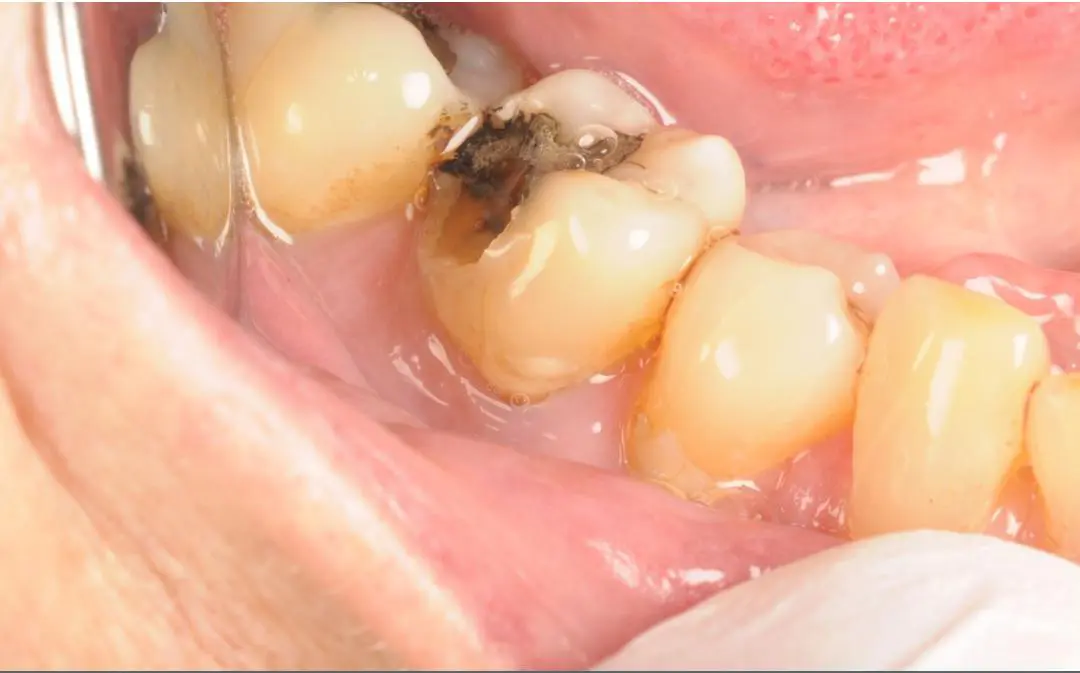
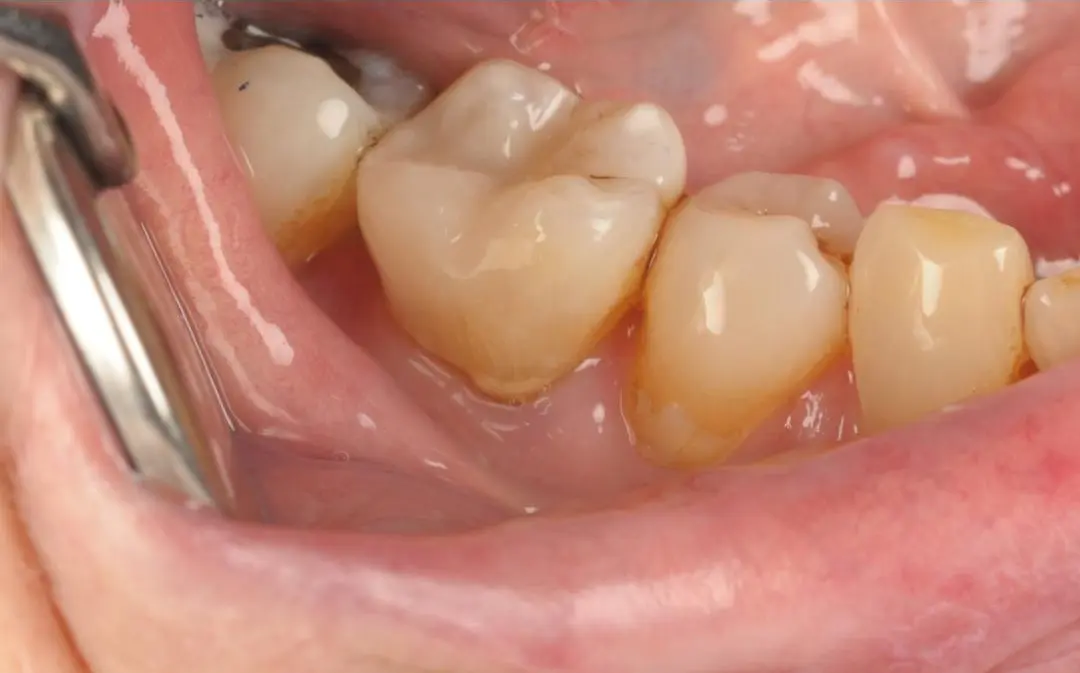
Real Patient Result: Emergency White Filling
Treatment by Dr Kamran
By introducing an irrigant beneath the flap, a clinician aims to disrupt the bacterial environment, reduce the concentration of harmful microorganisms, and mechanically remove the debris that sustains bacterial growth. Antimicrobial irrigants such as chlorhexidine may also have a short-term inhibitory effect on bacterial activity in the irrigated area, though this effect is temporary and does not replace definitive treatment.
Symptoms That May Indicate a Gum Flap Problem
It is helpful to be aware of the common signs that may suggest a gum flap is causing a problem, as early professional assessment can often support better management outcomes. Symptoms that patients commonly report include:
- Tenderness or aching pain around a back tooth, particularly a wisdom tooth
- Swelling of the gum tissue in the affected area
- An unpleasant taste in the mouth, which may indicate bacterial activity beneath the flap
- Difficulty opening the mouth fully (trismus), which can occur in more significant cases
- Swelling of the jaw or face in some situations
- Bad breath that persists despite regular oral hygiene
- Discomfort when biting down or chewing
These symptoms can vary in intensity and may come and go over time. Some patients find that symptoms temporarily improve before returning. This pattern is relatively common with pericoronitis and does not necessarily mean the underlying situation has resolved. A professional dental evaluation remains the appropriate course of action to properly assess what is happening and discuss suitable management options.
How Clinical Irrigation Is Performed
During a clinical irrigation procedure for a gum flap, the dentist or hygienist will typically begin by gently examining the area to assess the extent of inflammation and the nature of the tissue. They will then use a specialised irrigating syringe with a blunt-tipped or curved needle to carefully introduce a solution beneath the operculum.
The irrigant — which may be sterile saline, water, or a dilute chlorhexidine solution — is delivered with gentle pressure to flush the subgingival space. The procedure is generally well tolerated, though the area may be sensitive to touch. Local anaesthetic is not usually required for irrigation alone, though the clinician will ensure patient comfort throughout.
The procedure typically takes a short time and may be combined with other aspects of clinical management, such as discussing longer-term treatment options or the use of antimicrobial mouthwash at home. Patients are usually provided with oral hygiene advice following the procedure to help maintain cleanliness in the affected area.
It is important to note that whilst clinical irrigation may provide noticeable relief, it does not remove the gum flap itself or address the underlying reason why the wisdom tooth has not fully erupted. Clinical irrigation is therefore positioned as a supportive measure, not a standalone or definitive treatment.
When Professional Dental Assessment May Be Appropriate
There are a number of situations in which seeking a professional dental assessment for a possible gum flap would be sensible. The following are examples of circumstances where dental evaluation may be helpful — though this list is not exhaustive, and individual presentations can vary considerably:
- Persistent or worsening discomfort around a back tooth that does not settle within a short period
- Swelling of the gum, cheek, or jaw that seems to be spreading or increasing
- Difficulty opening the mouth or pain when swallowing
- A bad taste or odour that does not improve with careful oral hygiene
- Recurring episodes of pain or swelling in the same area
- Fever or general feeling of being unwell alongside localised dental symptoms
It is worth emphasising that these points are offered as general guidance. Dental symptoms should always be assessed on an individual basis by a qualified dental professional. If you are concerned about symptoms you are experiencing, arranging a professional examination is always the appropriate step.
Longer-Term Management Options for Gum Flaps
Clinical irrigation provides temporary relief, but it is generally not considered a long-term solution. The longer-term management of a gum flap associated with a wisdom tooth or other partially erupted tooth depends on a range of clinical factors that only a dentist can properly evaluate during an examination.
Broadly speaking, longer-term options that a dentist might discuss — depending on the individual presentation — may include:
Operculectomy: In some cases, where the wisdom tooth is likely to erupt successfully and is properly positioned, a dentist may consider removing the flap of gum tissue (the operculum) to eliminate the pocket where bacteria accumulate. This is a minor surgical procedure that is assessed on an individual basis.
Wisdom tooth extraction: Where the wisdom tooth is impacted, poorly positioned, or causing recurrent pericoronitis, extraction may be discussed as a longer-term option. This decision is made following a thorough clinical and radiographic assessment.
Ongoing monitoring: In some presentations, where symptoms are mild and the tooth appears to be erupting into a reasonable position, a period of careful monitoring alongside good oral hygiene may be considered appropriate.
All treatment decisions should be based on a full clinical assessment. Learning more about wisdom tooth and gum-related treatments available in London may help you understand what options could be relevant to your situation.
Prevention and Oral Health Advice for Gum Flap Management
Whilst it is not always possible to prevent a gum flap from developing — particularly where wisdom teeth are involved — there are practical steps that may help reduce the risk of associated complications and support your overall oral health:
Maintain thorough oral hygiene: Careful twice-daily brushing, including around the back teeth, can help reduce the bacterial load in the mouth. Use a toothbrush that allows you to reach the back of your mouth effectively, and consider a brush specifically designed for difficult-to-reach areas if needed.
Use interdental cleaning aids: Interdental brushes or floss can help remove food debris from between teeth. Your dentist or hygienist can advise on the most suitable options for your individual mouth.
Consider a therapeutic mouthwash: Chlorhexidine-based mouthwashes, when used as directed and for appropriate durations, can help reduce bacterial activity in the mouth. Speak to a dental professional before using these long term, as they are generally recommended for short-term use.
Attend regular dental check-ups: Routine dental examinations allow your dentist to monitor the eruption of wisdom teeth and identify any developing issues early. This is particularly important for younger adults whose wisdom teeth may still be in the process of emerging.
Seek advice promptly if symptoms arise: If you notice swelling, discomfort, or an unusual taste around a back tooth, arranging a dental appointment promptly is sensible rather than waiting to see if symptoms resolve on their own.
Understanding the importance of routine dental care can support long-term oral health, and booking a dental assessment helps identify concerns before they develop into more complex problems.
Key Points to Remember
- Clinical irrigation for gum flaps involves flushing debris and bacteria from beneath a flap of gum tissue (operculum) using a controlled irrigant, providing temporary relief from inflammation and discomfort.
- The procedure is carried out by a dental professional and is considered a supportive short-term measure, not a definitive treatment.
- Gum flaps most commonly occur around partially erupted wisdom teeth and can lead to a condition called pericoronitis if bacteria accumulate beneath the flap.
- Symptoms such as persistent pain, swelling, bad taste, or difficulty opening the mouth warrant a professional dental assessment.
- Longer-term management options — including operculectomy or extraction — depend entirely on individual clinical circumstances and are determined through examination.
- Good oral hygiene, regular dental attendance, and prompt attention to developing symptoms are the cornerstones of managing and reducing the risk of gum flap complications.
Frequently Asked Questions
Is clinical irrigation painful?
Clinical irrigation for a gum flap is generally well tolerated by most patients. The area may be tender or sensitive to touch if significant inflammation is present, but the irrigation process itself is typically performed gently. Dental professionals are experienced in ensuring patient comfort during the procedure. If you are anxious about the procedure, it is always appropriate to discuss this with your dentist beforehand so that they can explain exactly what to expect and adapt their approach where possible.
How long does relief from clinical irrigation last?
The duration of relief following clinical irrigation varies from person to person and depends on the severity of the inflammation, the extent of bacterial accumulation, and whether oral hygiene in the area can be maintained effectively afterwards. For some patients, relief may last several days; for others, symptoms may return more quickly if the underlying situation has not changed. Clinical irrigation is intended as a temporary measure, and the longer-term management plan should be discussed with a dental professional based on a full clinical assessment.
Can I carry out irrigation at home?
Whilst gentle rinsing with a warm saline solution at home may help reduce surface bacterial levels in the mouth, it is not equivalent to professional clinical irrigation. Home rinsing does not deliver an irrigant beneath a gum flap with the precision required to adequately flush the subgingival space. If you are experiencing symptoms related to a gum flap, a professional dental assessment is the appropriate course of action. Your dentist may advise on suitable home care measures to complement professional treatment.
Will a gum flap resolve on its own?
Some mild gum flaps associated with erupting wisdom teeth may settle if the tooth erupts fully and the overlying tissue recedes naturally. However, this is not predictable, and many gum flaps do not resolve without some form of clinical intervention. Recurrent episodes of pericoronitis are relatively common and may indicate that the gum flap requires professional management. Monitoring symptoms and seeking a dental assessment if they persist or recur is advisable.
Is pericoronitis serious?
Pericoronitis ranges considerably in severity. Many cases are mild and localised, causing discomfort and temporary inflammation. However, in some presentations — particularly where bacteria spread beyond the immediate area — the condition can become more significant and may require more comprehensive treatment including antibiotics or urgent dental care. This underscores the importance of seeking a professional dental assessment when symptoms are present, rather than managing the situation without guidance. A dentist can assess the extent of the problem and determine the most appropriate course of action.
How do I know if my gum flap needs treatment?
If you are experiencing persistent or worsening pain, swelling, difficulty opening your mouth, a bad taste, or recurring symptoms around a back tooth, these are indicators that a professional dental evaluation would be appropriate. A dentist can examine the area, assess the gum tissue, and in many cases take a dental X-ray to evaluate the position of the underlying tooth. Treatment decisions are always made on an individual basis following a thorough clinical examination and cannot be determined from symptoms alone.
Conclusion
Understanding the role of clinical irrigation in providing temporary relief for gum flaps is an important part of making informed decisions about your dental health. Pericoronitis — the inflammation associated with a partially covered tooth — can cause real discomfort, and clinical irrigation offers a professionally administered option for helping to manage bacterial load and reduce symptoms on a short-term basis.
However, irrigation is not a standalone solution, and it does not address the underlying reason a gum flap has developed. Patients experiencing symptoms related to a gum flap are encouraged to seek a dental assessment so that longer-term options can be properly explored. Good oral hygiene, regular dental attendance, and early professional advice remain the most reliable approaches to supporting oral health in this context.
If you are in London and experiencing discomfort around a back tooth or wisdom tooth, arranging a professional examination with a qualified dentist is a sensible and positive step towards understanding your options and receiving appropriate care.
Dental symptoms and treatment options should always be assessed individually during a clinical examination.
Disclaimer
This article has been produced for educational and informational purposes only. The content is intended to support general patient understanding of dental health topics and does not constitute professional dental advice, clinical assessment, or a recommendation for any specific treatment. The information provided is of a general nature and may not be applicable to every individual's circumstances.
Reading this article does not establish a patient–clinician relationship. Individual oral health concerns, symptoms, and treatment suitability must always be assessed during an in-person clinical dental examination conducted by a qualified dental professional registered with the General Dental Council (GDC).
No diagnosis is implied or intended within this content. No treatment outcomes are promised or guaranteed. If you are experiencing dental symptoms, pain, swelling, or any concerns about your oral health, please seek professional dental advice promptly.
This content has been prepared in accordance with General Dental Council (GDC) communication standards, Care Quality Commission (CQC) patient safety principles, and ASA CAP Code healthcare advertising guidance.