
If you regularly find food getting stuck between your teeth — even after brushing and flossing — you are not alone. Many adults in London search for answers when they notice persistent food trapping between teeth, particularly when it causes discomfort, bad breath, or a feeling that something is simply not quite right in their mouth.
Food trapping between teeth is often associated with a dental condition known as an open contact, where two neighbouring teeth no longer fit snugly against one another. This gap or loosened contact point allows food particles, particularly fibrous or sticky foods, to become wedged between teeth during eating.
Understanding why this happens, what it means for your oral health, and what options may be available is an important first step. This article explains the background of open contact issues, common signs to look out for, the underlying dental science, and when a professional dental assessment may be appropriate. As always, individual symptoms and treatment suitability should be evaluated during a clinical examination by a qualified dentist.
Experiencing these symptoms?
Delaying treatment can lead to tooth loss. We have slots available today.
What Causes Food Trapping Between Teeth?
Food trapping between teeth is commonly caused by an open contact — a gap or loosened point of contact between two adjacent teeth. This can result from tooth wear, shifting teeth, a poorly fitted dental restoration, or gum recession. Food trapping between teeth may irritate the gums and contribute to decay if not addressed professionally.
What Is an Open Contact Between Teeth?
An open contact refers to a situation where two adjacent teeth fail to maintain proper, snug contact with one another. In a healthy mouth, neighbouring teeth touch lightly at a specific contact point, which naturally helps to deflect food away from the gum tissue between them during chewing.
When this contact is lost or becomes too wide, a space forms that acts almost like a food trap. Particles — particularly fibrous vegetables, meat, bread, and seeds — can wedge into this gap and press against the gum tissue below.
Meet Dr. Yasha Shirazi
Principal Dentist at Emergency Dentist London
"We treat hundreds of dental emergencies every month. The sooner you come in, the easier the fix usually is."
Book an appointment with our team →Open contacts can develop gradually over time and may go unnoticed at first. Many patients only become aware of the issue when food trapping becomes a regular and uncomfortable nuisance. In some cases, the gum tissue between the teeth (known as the interdental papilla) may begin to show signs of irritation, appearing red, swollen, or tender.
It is worth noting that not all open contacts cause immediate discomfort, and not all food trapping is necessarily the result of a clinically significant open contact. However, if the problem is persistent, a dental assessment can help identify the underlying cause.
Common Causes of Open Contacts and Food Trapping Between Teeth
There are several reasons why open contacts may develop between teeth. Understanding these causes can help patients make sense of their symptoms and seek appropriate guidance.
Tooth Wear and Shifting
Over time, teeth can naturally drift or shift in position, particularly if a tooth has been lost elsewhere in the mouth. This movement can alter the contact relationship between neighbouring teeth.
Dental Restorations
A filling, crown, or inlay that is not precisely contoured may fail to re-establish the correct contact point with the adjacent tooth. This is one of the more common clinical causes of food trapping following dental treatment.
Gum Recession and Bone Loss
When the gum tissue recedes or bone support is lost — as may occur with gum disease — the shape and position of the gum between teeth can change, creating open triangular spaces known as black triangles. These spaces can make food trapping more likely.
Orthodontic Changes
Following orthodontic treatment, or without retention, teeth may gradually shift, potentially affecting contact points.
Tooth Shape and Size Variations
Some patients have naturally wider spaces between certain teeth, which can contribute to food trapping even without any pathological cause.
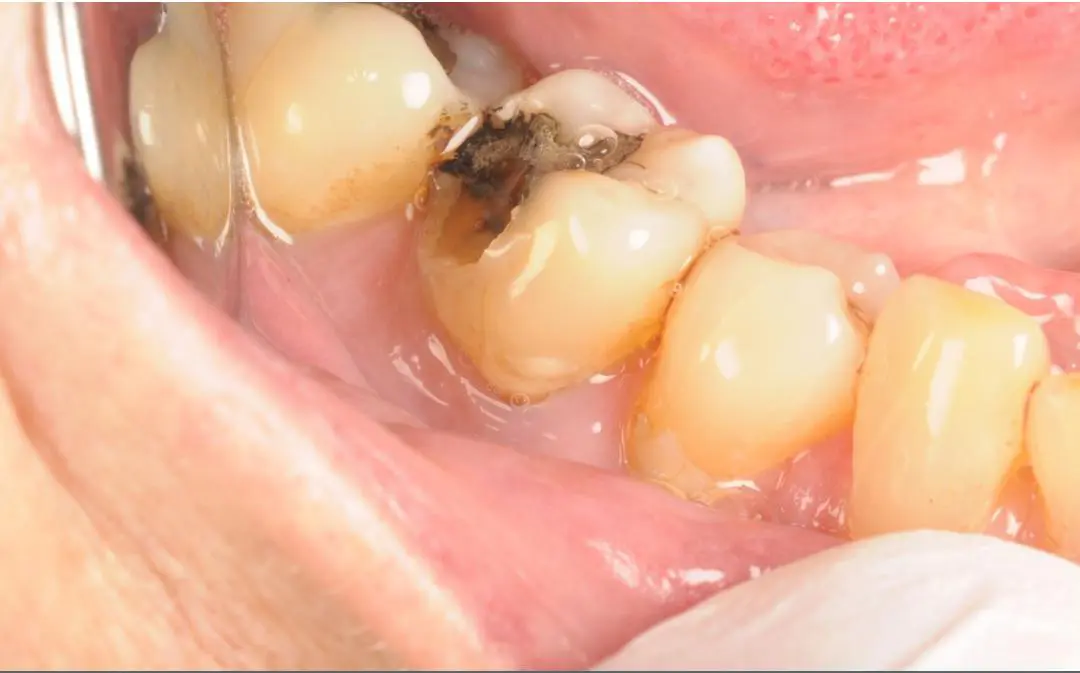
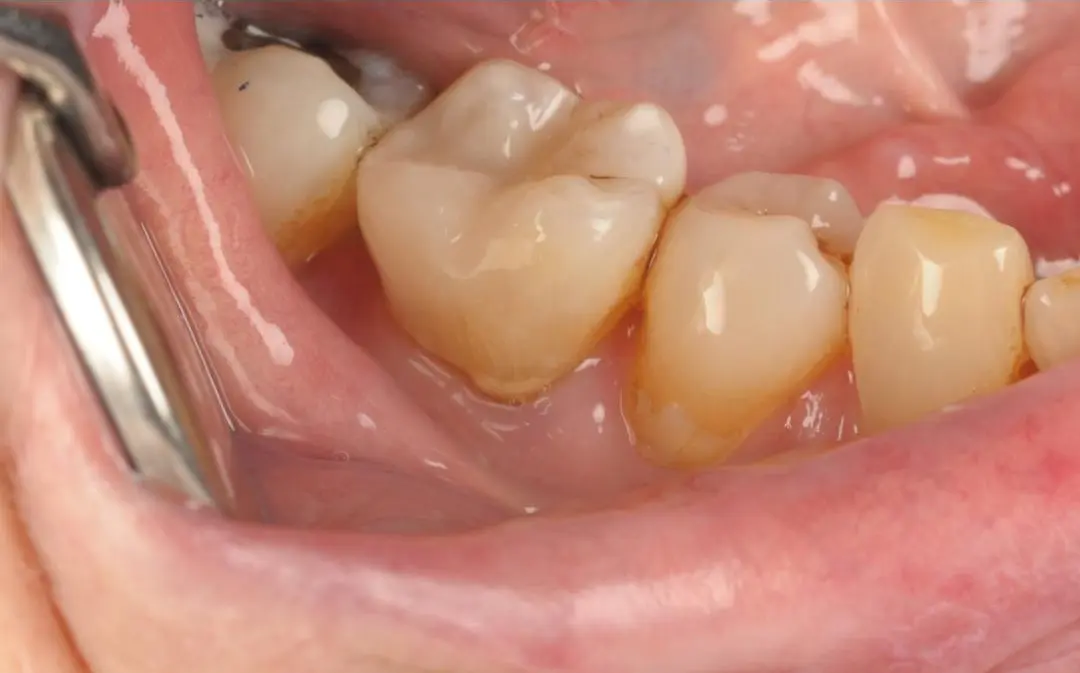
Real Patient Result: Emergency White Filling
Treatment by Dr Kamran
If you are concerned about gum recession or gum disease, this guide to gum health support options can help you understand the topic before discussing your individual situation with a dental professional.
Signs and Symptoms to Be Aware Of
Food trapping between teeth is in itself a noticeable symptom, but it may be accompanied by other signs that suggest the issue warrants further investigation.
Gum Discomfort or Tenderness
Food trapped against the gum can cause localised soreness or a dull aching sensation between teeth, particularly after meals.
Bleeding Gums
Irritated gum tissue between teeth may bleed during brushing or flossing. Whilst occasional minor bleeding can occur from brushing technique, persistent bleeding should be assessed by a dentist; this article on why gums bleed during brushing explains common causes.
Bad Breath
Trapped food debris can decompose between teeth and contribute to unpleasant breath, even when oral hygiene is otherwise good.
Sensitivity
If food trapping is associated with early dental decay or gum recession, sensitivity to temperature or sweet foods may develop.
Visible Gaps Between Teeth
Some patients notice the appearance of a visible space or dark triangle between their teeth at the gum line.
It is important not to attempt to self-diagnose based on symptoms alone. A clinical dental examination is the appropriate way to identify the specific cause of food trapping in any individual case.
The Dental Science Behind Open Contact Issues
To understand open contacts more fully, it helps to know a little about the anatomy of adjacent teeth and how they are designed to work together.
Each tooth has a contact area — a specific zone on its side surface where it touches the neighbouring tooth. This contact is not a sharp point but a small, defined area that is shaped by the natural contour of the tooth crown. The purpose of this contact is twofold: it helps to stabilise each tooth within the dental arch, and it helps to guide food away from the gum tissue beneath during chewing.
Beneath the contact point, there is a small triangular space called the embrasure, which is naturally filled by the interdental papilla — the pointed portion of gum tissue that sits between teeth. When the contact point is maintained correctly and the papilla is healthy, this system works efficiently.
When the contact point opens up — due to any of the causes described above — the embrasure space widens. Food can now enter this space and be driven down into the gum tissue with chewing forces. Over time, this repetitive food impaction can inflame the gum tissue and, if left unaddressed, may contribute to localised bone loss or dental decay on the sides of the affected teeth.
Understanding this process helps explain why food trapping is not simply a cosmetic concern but may have longer-term implications for dental health if it persists.
Treatment Approaches That a Dentist May Consider
Treatment for food trapping between teeth caused by an open contact will depend entirely on the underlying cause identified during a clinical examination. There is no single solution that applies to all cases, and a dentist will assess each patient's situation individually before recommending any course of action.
Replacing or Adjusting a Dental Restoration
If an existing filling, crown, or inlay has failed to establish the correct contact point, the restoration may need to be adjusted or replaced. A well-fitted restoration that recreates the natural contact point may significantly reduce or resolve food trapping.
Composite Bonding
In some cases, adding a small amount of tooth-coloured composite resin to the side surface of a tooth may help to close or narrow an open contact. Suitability depends on the size of the gap and other clinical factors.
Gum Treatment
Where gum recession or gum disease is contributing to the problem, appropriate periodontal treatment may be part of the management plan.
Orthodontic Assessment
If teeth have shifted significantly, an orthodontic opinion may be considered to evaluate whether tooth movement could improve the contact relationship.
Monitoring
In some cases, where the open contact is minor and not causing active harm, a dentist may recommend careful monitoring alongside improved interdental cleaning techniques.
All treatment decisions should be made collaboratively between patient and dentist, based on a thorough clinical assessment. Patients seeking advice about restorative options may find this guide useful: can you get a filling at an emergency dentist?.
When Professional Dental Assessment May Be Needed
Whilst occasional mild food trapping after a particularly fibrous meal is not necessarily cause for immediate concern, there are situations where it is sensible to arrange a dental assessment sooner rather than later.
You may wish to speak to a dentist if you notice:
- Persistent food trapping that occurs regularly between the same teeth
- Gum soreness, swelling, or bleeding around the affected area
- A dull ache or pressure sensation between teeth after eating
- Sensitivity to temperature or sweet foods in the area
- A visible gap or dark triangle that has appeared or grown larger between teeth
- Bad breath that persists despite good oral hygiene
- Recent dental work after which food trapping began
These signs do not confirm any specific diagnosis — only a clinical examination can do that. However, they suggest that a professional opinion would be a worthwhile and reassuring step.
If symptoms are worsening or pain is developing, arranging an urgent dental assessment in London is often the most practical next step.
Watch: Understanding Dental Emergency Costs in London
If you are concerned about the cost of seeking dental advice, the following video provides helpful information about consultation fees and membership options at Emergency Dentist in London:
Prevention and Oral Health Advice
Whilst not all open contacts can be prevented — particularly those arising from gum disease progression or natural tooth movement — there are practical steps that can support your interdental health and reduce the risk of complications associated with food trapping.
Maintain a Consistent Interdental Cleaning Routine
Using interdental brushes or floss daily helps to remove food and plaque from between teeth before it has the chance to irritate gum tissue or contribute to decay. Ask your dental team which interdental tools are most suitable for your specific gaps and spaces.
Attend Regular Dental Check-Ups
Routine dental examinations allow a dentist to monitor contact points between teeth and identify any gradual changes before they become more significant. Early detection of shifting teeth or deteriorating restorations means earlier, often simpler, management.
Address Gum Disease Promptly
Since gum disease and bone loss are key contributors to open contacts and black triangles, treating gum disease early is one of the most important preventative measures available. If your gums bleed regularly or you notice recession, a dental review is advisable.
Maintain Good Hydration and a Balanced Diet
A dry mouth can make food more likely to stick between teeth. Staying well hydrated supports saliva production, which plays a natural protective role in the mouth.
Wear a Retainer if Advised
If you have completed orthodontic treatment, wearing your retainer as instructed helps prevent tooth movement that could affect contact points over time.
For further reading on related symptoms, this article on gum infection and food trapping patterns provides additional educational guidance.
Key Points to Remember
- Food trapping between teeth is commonly associated with an open contact — a gap or loosened point where two neighbouring teeth meet
- Open contacts can develop due to tooth shifting, gum recession, gum disease, or poorly fitted dental restorations
- Persistent food trapping may irritate gum tissue and, over time, could contribute to localised decay or bone loss if unaddressed
- Symptoms such as gum soreness, bleeding, bad breath, or sensitivity in the area warrant a professional dental assessment
- Treatment options vary depending on the cause identified during a clinical examination and may include restoration adjustment, bonding, or periodontal care
- Good interdental hygiene, regular dental check-ups, and prompt management of gum disease support long-term oral health
Frequently Asked Questions
Why does food keep getting stuck between the same two teeth?
Persistent food trapping between the same two teeth often suggests that the contact point between those teeth has been lost or weakened — a condition known as an open contact. This can occur gradually due to tooth movement, gum recession, wear, or a dental restoration that no longer fits as it should. Rather than assuming the cause, it is worth having the area assessed by a dentist, who can examine the contact relationship and identify whether any treatment may be appropriate.
Can food trapping between teeth damage my gums?
Yes, repeated food impaction between teeth can irritate the gum tissue in that area. When food is regularly pressed into the gum during chewing, it can cause localised inflammation, soreness, and bleeding. Over time, if the cause is not addressed, there is a possibility of more significant gum and bone changes in that area. Good interdental cleaning helps to remove trapped food, but if the underlying open contact is not corrected, the problem is likely to continue.
Is food trapping between teeth always a sign of gum disease?
Not necessarily. Whilst gum disease can contribute to open contacts and food trapping — particularly through gum recession and bone loss — food trapping can also occur following dental treatment, tooth movement, or due to natural variations in tooth shape. A dental examination is the most reliable way to determine whether gum disease is a contributing factor in any individual case.
What is a black triangle between teeth, and is it related to food trapping?
A black triangle is the visible dark space that appears between teeth at the gum line when the interdental papilla (the pointed gum tissue between teeth) has receded or been lost. Black triangles are often associated with open contacts and can make food trapping more likely, as the protective barrier of gum tissue no longer fills the space between the teeth. They can develop as a result of gum disease, bone loss, or sometimes following orthodontic treatment. Management options depend on the cause and extent of the problem.
Can a new filling cause food to get trapped between teeth?
Yes, it is possible for a recently placed filling to be associated with food trapping if the contact point with the adjacent tooth has not been precisely recreated. Dental restorations need to not only restore the chewing surface but also re-establish the correct contact relationship with neighbouring teeth. If you notice food trapping after a filling has been placed, it is worth returning to your dentist to discuss this, as the restoration may require adjustment.
How is an open contact between teeth treated?
Treatment for an open contact depends on its underlying cause, which can only be determined during a clinical examination. Options that a dentist may consider include adjusting or replacing an existing dental restoration, applying composite bonding to narrow the gap, or addressing underlying gum disease. In cases where teeth have shifted, an orthodontic assessment may be relevant. There is no single approach that suits every patient — treatment recommendations are always based on individual clinical findings.
Conclusion
Food trapping between teeth is a common concern that many adults experience at some point, but when it becomes persistent and predictable, it is worth understanding what may be causing it. Open contact issues — where neighbouring teeth no longer maintain their natural snug contact — are a frequent underlying reason, and they can develop for a variety of dental and periodontal reasons.
As this article has explained, food trapping between teeth is not simply a minor inconvenience. Over time, repeated food impaction can affect gum health and contribute to other dental concerns. Fortunately, when identified, there are several clinical approaches that a dentist may consider to address the issue.
Good oral hygiene, regular dental check-ups, and early attention to gum health all play a meaningful role in supporting the long-term health of the contact points between your teeth. If you are experiencing persistent food trapping, discomfort, or any of the other symptoms discussed in this article, arranging a dental assessment is a sensible and straightforward next step.
Dental symptoms and treatment options should always be assessed individually during a clinical examination.
Disclaimer
This article has been produced for educational and informational purposes only. The content is intended to support general patient understanding of dental health topics and does not constitute professional dental advice, diagnosis, or treatment recommendations. Every individual's oral health is unique, and any symptoms, concerns, or questions relating to your dental health should be discussed directly with a qualified dental professional during a clinical examination. The information provided in this article does not replace the guidance of a registered dentist or dental specialist. No guaranteed outcomes or specific treatment results are implied or expressed within this content. If you are experiencing dental symptoms, please seek advice from a suitably qualified dental professional.