
It is entirely natural to feel concerned when a tooth continues to ache or throb after you have had a dental filling. For many patients, the expectation is that once a cavity has been treated, discomfort should immediately resolve. When it does not — particularly after a deep filling — the worry can quickly set in.
Tooth pain after a deep filling is one of the most commonly searched dental concerns in the UK. People often turn to the internet seeking reassurance, clarity on what is normal, and guidance on whether their symptoms require urgent attention.
This article explains why tooth pain after a deep filling occurs, what the underlying dental science tells us, what different types of discomfort may indicate, and when it may be appropriate to seek a professional dental assessment. Whether you are experiencing mild sensitivity or more persistent discomfort, understanding the likely causes can help you make informed decisions about your oral health.
Experiencing these symptoms?
Delaying treatment can lead to tooth loss. We have slots available today.
Featured Snippet Answer
Why does my tooth hurt after a deep filling?
Tooth pain after a deep filling is common and often temporary. Because deep fillings sit close to the nerve inside the tooth, the surrounding tissue can become mildly inflamed during the treatment process. This may cause sensitivity or aching that usually settles within a few days to weeks. Persistent or worsening pain should be assessed by a dental professional.
Understanding What a Deep Filling Actually Involves
A dental filling is used to restore a tooth that has been damaged by decay. The term deep filling refers to a restoration placed when decay has progressed significantly towards the inner part of the tooth — specifically towards the dental pulp, which contains the nerve and blood supply.
Meet Dr. Yasha Shirazi
Principal Dentist at Emergency Dentist London
"We treat hundreds of dental emergencies every month. The sooner you come in, the easier the fix usually is."
Book an appointment with our team →To place a filling, the dentist must first remove all decayed material. In the case of a deep filling, this process takes the restoration to within a very short distance of the pulp chamber. Even with great care, this proximity means the tooth's internal structures are more likely to respond to the treatment.
The deeper the decay, the greater the potential for post-operative sensitivity. This is not a sign that something has gone wrong — it is a natural biological response to the removal of damaged tooth structure and the placement of restorative material.
At Emergency Dentist in London, our dental team assesses the extent of decay carefully before recommending an appropriate restoration approach for each patient.
The Dental Science Behind Post-Filling Pain
To understand why a tooth hurts after a deep filling, it helps to consider the anatomy of a tooth. Each tooth contains:
- Enamel — the hard outer layer
- Dentine — the softer layer beneath enamel, containing microscopic tubules connected to the nerve
- Dental pulp — the innermost chamber housing the nerve and blood vessels
When decay reaches deep into the dentine layer, the dentinal tubules can become exposed or irritated. During the filling process — which involves drilling, cleaning, and placing restorative material — these tubules transmit signals to the nerve, which may result in inflammation.
This inflammation, known as pulpitis, can be either reversible or irreversible:
- Reversible pulpitis causes temporary sensitivity that typically resolves as inflammation settles
- Irreversible pulpitis involves more sustained nerve damage and may require further treatment
In most cases of deep fillings, reversible pulpitis is the more likely explanation for short-term discomfort.
Common Symptoms After a Deep Filling
Not all post-filling pain is the same. Understanding the nature of your discomfort can help you and your dental professional determine the most likely cause.
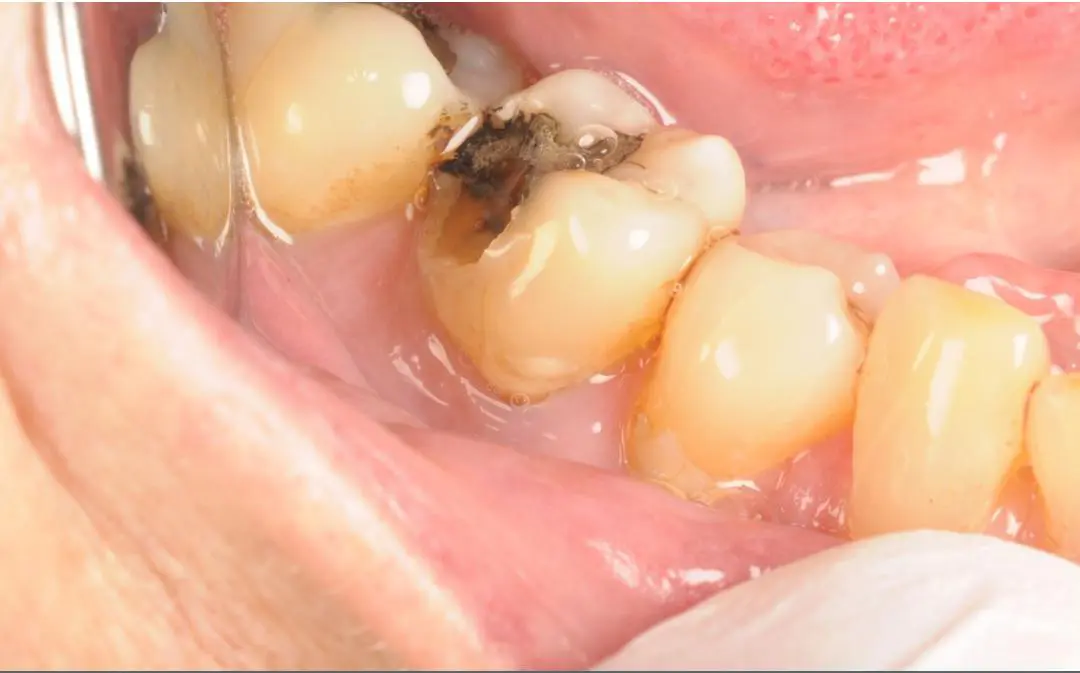
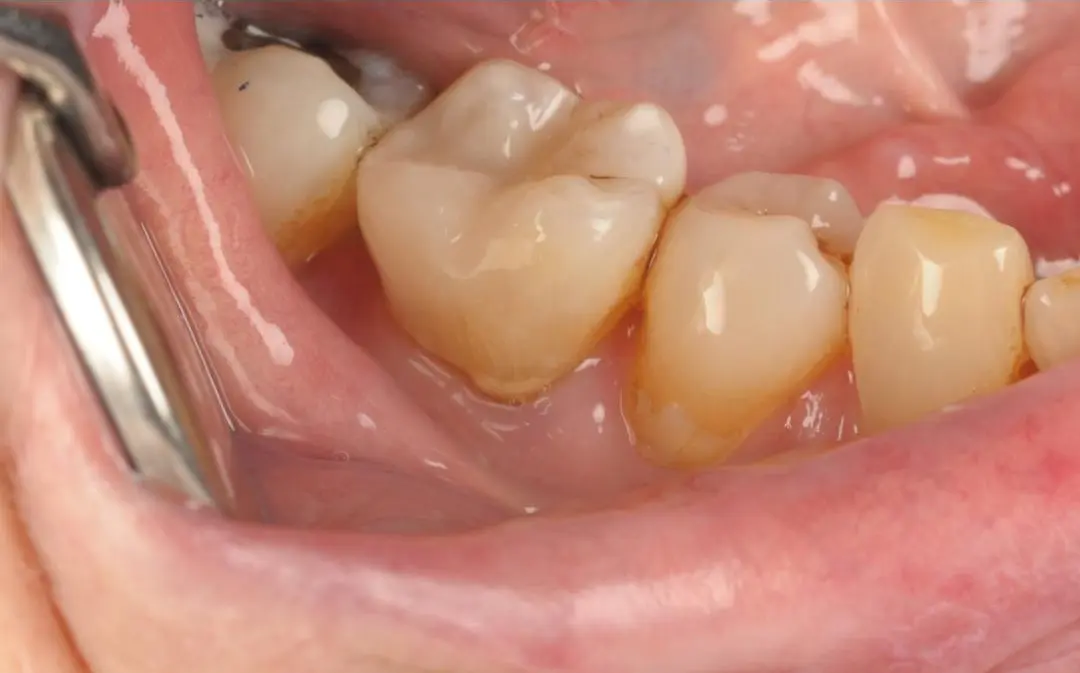
Real Patient Result: Emergency White Filling
Treatment by Dr Kamran
Sensitivity to temperature — Feeling a brief sharp sensation when consuming hot or cold food and drink is very common following a deep filling. This usually diminishes over days to weeks as the tooth settles.
Sensitivity to biting pressure — Some patients notice discomfort when chewing. This can occasionally occur if the filling sits slightly high in the bite. A simple adjustment from your dentist can often resolve this quickly.
Dull, persistent aching — A low-level ache that continues beyond two to three weeks warrants a follow-up dental assessment, as this may suggest the pulp has not settled as expected.
Throbbing or spontaneous pain — Pain that occurs without any obvious trigger, particularly if it is severe or wakes you during the night, should be assessed by a dental professional without delay.
When Professional Dental Assessment May Be Needed
Most mild sensitivity following a deep filling will resolve naturally within a few days to a few weeks. However, there are circumstances where seeking a dental assessment sooner would be advisable.
You may wish to contact a dental professional if you experience:
- Pain that becomes progressively worse rather than better over time
- Sensitivity that persists beyond three to four weeks
- Spontaneous pain with no clear trigger
- Swelling in the gum near the treated tooth
- A feeling of pressure or fullness around the tooth
- Visible changes such as darkening of the tooth or a pimple-like swelling on the gum
These symptoms do not necessarily indicate a serious complication, but they do suggest that a clinical review would be appropriate. If you are in the London area and concerned about pain following a recent filling, our emergency dental appointments are available to assess your situation promptly.
Treatment suitability always depends on individual clinical assessment. What may be normal for one patient may require further investigation in another.
Could the Filling Need Further Treatment?
In some cases, post-filling pain may indicate that additional treatment is required. If the dental pulp has been affected beyond its capacity to recover — due to the extent of original decay or existing damage — a root canal treatment may be recommended.
Root canal treatment involves carefully removing the affected pulp tissue, cleaning the internal canal system, and sealing the tooth to prevent further infection. Despite its reputation, the procedure is typically carried out under local anaesthesia and is intended to relieve pain rather than cause it.
Your dentist will only recommend further treatment following a thorough examination, which may include dental X-rays to assess the condition of the pulp and surrounding bone. You can learn more about what this process involves by reading about root canal treatment on our website.
Prevention and Oral Health Advice
While it is not always possible to prevent the need for deep fillings, several practical steps can help maintain good oral health and reduce the likelihood of decay progressing to this stage:
- Brush twice daily using fluoride toothpaste, taking care to clean along the gumline and between teeth
- Floss or use interdental brushes daily to remove plaque from areas a toothbrush cannot reach
- Limit sugary and acidic foods and drinks, particularly between meals when saliva flow is lower
- Attend regular dental check-ups — early detection of small cavities can prevent them from developing into deep decay requiring more complex treatment
- Discuss fissure sealants or fluoride treatments with your dentist if you are at higher risk of decay
Preventative dentistry is far more straightforward than restorative dentistry. Addressing small problems early helps to avoid the discomfort and additional treatment that can follow when decay is left untreated.
Key Points to Remember
- Tooth pain after a deep filling is common and often temporary due to inflammation near the dental pulp
- Mild sensitivity to temperature or pressure typically settles within a few days to several weeks
- Reversible pulpitis is the most frequent explanation for short-term post-filling discomfort
- Pain that worsens, becomes spontaneous, or is accompanied by swelling should prompt a dental review
- In some cases, additional treatment such as root canal therapy may be clinically recommended
- Good oral hygiene and regular check-ups remain the most effective way to prevent deep decay
Frequently Asked Questions
How long should tooth pain last after a deep filling?
Mild sensitivity or discomfort following a deep filling is generally considered normal for the first few days to two weeks. In some cases, particularly where the filling was very close to the nerve, sensitivity may persist for up to four weeks. If pain does not gradually improve within this timeframe, or if it worsens at any point, a dental review is advisable. A clinical assessment will help identify whether any further treatment is needed.
Is it normal to have throbbing pain after a filling?
A mild, occasional ache can be normal in the short term following a deep filling. However, a persistent throbbing sensation — especially one that occurs without any trigger, worsens over time, or disrupts sleep — is not something that should be left unassessed. Throbbing pain can suggest that the pulp is under significant stress or that an inflammatory or infective process may be occurring. Contact your dental practice for guidance.
Can a filling be too deep and damage the nerve?
During the placement of a deep filling, the nerve can be affected even when the dentist has taken every appropriate clinical precaution. This is because the decay itself may have already compromised the pulp before treatment began. In such cases, the pulp may not be able to recover fully, which can result in ongoing discomfort. This is one reason why early treatment of cavities — before they become deep — is always preferable from a clinical and patient comfort perspective.
What is pulpitis and can it resolve on its own?
Pulpitis is inflammation of the dental pulp — the inner nerve-containing tissue of the tooth. Reversible pulpitis, which often follows deep dental work, typically resolves on its own as inflammation subsides. Irreversible pulpitis, however, does not resolve without intervention and may progress to infection if left untreated. The distinction between the two forms requires clinical examination and cannot be determined from symptoms alone.
Should I take painkillers for tooth pain after a filling?
Over-the-counter pain relief such as ibuprofen or paracetamol (used as directed on the packaging and in accordance with any contraindications relevant to your health) may help manage mild discomfort in the short term. However, pain relief should not be used as a substitute for dental assessment if symptoms persist or worsen. If you are unsure which medication is appropriate for you, consult a pharmacist or your GP.
When should I call an emergency dentist?
You should contact an emergency dental service if you experience severe or rapidly worsening pain, significant facial swelling, difficulty swallowing or breathing, or a high temperature alongside dental symptoms. These may indicate a spreading dental infection that requires prompt clinical attention. Our emergency dental service in London is available to assess urgent dental concerns.
Conclusion
Experiencing tooth pain after a deep filling is a common concern that understandably causes worry. In the majority of cases, discomfort is temporary and reflects a normal biological response to treatment carried out in close proximity to the dental pulp. Sensitivity to temperature and mild aching often resolve within a few days to a few weeks.
However, not all post-filling pain is the same. Pain that persists, worsens, or is accompanied by other symptoms such as swelling or spontaneous aching warrants professional dental evaluation. Identifying the cause early allows for the most straightforward management pathway.
Maintaining good oral hygiene, attending regular check-ups, and seeking early treatment for dental concerns all contribute meaningfully to long-term oral health.
Dental symptoms and treatment options should always be assessed individually during a clinical examination.
Disclaimer: This article is intended for general educational purposes only and does not constitute personalised dental advice. Individual diagnosis and treatment recommendations require a clinical examination by a qualified dental professional.
Next Review Due: 16 October 2027