
One of the most unsettling sensations you can experience is running your tongue or cheek across a tooth and noticing something does not feel quite right. A rough, jagged, or sharp edge where a smooth tooth surface once sat is a common reason people search online for dental information — often late at night, after biting down on something hard or noticing the change unexpectedly.
A broken tooth causing a rough feeling against the cheek is not simply a cosmetic inconvenience. It can indicate structural tooth damage that, left unaddressed, may affect your oral health more broadly. Understanding why this sensation occurs, what is happening inside and around your tooth, and when it is appropriate to seek professional dental assessment can help you make informed decisions about your dental care.
This article explains the dental science behind broken teeth, why the rough sensation occurs, and what practical steps you may consider taking to protect your oral health.
Experiencing these symptoms?
Delaying treatment can lead to tooth loss. We have slots available today.
Featured Snippet: Why Does a Broken Tooth Feel Rough Against the Cheek?
A broken tooth causes a rough feeling because the smooth outer layer of enamel has fractured, exposing uneven, jagged edges. These sharp or irregular surfaces make direct contact with the soft tissue of the inner cheek as you speak or chew, creating a noticeable rough sensation. The degree of roughness depends on how the tooth has broken.
What Actually Happens When a Tooth Breaks?
Teeth are remarkably strong structures, but they are not indestructible. When a tooth breaks, the outer shell of hard enamel fractures, creating a new surface that is rarely smooth. Enamel, the hardest biological material in the human body, has a crystalline structure. When it shatters under pressure — whether from biting something hard, a facial injury, tooth decay weakening the internal structure, or general wear — the fracture line creates an uneven, often razor-sharp margin.
Unlike bone, tooth enamel cannot regenerate or repair itself. Once the surface is broken, the damaged edge remains until treated by a dental professional. Depending on how the tooth has broken, the rough edge may be:
Meet Dr. Yasha Shirazi
Principal Dentist at Emergency Dentist London
"We treat hundreds of dental emergencies every month. The sooner you come in, the easier the fix usually is."
Book an appointment with our team →- Superficial — a minor chip affecting only the enamel surface
- Moderate — a break extending into the dentine layer beneath enamel
- Significant — a fracture that may reach the inner pulp tissue
Each of these levels of damage produces a distinct rough edge that can irritate the soft, delicate lining of the inner cheek, particularly during everyday activities such as eating, speaking, or simply resting the cheek against the teeth.
Why Does the Cheek Feel the Roughness So Acutely?
The inner lining of your cheeks — known as the buccal mucosa — is composed of soft, moist tissue that is sensitive to texture and pressure. Under normal circumstances, your cheek rests gently against smoothly contoured tooth surfaces. This is by anatomical design, and the natural curves of healthy teeth are shaped to avoid cheek trauma.
When a tooth breaks, the newly created edge is often angular or pointed. Because the inner cheek moves constantly — during swallowing, speaking, and chewing — it repeatedly makes contact with this irregular surface. Over time, this friction can cause:
- Localised irritation or soreness of the cheek tissue
- Minor abrasions on the inner cheek lining
- A persistent awareness or tenderness in the area
This is why even a relatively small chip can feel disproportionately significant — the sensitivity of the cheek tissue amplifies awareness of any surface irregularity.
If you have noticed an irritating rough sensation, a dental emergency assessment may help identify the extent of the damage and appropriate next steps.
The Dental Science Behind Tooth Fractures
To understand why broken teeth feel the way they do, it helps to understand basic tooth anatomy. Each tooth is made up of several layers:
- Enamel — the outermost, hardest layer that gives the tooth its smooth, protective surface
- Dentine — the layer beneath enamel, slightly softer and more porous, containing microscopic tubules
- Pulp — the innermost living tissue containing nerves and blood vessels
- Cementum — the layer covering the tooth root
When enamel fractures, the smooth outer shell is compromised. If the fracture extends into the dentine, the porous nature of that layer can lead to increased sensitivity to temperature and pressure. The tubules within dentine communicate with the pulp, which is why deeper fractures may produce sharper discomfort.
This is why a broken tooth is rarely just a surface issue — the depth of the break determines the complexity of any treatment that may be appropriate following a proper clinical examination.
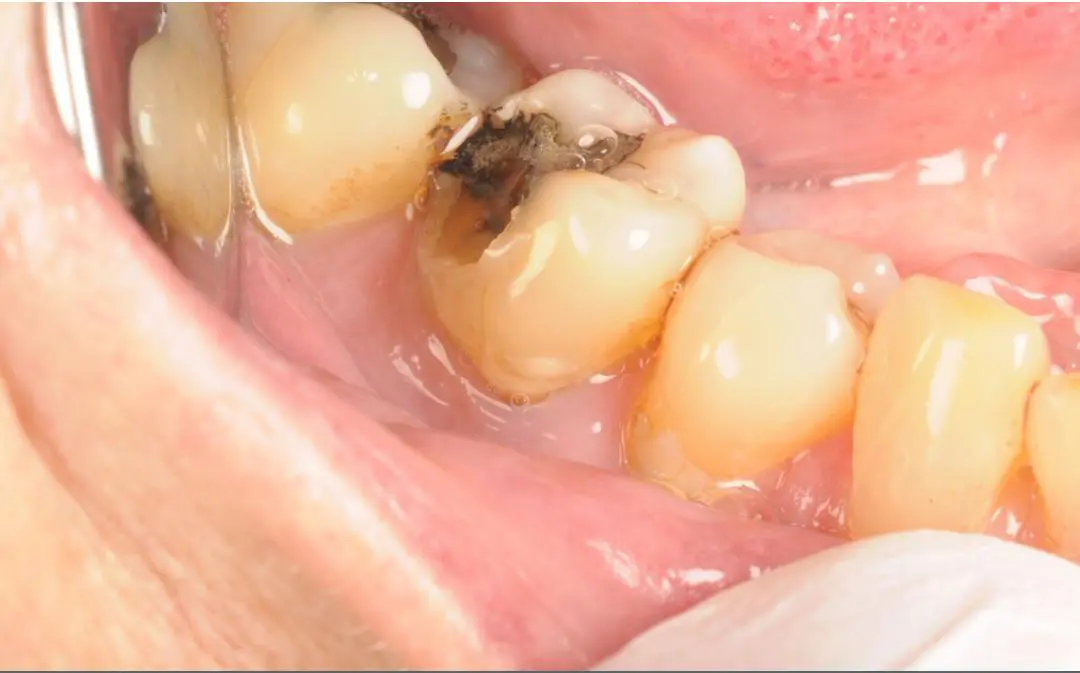
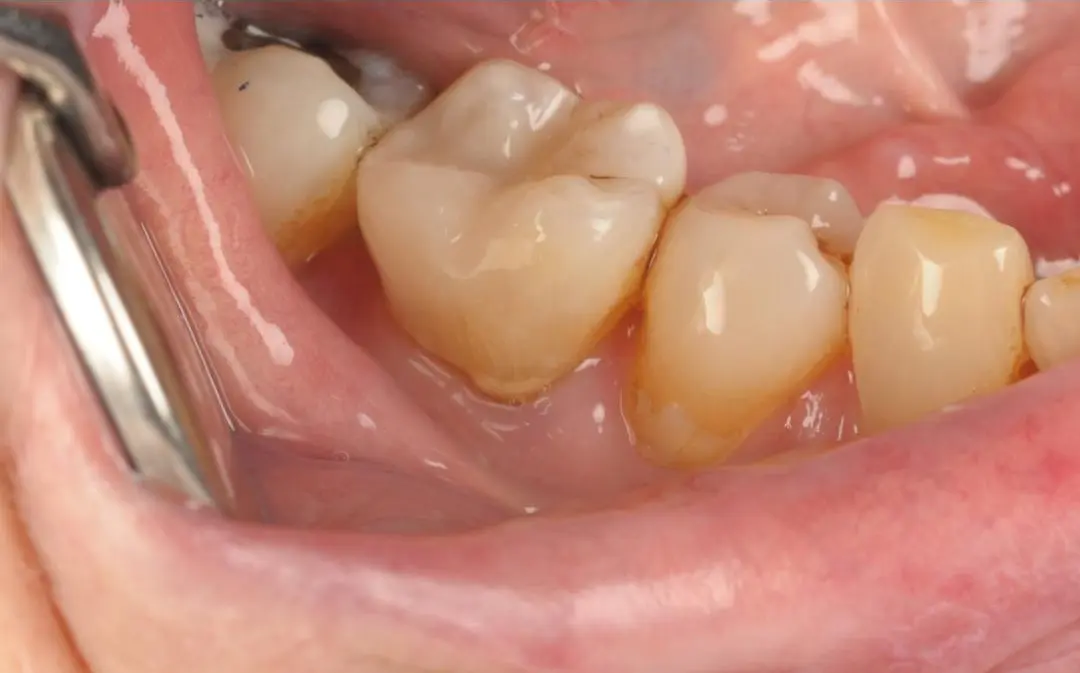
Real Patient Result: Emergency White Filling
Treatment by Dr Kamran
Common Causes of Broken Teeth in Adults
Broken teeth can occur for a variety of reasons, and understanding the common causes may help you reduce your personal risk:
- Biting hard foods — crusty bread, ice, hard sweets, or bones can exert unexpected force
- Tooth decay — cavities weaken internal tooth structure, making fractures more likely
- Old or large fillings — heavily restored teeth may be more susceptible to fracture under pressure
- Teeth grinding (bruxism) — habitual grinding places repeated stress on tooth enamel
- Facial trauma — accidents, falls, or sports injuries can result in tooth fractures
- Age-related wear — enamel naturally thins over time, increasing vulnerability
Understanding your risk factors may be worth discussing with your dentist during a routine examination.
When a Broken Tooth May Require Professional Assessment
Not every broken tooth constitutes a dental emergency, but certain symptoms suggest that professional evaluation would be appropriate sooner rather than later. You may wish to seek dental advice if you notice:
- Persistent sharp pain when biting, chewing, or applying pressure to the tooth
- Sensitivity to hot or cold temperatures that lingers after the stimulus is removed
- Swelling or tenderness in the gum tissue around the broken tooth
- Visible darkening of the tooth, which may suggest internal damage
- Repeated cheek ulceration caused by the rough edge of the broken tooth
- A loose fragment of tooth that has partially separated
These signs do not necessarily indicate a serious condition, but they do suggest that prompt dental assessment would be worthwhile. A qualified dental professional can examine the tooth, assess its structural integrity, and discuss appropriate options based on your individual circumstances.
For patients in London experiencing sudden tooth damage, information about emergency dental treatment options is available to help guide your next steps.
Treatment Approaches That May Be Considered
The management of a broken tooth depends entirely on the nature, extent, and location of the fracture, as well as the overall health of the tooth. Treatment suitability is always determined through clinical examination, and outcomes vary between individuals. Approaches a dentist might consider include:
- Smoothing and polishing — for minor chips, carefully rounding the rough edge may resolve the cheek irritation
- Composite bonding — tooth-coloured resin can be shaped to restore the contour of a chipped or broken tooth
- Dental crown — where significant structural damage has occurred, a crown may be recommended to protect and restore the tooth
- Root canal treatment — if the fracture has affected the inner pulp tissue, further intervention may be considered
- Extraction — in cases where the tooth cannot be reliably restored, removal may be discussed alongside replacement options
No specific outcome can be guaranteed, and all treatment decisions should be made collaboratively between patient and clinician following thorough assessment.
Prevention and Oral Health Advice
While not every tooth fracture can be anticipated, there are practical steps you can take to support the long-term health of your teeth:
- Attend regular dental check-ups — routine examinations allow your dentist to identify areas of weakness before fractures occur
- Wear a mouthguard during contact sports — custom-fitted mouthguards offer effective protection
- Discuss bruxism with your dentist — if you grind your teeth, an occlusal splint worn at night may help reduce enamel wear
- Avoid using teeth as tools — opening packaging or biting nails places unnecessary stress on tooth structure
- Maintain a balanced diet — reducing acidic and sugary foods helps preserve enamel strength
- Stay hydrated — saliva plays an important protective role, and adequate hydration supports healthy saliva production
Learning about preventative dental care can help you make informed choices about protecting your oral health long term.
Key Points to Remember
- A broken tooth causes a rough feeling because fractured enamel creates jagged, irregular edges that make contact with the sensitive inner cheek lining
- Enamel cannot self-repair, so the rough edge will persist until professionally treated
- The depth of the fracture determines the complexity of symptoms — deeper breaks may affect dentine or pulp
- Common causes include biting hard foods, tooth decay, grinding, and trauma
- Persistent pain, sensitivity, or cheek irritation following a tooth fracture are reasonable reasons to seek professional dental assessment
- Treatment options range from minor smoothing to more involved restorative procedures, depending on individual clinical findings
Frequently Asked Questions
Is a rough feeling from a broken tooth always a dental emergency?
Not always. A minor chip that has created a slightly rough edge but causes no pain or sensitivity may not require immediate emergency attention, though it should be assessed in due course to prevent further damage or cheek irritation. However, if you are experiencing significant pain, visible swelling, or a large fragment of tooth has broken away, it would be appropriate to seek prompt dental assessment. A qualified dentist can advise on urgency based on your specific symptoms and circumstances.
Can a broken tooth irritate or cut the inside of my cheek?
Yes. The sharp or jagged edge left by a broken tooth can repeatedly contact the soft tissue of the inner cheek during everyday movements such as speaking and chewing. Over time, this may cause localised soreness, minor abrasions, or small ulcers on the cheek lining. While these are generally not serious, persistent cheek ulceration warrants dental attention both to smooth the tooth surface and to ensure the tissue heals appropriately. A dentist can assess whether the edge needs to be rounded or the tooth restored.
Will the rough feeling go away on its own?
The rough sensation caused by a broken tooth will not resolve without treatment, because enamel does not regenerate. The fractured edge remains in its damaged state until a dental professional smooths, bonds, or restores the tooth surface. In some cases, very minor chips may feel slightly less sharp over time as the edge naturally wears, but this process is unpredictable and does not address any underlying structural concern. Professional assessment remains the most reliable way to manage the issue appropriately.
How long can I leave a broken tooth before seeing a dentist?
This depends on the severity of the break and any associated symptoms. A small chip causing minimal discomfort may allow a little more flexibility in timing, though delaying assessment can allow further fracture or decay to develop. A break accompanied by pain, sensitivity, swelling, or significant structural loss should be assessed as soon as reasonably possible. Treatment is generally more straightforward when addressed promptly. Your dental team can advise on urgency when you contact them to describe your symptoms.
Can a broken tooth affect surrounding teeth or soft tissues?
Over time, an untreated broken tooth may create ongoing friction against the cheek or tongue, leading to repeated soft tissue irritation. Additionally, a weakened tooth may be more susceptible to further fracture under biting pressure, and exposed dentine may increase sensitivity or vulnerability to decay. Adjacent teeth may also experience altered bite forces if the broken tooth changes the way you chew. These are reasons why clinical assessment and appropriate management are generally recommended rather than monitoring indefinitely without intervention.
What should I do immediately after noticing a broken tooth?
If you notice a broken tooth, try to avoid placing excessive pressure on that area while eating. Rinsing gently with warm water can help keep the area clean. If there is a sharp edge causing cheek irritation, dental wax (available from most pharmacies) may provide temporary comfort by covering the rough surface. Avoid attempting to file or alter the tooth yourself. Contact your dental practice to arrange an assessment at the earliest appropriate opportunity, or seek emergency dental care if you are experiencing significant pain or swelling.
Conclusion
A broken tooth causing a rough feeling against the cheek is a common dental concern that arises because fractured enamel creates irregular, jagged surfaces in direct contact with sensitive cheek tissue. Understanding the anatomy behind the sensation — and why the cheek perceives it so acutely — helps explain why even a small chip can feel so noticeable.
The primary keyword here is clear: a broken tooth causing a rough feeling is not simply a textural nuisance. It reflects an underlying change in tooth structure that may benefit from professional evaluation, particularly when accompanied by pain, sensitivity, or recurring cheek irritation.
Attending for dental assessment allows a qualified clinician to examine the tooth, determine the extent of any damage, and discuss appropriate options tailored to your individual needs. Dental symptoms and treatment options should always be assessed individually during a clinical examination.
If you are experiencing any of the symptoms described in this article, seeking professional dental guidance at the earliest appropriate opportunity is always the recommended course of action.
Disclaimer: This article is intended for general educational purposes only and does not constitute personalised dental advice. Individual diagnosis and treatment recommendations require a clinical examination by a qualified dental professional.
Next Review Due: 22 October 2027