
Many people who notice swelling, discomfort, or an unusual lump near a tooth or in the gum naturally turn to the internet for answers. Two terms that frequently appear in these searches are dental abscess and dental cyst — and understandably, they can be easy to confuse. Both involve abnormal tissue changes in or around the mouth, and both may cause similar initial symptoms.
Understanding the difference between a dental abscess and a cyst matters because the underlying causes, progression, and clinical management of each condition are quite distinct. Treating one as the other — or dismissing either without professional assessment — may lead to delays in appropriate care.
This article explains what each condition involves, how they differ in terms of origin and behaviour, what signs and symptoms may be associated with each, and when it would be sensible to speak with a dental professional. If you are currently experiencing pain, swelling, or any concerning oral symptoms, a clinical examination is always the most appropriate next step.
Experiencing these symptoms?
Delaying treatment can lead to tooth loss. We have slots available today.
What Is the Difference Between a Dental Abscess and a Cyst?
A dental abscess is an acute infection caused by bacteria, typically producing pus and presenting with pain, swelling, and sometimes fever. A dental cyst is a slower-developing, fluid-filled sac that forms in the jawbone or soft tissue. While both involve abnormal collections near the teeth, their causes, development, and clinical management differ significantly.
What Is a Dental Abscess?
A dental abscess is a collection of pus caused by a bacterial infection. It can develop in different areas of the mouth, most commonly at the root tip of a tooth (periapical abscess) or within the gum tissue alongside a tooth (periodontal abscess).
Abscesses typically develop rapidly and are often associated with noticeable symptoms. They are generally triggered by untreated tooth decay, a cracked tooth, or advanced gum disease that allows bacteria to enter the deeper structures of the tooth or surrounding tissues.
Meet Dr. Yasha Shirazi
Principal Dentist at Emergency Dentist London
"We treat hundreds of dental emergencies every month. The sooner you come in, the easier the fix usually is."
Book an appointment with our team →The infection process can be quite acute — the body responds to the bacterial invasion by sending white blood cells to the area, which results in the formation of pus. If left without clinical attention, the infection may spread beyond the immediate site, which is why early professional assessment is important. Prompt dental abscess treatment can help address the infection before it progresses further.
Common signs that may indicate a dental abscess include:
- Throbbing or persistent toothache
- Swelling of the face, cheek, or jaw
- Sensitivity to hot or cold temperatures
- Pain when chewing or biting
- A foul taste or bad breath
- Swollen lymph nodes in the neck
- Occasionally, a fever
If you are experiencing severe swelling, difficulty swallowing, or difficulty breathing, you should seek urgent dental or medical attention promptly.
What Is a Dental Cyst?
A dental cyst is a pathological cavity — typically a fluid-filled or semi-solid sac — that develops within the jawbone or, less commonly, in the soft tissues of the mouth. Unlike an abscess, cysts tend to grow slowly and may remain entirely symptom-free for an extended period.
There are several types of dental cysts. One of the most common is the radicular cyst (also known as a periapical cyst), which forms at the root tip of a tooth that has become non-vital, usually as a result of untreated infection or decay. Another frequently encountered type is the dentigerous cyst, which develops around the crown of an unerupted tooth — most often a wisdom tooth.
Because cysts grow gradually, they may be discovered incidentally on a dental X-ray taken for another purpose. However, as they enlarge, they can place pressure on adjacent teeth and bone, potentially causing:
- Mild, intermittent discomfort or pressure
- Gradual swelling in the jaw
- Displacement of neighbouring teeth
- Visible changes to the jaw's outline in more advanced cases
It is important to note that the definitive identification of a cyst type requires radiographic imaging and, in some cases, laboratory analysis of the tissue.
The Underlying Dental Science: How Each Condition Develops
To understand why these two conditions behave so differently, it helps to consider what is happening at a cellular level.
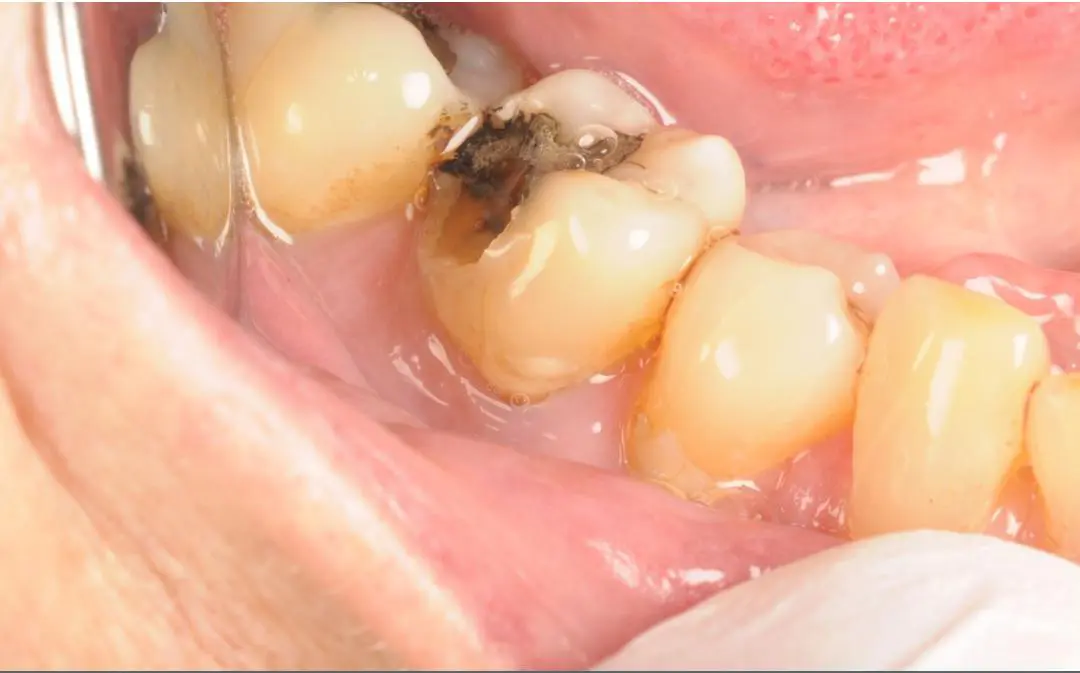
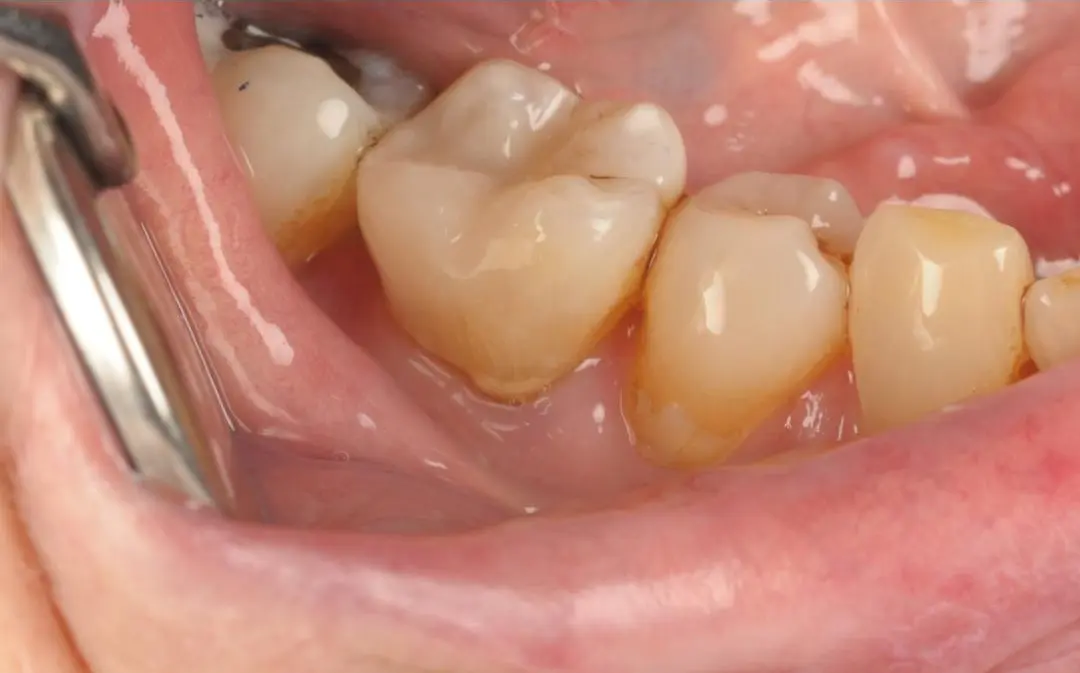
Real Patient Result: Emergency White Filling
Treatment by Dr Kamran
A dental abscess begins with bacterial invasion. When decay penetrates through the enamel and dentine and reaches the pulp — the soft inner tissue of the tooth containing nerves and blood vessels — bacteria multiply rapidly in an environment with limited immune defences. The resulting infection triggers an acute inflammatory response. Pus accumulates as the immune system attempts to contain the bacteria, and this can build up pressure quickly, explaining the intense and often sudden pain associated with abscesses.
A dental cyst, by contrast, develops through a much slower biological process. Most cysts originate from remnants of dental tissue that become stimulated — often by low-grade, chronic inflammation or by the presence of an unerupted tooth. The epithelial cells lining the cyst wall gradually proliferate, and fluid accumulates within the sac over months or even years. This slow growth means the surrounding bone often remodels quietly around the cyst, which is why patients may be entirely unaware of its presence until it is identified on imaging.
Understanding this distinction reinforces why professional dental assessment — including appropriate X-rays — is essential for accurate identification and appropriate management.
When to Seek Professional Dental Advice
Certain symptoms and situations warrant prompt attention from a dental professional. While this article is not intended to assist in self-diagnosis, the following signs are worth discussing with a dentist:
- Persistent or worsening dental pain that does not resolve within a day or two
- Facial swelling, particularly if it appears rapidly or is increasing in size
- A lump or swelling in the jaw that you notice over time, even if it is painless
- Teeth that feel loose without an obvious explanation
- Recurring bad taste or bad breath despite good oral hygiene
- A tooth that has changed colour or feels different when biting
- Swollen lymph nodes in the neck or jaw area
If a dentist suspects either a dental abscess or a cyst, they will typically take dental X-rays to assess the area. In some cases, a cone beam CT scan may be recommended for a more detailed view of the jawbone. For cysts, a biopsy of the tissue may be required to confirm the diagnosis and type.
You can read more about emergency dental services in London if you are experiencing acute dental pain or swelling and need prompt assessment.
Treatment Approaches: How Are They Managed?
It is important to understand that treatment for either condition depends entirely on a clinical assessment of the individual patient — no two cases are the same.
Dental abscess treatment may involve:
- Root canal treatment to remove the infected pulp tissue and disinfect the root canal system, allowing the tooth to be preserved where clinically appropriate
- Dental extraction if the tooth cannot be saved
- Drainage of the abscess to relieve pressure and remove the pus
- Antibiotics may be prescribed where there is evidence of spreading infection, though they are generally used alongside — not instead of — dental treatment
Dental cyst treatment may involve:
- Enucleation — the surgical removal of the entire cyst lining
- Marsupialisation — a procedure to decompress larger cysts by creating a small opening, allowing the cyst to shrink gradually before possible further treatment
- Root canal treatment for cysts associated with a non-vital tooth, which may allow the cyst to resolve over time
- Monitoring in select cases where the cyst is small and inactive, with regular radiographic review
Treatment suitability is always determined on an individual basis following clinical examination and appropriate imaging. You can learn more about root canal treatment as one potential option in managing tooth-related infections.
Prevention and Oral Health Advice
While not all dental cysts or abscesses can be prevented, there are a number of practical steps that may reduce your risk of developing the underlying conditions that lead to them:
- Attend regular dental check-ups — routine examinations allow dentists to identify early signs of decay, infection, or unusual tissue changes, often before symptoms develop
- Maintain a consistent oral hygiene routine — brushing twice daily with a fluoride toothpaste and cleaning between teeth daily with floss or interdental brushes helps to reduce the bacterial load in the mouth
- Address tooth decay promptly — early-stage decay is far simpler to manage than advanced infection; avoiding delays in treatment significantly reduces the risk of abscess formation
- Have wisdom teeth monitored — if your dentist has identified unerupted or partially erupted wisdom teeth, regular monitoring can help identify any associated cyst formation at an early stage
- Do not ignore discomfort — mild, intermittent dental discomfort can sometimes be an early indicator of a developing problem; seeking advice sooner rather than later is generally beneficial
If you have already had root canal treatment and are concerned about recurring symptoms, our article on whether a dental abscess can return after root canal treatment may help you make informed decisions about your dental routine.
Key Points to Remember
- A dental abscess is an acute bacterial infection producing pus, typically associated with pain and rapid swelling.
- A dental cyst is a slowly developing, fluid-filled sac that may be entirely painless for a significant period.
- Both conditions originate in different ways and require different clinical approaches.
- Neither condition can be reliably diagnosed without a clinical examination and appropriate dental imaging.
- Early professional assessment is beneficial for both conditions — delaying attention may allow either to progress.
- Good oral hygiene, regular check-ups, and prompt management of tooth decay are practical steps that support oral health.
Frequently Asked Questions
Can a dental abscess turn into a cyst?
A dental abscess and a dental cyst are distinct conditions, though chronic, low-grade infection near a tooth's root tip can contribute to the development of a radicular cyst over time. This is not an automatic progression — it is a gradual biological process associated with prolonged inflammation. This is one reason why prompt treatment of dental infections is encouraged. A dentist can assess whether infection has led to any associated tissue changes through clinical examination and X-rays.
Is a dental cyst dangerous?
Most dental cysts are benign and grow slowly, but they are not without potential complications. Over time, an untreated cyst may expand and resorb surrounding bone, affect adjacent teeth, or, in rare cases, become infected. In very rare instances, certain types of cysts may undergo changes that require further investigation. Early identification and appropriate clinical management significantly reduce the risk of complications. Any suspected cyst should be assessed professionally.
How is a dental abscess diagnosed?
A dental abscess is typically diagnosed through a combination of clinical examination and dental X-rays. A dentist will assess the affected tooth and surrounding tissues, check for tenderness, and examine X-ray images to identify infection at the root tip or in the surrounding bone. In some cases, additional imaging such as a cone beam CT scan may be recommended for a more detailed assessment. Diagnosis always requires a professional examination — it cannot be confirmed through symptoms alone.
Can a dental cyst go away on its own?
Dental cysts do not typically resolve without clinical intervention. However, small cysts associated with a non-vital tooth may show signs of healing following successful root canal treatment, which is reviewed through follow-up X-rays over time. The appropriate management approach depends entirely on the type, size, and location of the cyst, as well as the individual clinical circumstances. Any suspected cyst should be assessed by a dentist who can recommend a suitable management plan.
What does a dental abscess feel like?
A dental abscess is often described as a persistent, throbbing pain around the affected tooth that may intensify when biting or chewing. The area may feel tender to touch, and swelling of the gum, cheek, or jaw may be noticeable. Some patients experience sensitivity to temperature changes. In more significant cases, patients may feel generally unwell. It is important to note that symptoms vary between individuals, and a dental professional should assess any suspected abscess.
Are dental cysts painful?
Dental cysts are often entirely painless in their early stages and may be discovered only through routine dental X-rays. As a cyst grows, some patients may notice a vague sense of pressure or mild intermittent discomfort in the area. If a cyst becomes infected, more noticeable symptoms — including pain and swelling — may develop. The absence of pain does not mean a cyst is of no clinical significance; it is still important to seek professional assessment if a cyst is suspected or identified.
Conclusion
Understanding the difference between a dental abscess and a cyst is genuinely useful for anyone who has noticed unusual oral symptoms or is simply seeking to be better informed about their dental health. While both conditions involve abnormal changes in or around the teeth and jaw, they differ meaningfully in their causes, development, presentation, and clinical management.
A dental abscess tends to develop acutely and is driven by bacterial infection, often presenting with noticeable pain and swelling. A dental cyst, by contrast, is a slower-growing fluid-filled sac that may be entirely symptom-free until identified on an X-ray — or until it has grown large enough to cause structural changes.
Neither condition should be self-diagnosed or left unmonitored. If you have concerns about any oral symptoms — whether a persistent toothache, an area of swelling, or something your dentist has identified on imaging — professional dental advice is always the appropriate course of action.
Dental symptoms and treatment options should always be assessed individually during a clinical examination.
Disclaimer: This article is for general educational purposes only and does not constitute professional dental advice, diagnosis, or treatment. Every patient's circumstances are unique; dental symptoms and treatment options should always be assessed during a clinical examination by a qualified dental professional. No specific outcomes are guaranteed. This content has been prepared in line with GDC, CQC, ASA CAP Code, and GMC communication standards. If you have concerns about your oral health, please contact a registered dentist.
Next Review Due: 26 August 2027