
A broken molar is one of the more common reasons people seek dental advice online — often because they are hoping to understand whether the situation is truly urgent or something that can wait. Whether the break happened suddenly from biting something hard, or gradually over time, it can be difficult to know how seriously to treat the situation, particularly when the tooth feels manageable day to day.
The reality is that a broken molar left untreated can progress in ways that are not always immediately obvious. Because molars sit at the back of the mouth and bear considerable chewing force, they are particularly vulnerable to further structural deterioration when left without clinical attention.
This article aims to explain, in clear and practical terms, what may happen to a broken molar over time, what symptoms might indicate that assessment is becoming more pressing, and what dental professionals may recommend based on individual clinical circumstances. It is not intended to diagnose your situation, but to help you understand the issue more fully so you can make an informed decision about seeking professional guidance.
Experiencing these symptoms?
Delaying treatment can lead to tooth loss. We have slots available today.
What happens if you leave a broken molar untreated for months?
A broken molar left untreated for months may gradually worsen due to ongoing exposure to bacteria, biting pressure, and moisture. The break can deepen, enamel may further fracture, and the inner tooth structure becomes vulnerable to decay and infection. Over time, what might have been a straightforward restoration could require more complex dental treatment. Early assessment is advisable.
Why Do Molars Break in the First Place?
Molars are the large, flat teeth at the back of the mouth designed to grind and crush food. Because of their position and function, they endure significant force during daily chewing — which also makes them more susceptible to fracturing under certain conditions.
Common reasons molars break include:
Meet Dr. Yasha Shirazi
Principal Dentist at Emergency Dentist London
"We treat hundreds of dental emergencies every month. The sooner you come in, the easier the fix usually is."
Book an appointment with our team →- Biting down on hard foods such as ice, hard sweets, or nuts
- Pre-existing large fillings that have weakened the surrounding tooth structure over time
- Tooth decay that has eroded the enamel and dentine, leaving the tooth structurally compromised
- Trauma to the jaw or face from an accident or impact
- Bruxism (teeth grinding) which places repeated excessive force on the molars during sleep
- Old or failing restorations that allow the tooth to fracture around them
Understanding the cause can help a dental professional determine both the extent of the damage and the most appropriate treatment approach. A clinical examination — including imaging where necessary — is usually required to assess the full picture. Not every fracture happens under obvious force; our guide on why teeth can break without obvious force explains the hidden causes in more detail.
The Anatomy of a Molar: Why Structure Matters
To understand why an untreated broken molar can become more complex over time, it helps to have a basic understanding of tooth anatomy.
Each tooth is made up of several layers:
- Enamel — the hard outer layer that provides the first line of defence against damage and decay
- Dentine — the softer layer beneath the enamel, which contains microscopic tubules connected to the nerve
- Pulp — the innermost chamber containing nerves and blood vessels
- Root canal system — the channels that run through the root and connect the pulp to the surrounding bone
- Periodontal ligament and alveolar bone — the supporting structures that anchor the tooth
When a molar breaks, enamel is the first structure affected. If the fracture is superficial, the dentine may not initially be exposed. However, if the break is deeper or extends over time, the dentine and eventually the pulp can become exposed to oral bacteria. Once bacteria reach the pulp, an inflammatory or infective process may begin — one that does not always announce itself immediately with obvious pain.
This is one reason why some patients delay seeking advice: the tooth may not hurt intensely in the early stages, even as internal changes are progressing.
What May Happen Over Time If a Broken Molar Is Left Untreated
This is the core concern for many patients, and it is a reasonable one. The progression of an untreated broken molar is not entirely predictable — it varies depending on the location and depth of the fracture, whether decay was already present, and individual factors such as oral hygiene and diet. However, several patterns are commonly observed clinically.
Further Fracturing
A tooth that has already broken is structurally weakened. The forces placed on it during chewing can cause the crack or break to extend further. What begins as a chipped cusp may eventually result in a more significant fracture that involves a greater portion of the tooth's structure. In some cases, a tooth may split vertically through the root, which can significantly affect treatment options.
Development of Decay
A broken tooth creates irregular surfaces and often a space where food particles and bacteria can accumulate. If bacteria are not effectively removed through brushing and flossing — which can be more difficult around a broken tooth — decay may develop or accelerate. Decay in dentine progresses more rapidly than in enamel, meaning the window for simpler restorative treatment may narrow over time.
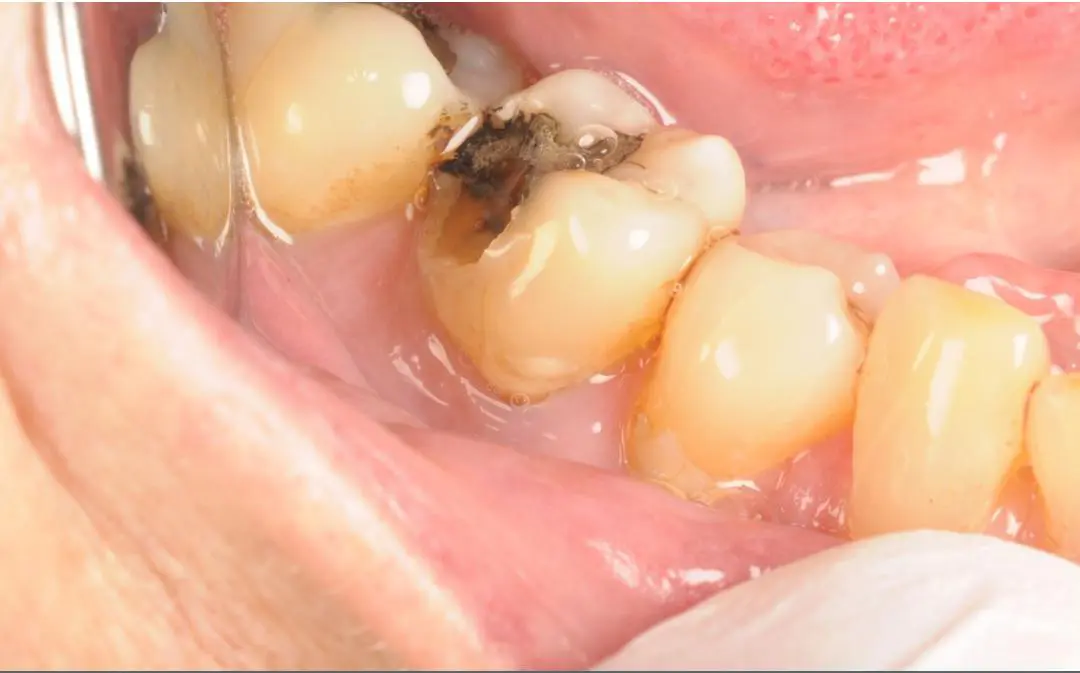
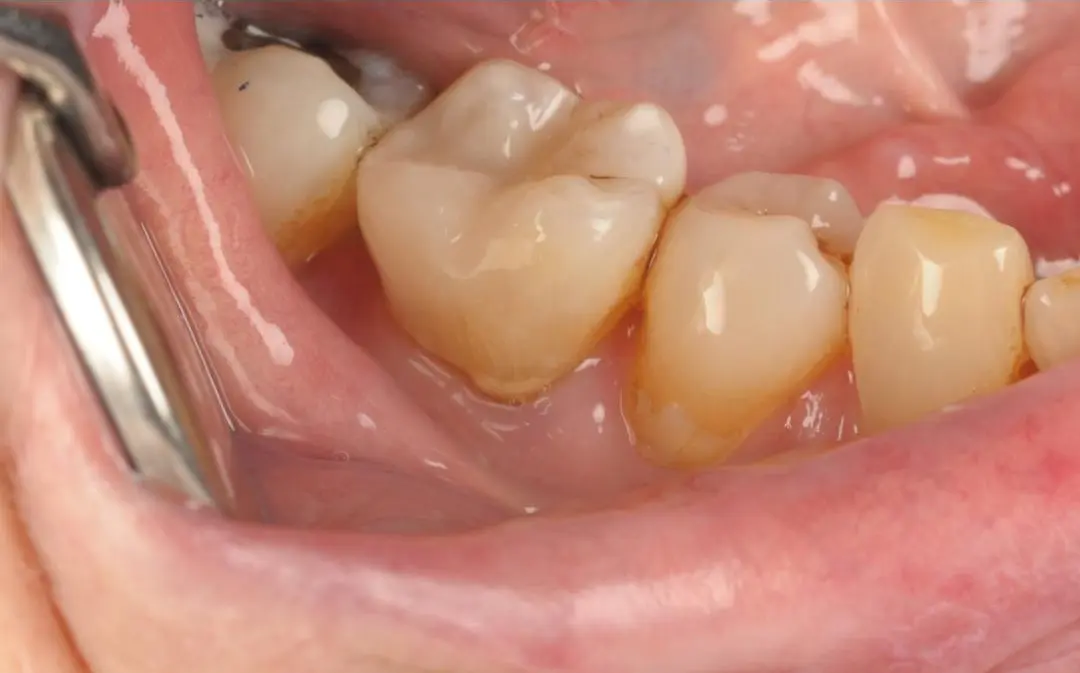
Real Patient Result: Emergency White Filling
Treatment by Dr Kamran
Pulp Inflammation and Infection
If the break reaches the dentine, bacteria and temperature changes may begin to irritate the pulp tissue. Over weeks or months, this can lead to pulpitis — inflammation of the pulp. Some forms of pulpitis are reversible if treated early; others progress to irreversible pulpitis, where the pulp tissue becomes permanently affected, and root canal treatment may become necessary. From there, if left further, the pulp may begin to die (pulp necrosis), potentially leading to a dental abscess.
Abscess Formation
A dental abscess is a collection of infection that can develop at the tip of the root or in the surrounding gum tissue. It is a sign that infection has extended beyond the tooth itself. Symptoms may include persistent or throbbing pain, swelling around the jaw or face, sensitivity to temperature, and in some cases a foul taste in the mouth. An abscess is a situation that warrants prompt dental assessment.
Impact on Surrounding Teeth and Gum Tissue
A broken molar that is not addressed may also affect the adjacent teeth and the gum tissue around it. Food trapping around the damaged tooth can irritate the gums and contribute to localised gum disease. Neighbouring teeth may shift slightly as the structural balance of the bite is disrupted, and over time, bone loss around the tooth may occur.
If you are concerned about any of these developments, exploring emergency dental care options in London may be a helpful first step in understanding what is available to you.
Symptoms That May Suggest Assessment Is Becoming More Important
Not every broken molar causes immediate pain, and this can make it tempting to delay seeking advice. However, there are symptoms that may suggest the situation is progressing and that a professional assessment would be beneficial.
These include:
- Sensitivity to hot or cold that lingers after the temperature stimulus is removed
- Pain when biting or chewing, particularly on the affected side
- Spontaneous toothache or persistent discomfort that is not linked to a specific trigger
- Swelling of the gum, jaw, or cheek near the affected tooth
- A visible crack, chip, or missing section of the tooth that appears to be growing larger
- Foul taste or smell near the area, which can sometimes be associated with infection
- Sensitivity to sweet foods around the broken area
It is worth noting that the absence of pain does not mean the tooth is unaffected. Some patients experience little discomfort even when significant changes are occurring internally. This is why clinical assessment, rather than symptom severity alone, is the most reliable way to understand what is happening.
When to Seek Professional Dental Assessment
If you have a broken molar that has been left untreated, the most important step you can take is to arrange a dental appointment for a clinical examination. The following situations are particularly worth prioritising:
- The tooth is causing persistent or increasing pain
- You notice swelling in the gum, jaw, or face
- You feel unwell alongside dental symptoms (which can occasionally be associated with spreading infection)
- The tooth appears to be breaking further
- You are finding it difficult to chew on that side of your mouth
- It has been several months or more since the break occurred
A dental professional will be able to take relevant X-rays or use other diagnostic tools to assess the extent of the damage and the condition of the pulp and root. From there, they can discuss treatment options that are clinically appropriate for your individual situation.
Watch: Same-Day Emergency Dental Appointments in London
If you are experiencing discomfort from a broken molar and need to be seen promptly, same-day appointments may be available. The video below explains more about emergency dental access in London.
Please note: Any appointment fees referenced in the video above are indicative only. A full treatment plan with associated costs will be provided following your clinical assessment. Fees may vary depending on individual clinical needs and the treatment required.
What Treatment Might Be Considered?
Treatment for a broken molar will depend entirely on the clinical findings during examination. There is no single fixed pathway — the appropriate approach will depend on factors such as the extent of the fracture, whether decay is present, the condition of the pulp and root, and the patient's overall dental health.
Some approaches a dentist may discuss, depending on the clinical assessment, include:
- Dental bonding or composite restoration — for minor chips or breaks where the tooth structure is largely intact and the pulp is unaffected
- Dental crown — where a significant portion of the tooth has been lost but the root is healthy and can support a crown
- Root canal treatment — if the pulp has become inflamed or infected, a root canal procedure may be used to remove the affected tissue and seal the root canals before restoring the tooth with a crown
- Tooth extraction — in cases where the tooth cannot be preserved due to the extent of the fracture, decay, or bone loss, extraction may be the most clinically appropriate option
Each of these options has its own considerations, and a dental professional will be best placed to explain which approach is suitable based on your individual examination. You can learn more about what to expect from tooth restoration and crown treatment through a consultation with a qualified dentist.
Prevention and Oral Health Advice for Molar Health
While not every broken molar can be prevented, there are practical steps that can reduce the risk of fractures and help maintain the health of your back teeth over time.
Protect Teeth From Excessive Force
If you grind or clench your teeth during sleep — a condition known as bruxism — speaking to your dentist about a custom-fitted night guard may help reduce the force placed on your molars. Repeated grinding is a common contributor to molar fractures, particularly in teeth with existing restorations.
Attend Regular Dental Check-ups
Routine dental examinations allow a dentist to identify teeth that may be at risk of fracturing — for example, teeth with large or ageing fillings, early-stage cracks, or weakened enamel — before a break occurs. Early intervention tends to offer more straightforward treatment options.
Maintain Good Oral Hygiene
Brushing twice daily with a fluoride toothpaste and cleaning between teeth with floss or interdental brushes helps protect the enamel and prevent the decay that can weaken a tooth's structure. A dentist or hygienist can offer tailored advice on technique.
Be Mindful of Hard Foods
Avoiding or being cautious with particularly hard foods — such as ice, hard boiled sweets, or unpopped popcorn kernels — can help reduce the risk of unexpected fractures, especially if you already have teeth with fillings or prior restorations.
Address Dental Concerns Promptly
One of the most effective ways to prevent a minor dental issue from becoming a more complex one is to seek advice at an early stage. If you notice a chip, crack, or change in a tooth, arranging an appointment sooner rather than later generally provides more treatment options.
For guidance on maintaining your dental health and accessing routine or emergency care, our broken tooth repair service can provide further information.
Key Points to Remember
- A broken molar left untreated can deteriorate over time due to bacterial exposure, biting forces, and ongoing structural weakening.
- Not all broken molars cause immediate or obvious pain — the absence of severe discomfort does not mean the tooth is stable.
- Over months, an untreated break may lead to deepening decay, pulp inflammation, infection, or abscess formation.
- Treatment options depend entirely on clinical findings — early assessment generally allows for more straightforward restorative approaches.
- Symptoms such as persistent sensitivity, pain on biting, swelling, or spontaneous toothache are worth discussing with a dental professional.
- Regular check-ups, good oral hygiene, and addressing dental changes early are among the most practical ways to protect molar health.
Frequently Asked Questions
Can a broken molar heal on its own?
No — unlike some tissues in the body, tooth enamel and dentine do not regenerate or self-repair once damaged. A broken molar will not heal without clinical intervention. While the tooth may feel manageable in the short term, the structural damage remains and may worsen over time. If a molar has broken, a dental assessment is advisable to understand the extent of the damage and what treatment, if any, may be appropriate. The approach taken will depend on individual clinical findings.
How long can I wait before seeing a dentist about a broken molar?
This depends on the severity of the break and whether symptoms are present. If you are experiencing significant pain, swelling, or signs of infection, it is advisable to seek assessment promptly — same-day or urgent appointments may be available. For a break that is not causing active discomfort, arranging an appointment within a reasonable timeframe rather than waiting several months is generally the more cautious approach, as untreated fractures can progress. A dentist can advise on urgency once they have assessed the tooth.
Is a broken molar always painful?
Not necessarily. Some broken molars cause immediate sensitivity or pain, whilst others may feel relatively asymptomatic, particularly if the fracture is confined to the enamel and has not yet reached the dentine or pulp. However, the absence of pain does not confirm the tooth is unaffected or stable. Internal changes — including early decay or pulp irritation — can occur without causing obvious discomfort in the initial stages. This is one reason clinical assessment is more informative than relying on pain levels alone.
What is the difference between a cracked and a broken molar?
These terms are sometimes used interchangeably, but there are clinical distinctions. A crack may be a fine fracture line that runs through part of the tooth — sometimes invisible to the naked eye — whilst a break or chip refers to a portion of tooth structure that has physically separated or is missing. Both can vary in severity. Cracks can be particularly difficult to identify without specialist assessment and imaging. Both situations benefit from clinical evaluation to determine the appropriate management.
Can a broken molar affect the teeth next to it?
Over time, an untreated broken molar may indirectly affect neighbouring teeth. Food trapping around the damaged tooth can increase bacterial accumulation and the risk of decay in adjacent teeth. If the broken molar is extracted without replacement, neighbouring and opposing teeth may gradually shift in position, affecting the bite. Gum tissue around the area may also be affected by localised irritation or inflammation. These are additional reasons why addressing a broken molar through proper dental assessment is advisable rather than leaving it indefinitely.
Will I need root canal treatment if my molar has been broken for a long time?
Not necessarily — but it depends on the clinical findings at examination. If the fracture has reached the pulp and the pulp has become inflamed or infected over time, root canal treatment may be one of the options a dentist discusses. However, if the pulp remains healthy, other restorative options such as a dental crown may be more appropriate. Treatment is always determined based on individual clinical assessment, and a dentist will explain the options relevant to your specific situation following a thorough examination.
Conclusion
A broken molar is more than an aesthetic concern — it is a structural change to a tooth that plays an important functional role. When left untreated over months, the consequences can range from minor worsening of the fracture to more significant developments such as decay, pulp involvement, or infection. The good news is that when assessed promptly, dental professionals have a range of evidence-informed approaches that may be used to restore or manage the tooth, depending on the individual clinical picture.
If you have a broken molar that has been left untreated — or if you are unsure whether a dental change warrants attention — arranging a clinical examination is the most straightforward and responsible step. A dentist will be able to assess the situation accurately and discuss the options that are appropriate for you.
Dental symptoms and treatment options should always be assessed individually during a clinical examination.
Disclaimer: This article is for general educational purposes only and
does not constitute professional dental advice, diagnosis, or treatment.
Every patient's circumstances are unique; dental symptoms and treatment
options should always be assessed during a clinical examination by a
qualified dental professional. No specific outcomes are guaranteed. This
content has been prepared in line with GDC, CQC, ASA CAP Code, and GMC
communication standards. If you have concerns about your oral health,
please contact a registered dentist.
Next Review Due: 21 August 2027