
Many people are familiar with the idea of a dental abscess — that painful, swollen reaction that signals something is seriously wrong inside a tooth. But what happens when a tooth nerve dies quietly, without producing the dramatic symptoms most people associate with dental infection? This is a question that leads many adults to search online, often puzzled by a tooth that has changed colour, feels different, or has simply stopped hurting after a period of sensitivity.
A dying tooth nerve — clinically referred to as pulp necrosis — does not always announce itself loudly. In some cases, the process unfolds gradually and with minimal discomfort, leaving patients unaware that a significant change is occurring within the tooth structure. Understanding what a dead tooth nerve means, why it happens, and what it may mean for your long-term oral health is important, even when no abscess is present. This article explores the topic in straightforward, clinically responsible terms and explains when a professional dental assessment may be appropriate.
Featured Snippet: What Happens If a Tooth Nerve Dies Without Causing an Abscess?
When a tooth nerve dies without causing an abscess, the pulp tissue inside the tooth gradually breaks down. The tooth may discolour, becoming grey or yellow, and sensitivity often disappears. Though pain may reduce, the dead tissue can remain susceptible to bacterial infection over time, making professional dental evaluation important even in the absence of obvious symptoms.
Experiencing these symptoms?
Delaying treatment can lead to tooth loss. We have slots available today.
Understanding Tooth Nerve Death: What Is Pulp Necrosis?
To understand what happens when a tooth nerve dies, it helps to know a little about tooth anatomy. Each tooth contains a central chamber called the pulp, which houses nerves, blood vessels, and connective tissue. This living tissue keeps the tooth nourished and sensitive to temperature and pressure.
Pulp necrosis occurs when this tissue dies, usually as a result of trauma, deep decay, or repeated dental procedures on the same tooth. When the blood supply to the pulp is disrupted or infection advances into the pulp chamber, the tissue breaks down irreversibly.
Importantly, pulp necrosis does not always lead immediately to an abscess. In some individuals, the immune system manages the bacterial load effectively enough — at least initially — to prevent an acute infectious episode. The pulp simply dies and remains inside the tooth as necrotic tissue, neither causing dramatic pain nor forming a visible swelling. This silent progression is one of the reasons regular dental check-ups are so valuable in detecting changes that patients may not feel.
Meet Dr. Yasha Shirazi
Principal Dentist at Emergency Dentist London
"We treat hundreds of dental emergencies every month. The sooner you come in, the easier the fix usually is."
Book an appointment with our team →Why Might No Abscess Form?
An abscess develops when bacteria multiply aggressively and the body cannot contain the infection, leading to a collection of pus either at the tip of the tooth root or in the surrounding gum tissue. However, this outcome is not inevitable following pulp death.
Several factors may influence whether an abscess forms:
- The individual's immune response — a healthy immune system may keep bacterial spread in check, at least temporarily.
- The type of bacteria involved — some bacterial strains progress more aggressively than others.
- The extent of pulp damage — partial versus complete pulp death can affect how quickly infection spreads.
- Drainage pathways — in some cases, bacteria may drain slowly through the root canal or along the gum margin, reducing acute pressure without forming a localised abscess.
It is important to note, however, that the absence of an abscess does not mean the situation is resolved. Necrotic pulp tissue within the tooth can remain a source of low-grade bacterial activity, and the risk of infection progressing does not disappear simply because acute symptoms have not developed.
Symptoms You May Notice When a Tooth Nerve Dies
The symptoms associated with a dying or dead tooth nerve can vary considerably between individuals. Some of the changes patients may observe include:
- Tooth discolouration — a grey, brown, or yellowish tint developing within the tooth over weeks or months is one of the more noticeable signs. This occurs because the haemoglobin from blood cells in the breaking-down pulp tissue leaches into the surrounding dentine.
- Reduction or disappearance of sensitivity — a tooth that was previously sensitive to hot or cold may gradually lose that sensitivity entirely as the nerve tissue dies.
- Mild, intermittent discomfort — some patients report a dull ache or pressure sensation, particularly when biting, though others experience no discomfort at all.
- Gum changes near the affected tooth — a small pimple-like spot on the gum (sometimes called a sinus tract) may appear and disappear, allowing low-grade infection to drain.
None of these symptoms should be used to self-diagnose. Only a clinical examination, which may include dental X-rays, can confirm the status of the pulp and the surrounding bone.
If you have noticed any changes to the appearance or sensation of a tooth, arranging an emergency dental appointment in London for a professional assessment is a sensible and straightforward step.
The Clinical Science: What Happens Inside the Tooth Over Time?
Once pulp necrosis is established, the tooth is effectively no longer vital — it has lost its living internal tissue. Without a blood supply, the tooth cannot mount an immune response from within. This makes the remaining necrotic tissue, and the root canal system itself, a potential reservoir for anaerobic bacteria.
Over time, bacterial toxins and breakdown products from the necrotic tissue may begin to migrate through the microscopic openings at the tip of the tooth root (the apical foramen). The surrounding bone and periodontal ligament can respond with low-grade chronic inflammation, which may be visible on a dental X-ray as a periapical radiolucency — a dark shadow indicating bone changes at the root tip.
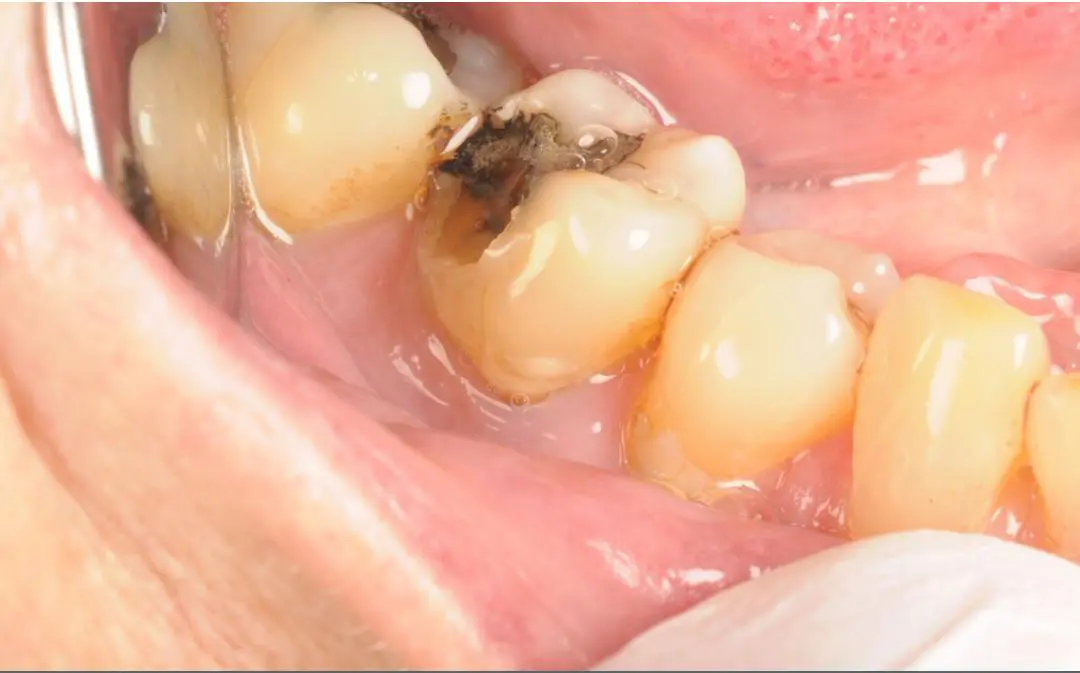
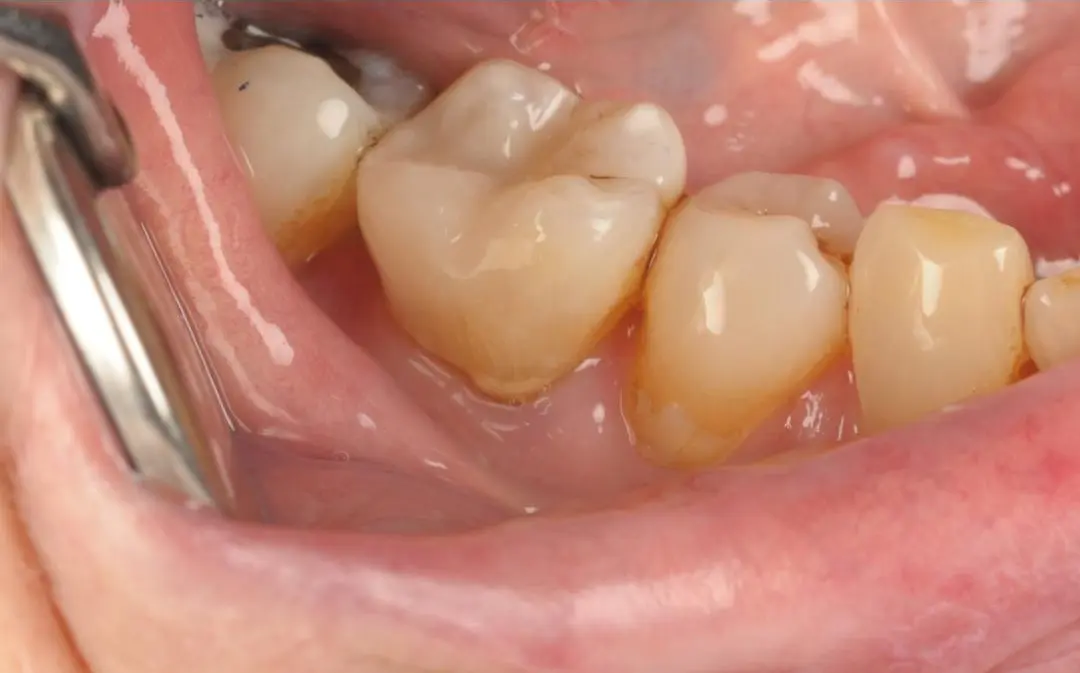
Real Patient Result: Emergency White Filling
Treatment by Dr Kamran
This periapical pathology can exist without any obvious symptoms in some patients for months or even years. This is why dental imaging plays such a key role in identifying problems that patients would otherwise have no way of detecting. Understanding the root canal treatment process can help patients appreciate how these internal changes are addressed clinically.
When Professional Dental Assessment May Be Appropriate
Even when symptoms are mild or absent, there are several situations where arranging a dental consultation would be advisable:
- A tooth has visibly changed colour without an obvious cause
- You experienced dental trauma in the past and are unsure whether it was ever formally assessed
- Sensitivity in a specific tooth has gradually disappeared over time
- You notice a recurring small spot or blister on the gum near a particular tooth
- Your dentist has previously mentioned monitoring a tooth following deep decay or a large filling
A dentist can assess the tooth's vitality using simple, non-invasive tests and take X-rays to evaluate the root and surrounding bone. Early identification of pulp necrosis allows for timely treatment, which in many cases can preserve the tooth. Leaving a non-vital tooth without assessment does carry a risk of silent progression that may become more complex to manage later.
Prevention and Maintaining Good Oral Health
While not all causes of pulp necrosis are preventable — dental trauma, for example, can happen unexpectedly — there are practical steps that support overall tooth health and reduce the likelihood of pulp involvement from decay:
- Attend regular dental check-ups — six-monthly or annual examinations allow your dentist to identify early decay, cracks, or other issues before they progress to the pulp.
- Address toothache or sensitivity promptly — dental discomfort is often a sign that something needs attention. Early treatment of decay is far less invasive than treatment required once infection has reached the pulp.
- Wear a mouthguard for contact sports — trauma is a common cause of pulp damage in younger adults and adolescents.
- Maintain consistent oral hygiene — brushing twice daily with fluoride toothpaste and cleaning between teeth regularly helps prevent the decay that can eventually threaten pulp health.
- Discuss grinding habits with your dentist — bruxism can cause micro-fractures in teeth that, over time, may compromise the pulp.
Learning about tooth pain causes and treatments can also help patients understand when symptoms warrant a professional review.
Key Points to Remember
- A tooth nerve can die (pulp necrosis) without immediately causing an abscess or severe pain.
- Tooth discolouration and a gradual loss of sensitivity are among the more common indicators of a non-vital tooth.
- The absence of pain does not confirm that a tooth is healthy — changes can occur silently.
- Necrotic pulp tissue may contribute to ongoing low-grade infection and bone changes around the root tip over time.
- Early professional assessment, including dental X-rays, can identify problems before they become more complex.
- Preventative habits and regular dental check-ups remain a reliable approach to protecting long-term tooth health.
Frequently Asked Questions
Can a dead tooth nerve heal on its own?
Once pulp tissue has undergone necrosis, it cannot regenerate or heal. The blood supply to the pulp is irreversibly compromised, meaning the tissue remains dead within the tooth. However, some patients experience very few symptoms for extended periods. This does not mean the situation has resolved — it simply means the body may be managing the bacterial burden without producing acute symptoms. Professional assessment is always recommended to determine the appropriate next steps.
How does a dentist know if a tooth nerve has died?
A dentist uses a combination of clinical tests and dental X-rays to assess pulp vitality. Vitality tests, such as applying cold stimuli or mild electrical pulses to the tooth, help determine whether the pulp is still responsive. X-rays allow the dentist to examine the root and surrounding bone for signs of periapical changes. Only a clinical examination can provide an accurate assessment — no symptoms alone are sufficient for a reliable conclusion.
What treatment is typically used for a tooth with a dead nerve?
Root canal treatment is the most common approach for managing a tooth with pulp necrosis. The procedure involves removing the necrotic tissue from within the root canal system, cleaning and shaping the canals, and sealing them to prevent reinfection. The tooth can then be restored with a crown or filling, depending on its condition. Treatment suitability always depends on individual clinical factors assessed by the dentist during examination.
Is it safe to leave a dead tooth without treatment?
Leaving a non-vital tooth without treatment is generally not recommended, as the necrotic tissue can act as a source of bacterial activity over time. While some patients experience few or no symptoms for prolonged periods, the risk of the situation progressing — potentially leading to infection, bone loss, or abscess formation — remains. A dental professional is best placed to advise on the appropriate management based on a thorough clinical assessment.
Can a tooth die without ever causing pain?
Yes, this can occur. Some individuals experience minimal discomfort as the pulp gradually loses vitality, particularly if the process unfolds slowly or if the nerve is already partially compromised. Tooth trauma in particular can lead to pulp necrosis with relatively little pain. This is one of the reasons tooth discolouration or the silent disappearance of previous sensitivity should not be dismissed — these changes may warrant investigation even without accompanying pain.
Will a discoloured tooth always mean the nerve has died?
Not necessarily. Tooth discolouration can have a number of causes, including surface staining from food and drink, certain medications, or developmental factors. However, a greyish or darkening discolouration developing within a single tooth — particularly following trauma or a history of dental treatment — may indicate internal changes related to the pulp. A dentist can differentiate between these causes during examination and advise on appropriate next steps.
Conclusion
A dying or dead tooth nerve does not always present with the dramatic pain or swelling that many patients expect. Pulp necrosis can unfold quietly, with tooth discolouration and a gradual absence of sensitivity serving as subtler signals that something has changed within the tooth. Understanding what happens when a tooth nerve dies — and why the absence of an abscess does not indicate everything is fine — helps patients make more informed decisions about their oral health.
If you have noticed any changes to the appearance or sensation of a tooth, or if you are simply uncertain about the status of a tooth that has a history of trauma or deep treatment, arranging a professional dental assessment is a sensible course of action. Dental symptoms and treatment options should always be assessed individually during a clinical examination.
Early evaluation offers a strong opportunity for straightforward, conservative management — protecting the tooth and your overall oral health for the long term.
Disclaimer: This article is intended for general educational purposes only and does not constitute personalised dental advice. Individual diagnosis and treatment recommendations require a clinical examination by a qualified dental professional.
Next Review Due: 02 November 2027