
A swollen, tender area of gum behind your last molar can be both uncomfortable and concerning. It is one of the most common reasons adults search online for dental advice, often wondering whether the swelling is something serious or whether it will resolve on its own. In many cases, this type of gum swelling may be associated with a condition known as pericoronitis — an inflammation of the soft tissue surrounding a partially erupted tooth, most frequently a wisdom tooth.
Understanding what pericoronitis is, why it develops, and how it is typically managed can help you make informed decisions about your oral health. Many people experience this issue at some point during their twenties or thirties, when wisdom teeth are most likely to emerge. However, the condition can occur at any age where a tooth has not fully come through the gum.
This article explains the causes, symptoms, and treatment approaches associated with pericoronitis, as well as practical advice on when it may be appropriate to seek a professional dental assessment. Knowing what to look for can make a significant difference in managing symptoms early and maintaining good oral health.
Experiencing these symptoms?
Delaying treatment can lead to tooth loss. We have slots available today.
What Is Pericoronitis?
Pericoronitis is an inflammatory condition affecting the gum tissue (known as the operculum) that partially covers an erupting or impacted tooth, most commonly a lower wisdom tooth. It occurs when bacteria and food debris become trapped beneath the gum flap, leading to localised swelling, discomfort, and sometimes infection. The condition may be acute or chronic and typically requires professional dental assessment to determine the most appropriate course of management.
What Causes Pericoronitis?
Pericoronitis develops when the gum tissue surrounding a partially erupted tooth becomes irritated or infected. The lower wisdom teeth — also known as third molars — are the most commonly affected because they are often the last teeth to emerge and frequently lack sufficient space to fully erupt through the gum line. If you have also noticed pressure or discomfort from a trapped tooth, our guide to toothache from an impacted tooth explains why this can happen.
When a tooth only partially breaks through, a flap of gum tissue (the operculum) remains draped over the crown of the tooth. This creates a pocket where bacteria, food particles, and plaque can accumulate. Because this area is difficult to clean effectively with a toothbrush, the environment becomes conducive to bacterial growth and inflammation.
Meet Dr. Yasha Shirazi
Principal Dentist at Emergency Dentist London
"We treat hundreds of dental emergencies every month. The sooner you come in, the easier the fix usually is."
Book an appointment with our team →Several factors may increase the likelihood of pericoronitis developing:
- Partial tooth eruption — when the wisdom tooth does not fully emerge
- Impacted wisdom teeth — teeth that are angled or blocked by adjacent teeth
- Difficulty cleaning the area — the far back of the mouth is naturally harder to reach
- Upper tooth trauma — an opposing upper molar may bite down on the swollen gum flap, worsening irritation
- Stress or lowered immunity — general health changes may influence susceptibility to infection
It is worth noting that not everyone with partially erupted wisdom teeth will develop pericoronitis, and the severity can vary considerably from person to person.
Recognising the Symptoms of Pericoronitis
The symptoms of pericoronitis can range from mild discomfort to more significant signs that may indicate infection. Being aware of these symptoms can help you identify the condition early and seek appropriate advice.
Common Signs Include:
- Swollen, red gum tissue behind the last molar, particularly on the lower jaw
- Pain or tenderness in the affected area, which may radiate to the ear, jaw, or throat on the same side — a pattern discussed further in our article on pain radiating to the ear from a wisdom tooth
- Difficulty opening the mouth fully (known as trismus)
- An unpleasant taste in the mouth, sometimes associated with discharge from beneath the gum flap
- Bad breath (halitosis) that persists despite regular brushing
- Difficulty or discomfort when chewing or biting down
- Swelling of the lymph nodes beneath the jaw
In more advanced cases, some patients may experience general malaise, a raised temperature, or difficulty swallowing. These symptoms may suggest the infection is spreading beyond the localised area and should prompt timely dental assessment.
It is important to remember that these symptoms can also be associated with other dental conditions, so a clinical examination is necessary to confirm the cause.
The Dental Science Behind Pericoronitis
To understand why pericoronitis occurs, it helps to know a little about how teeth erupt and the role of the surrounding soft tissue.
Tooth Eruption and the Operculum
When a tooth begins to push through the jawbone and gum tissue, the gum gradually recedes to allow the crown of the tooth to become fully visible in the mouth. In an ideal situation, the gum tissue pulls back completely, and the tooth sits neatly within the dental arch.
However, wisdom teeth often do not follow this straightforward pattern. The human jaw has gradually become smaller over evolutionary time, meaning there is frequently insufficient room for third molars to erupt fully. When a wisdom tooth only partially emerges, the remaining gum tissue — the operculum — forms a soft tissue flap over part of the tooth's biting surface.
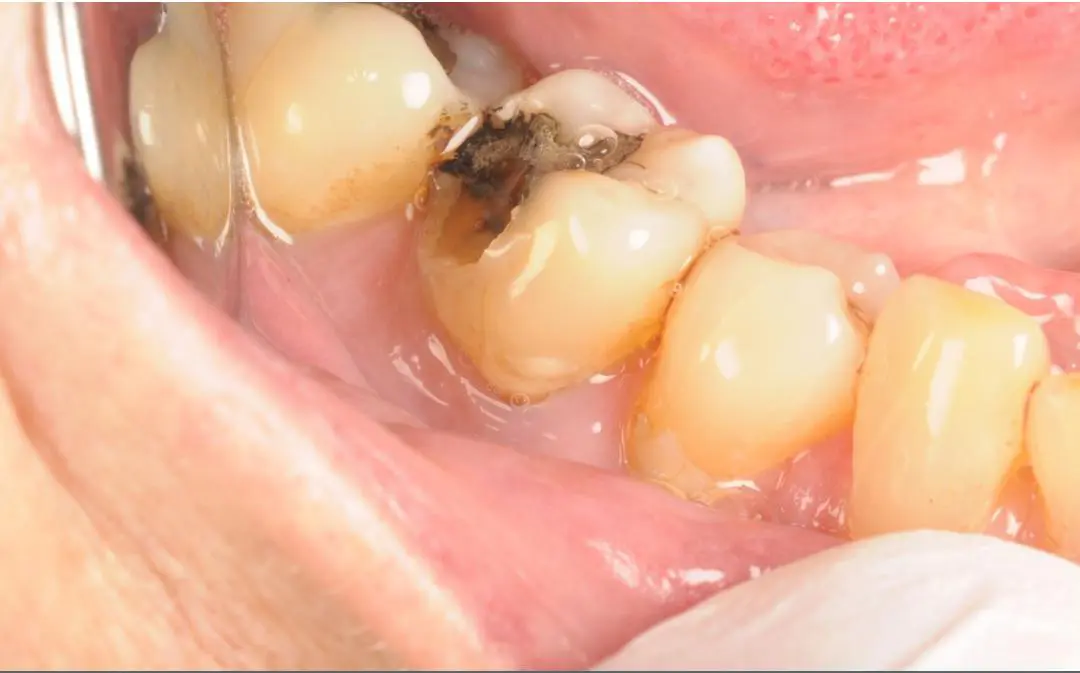
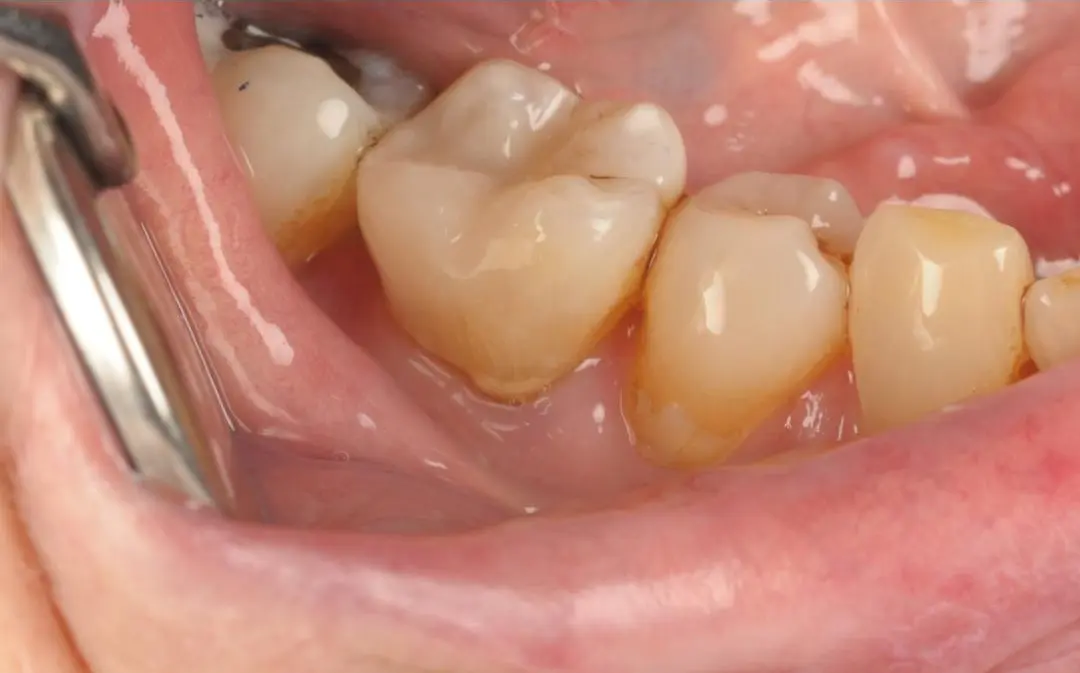
Real Patient Result: Emergency White Filling
Treatment by Dr Kamran
The Bacterial Environment
Beneath this flap, a warm, moist, and sheltered environment develops. This is an ideal setting for the accumulation of oral bacteria, particularly anaerobic species that thrive in low-oxygen conditions. As bacteria multiply, they produce toxins and acids that irritate and inflame the surrounding gum tissue.
The body responds with an inflammatory reaction — increased blood flow to the area, swelling, and the migration of white blood cells to fight infection. This is the clinical presentation of pericoronitis. If the bacterial load overwhelms the body's local defences, the inflammation may progress to a localised abscess or, in rare cases, a more widespread infection.
Understanding this process highlights why effective cleaning of the area and timely professional advice are important in managing the condition.
How Is Pericoronitis Typically Treated?
The treatment approach for pericoronitis depends on the severity of the condition, whether infection is present, and the position and prognosis of the affected tooth. Treatment suitability is always determined during a clinical examination, as each patient's situation is unique.
Managing Mild Pericoronitis
In mild cases, where the inflammation is localised and there are no signs of spreading infection, initial management may include:
- Thorough cleaning of the area — a dentist may gently irrigate beneath the gum flap to remove trapped debris and bacteria
- Oral hygiene guidance — advice on how to keep the area clean at home, including the use of warm saltwater rinses
- Pain management — over-the-counter pain relief may be recommended to manage discomfort
Managing Moderate to Severe Pericoronitis
Where there are signs of infection, such as significant swelling, pus discharge, difficulty opening the mouth, or systemic symptoms, additional treatment may be considered:
- Antibiotics — if a dental professional determines that infection has spread beyond the immediate area, a course of antibiotics may be prescribed
- Operculectomy — in some cases, surgical removal of the overlying gum flap may be considered to eliminate the pocket where bacteria collect
Wisdom Tooth Extraction
If pericoronitis recurs or the wisdom tooth is unlikely to erupt fully, treatment aimed at wisdom tooth pain relief or extraction may be recommended as a longer-term solution. This decision is made on a case-by-case basis following clinical and sometimes radiographic assessment.
When Professional Dental Assessment May Be Needed
While mild gum discomfort behind a wisdom tooth may sometimes settle with careful home care, there are situations where seeking a professional dental evaluation is advisable.
You may wish to consider contacting a dental practice if you experience:
- Persistent swelling or pain that does not improve after two or three days of home care
- Increasing difficulty opening your mouth or swallowing
- A noticeable unpleasant taste or discharge from the affected area
- Swelling spreading to the cheek, jaw, or neck area
- A raised temperature or feeling generally unwell
- Recurrent episodes of swelling and discomfort in the same area
These symptoms do not necessarily indicate a serious complication, but they do suggest that professional assessment would be beneficial to determine the cause and discuss appropriate management options.
If you are experiencing dental pain that feels urgent or is significantly affecting your ability to eat, sleep, or carry out daily activities, seeking same-day dental advice may be appropriate. Where swelling is accompanied by pus or a persistent bad taste, our guide on swollen gums with pus and dental abscess relief explains why prompt review matters, and a dentist may also need to consider dental abscess treatment depending on the clinical findings.
Prevention and Oral Health Advice
While it is not always possible to prevent pericoronitis — particularly when wisdom teeth are impacted or poorly positioned — there are practical steps that may help reduce the risk or manage early symptoms.
Maintaining Good Oral Hygiene
Keeping the area around partially erupted wisdom teeth as clean as possible is one of the most effective preventative measures. This includes:
- Brushing carefully around the back of the mouth, using a small-headed toothbrush to reach behind the last molar
- Using interdental brushes or a single-tufted brush to clean around and behind wisdom teeth where a standard toothbrush may not reach effectively
- Rinsing with warm saltwater (half a teaspoon of salt dissolved in a glass of warm water) if you notice mild gum irritation, to help reduce bacterial load
- Using an antiseptic mouthwash as a supplement to brushing, particularly if access to the area is limited
Attending Regular Dental Check-Ups
Routine dental examinations allow your dentist to monitor the development and position of wisdom teeth. X-rays can reveal whether a wisdom tooth is likely to erupt fully, is impacted, or may cause future problems. Early identification of potential issues allows for planned management rather than emergency treatment.
Being Mindful of Early Symptoms
If you notice mild swelling or tenderness behind your last molar, taking early action with improved cleaning and saltwater rinses may help manage the situation before it progresses. However, if symptoms persist or worsen, professional advice is recommended.
Key Points to Remember
- Pericoronitis is a common inflammatory condition affecting the gum tissue around partially erupted teeth, most often lower wisdom teeth.
- The condition occurs when bacteria and debris become trapped beneath a flap of gum covering part of the tooth.
- Symptoms may include swelling, pain, difficulty opening the mouth, bad breath, and an unpleasant taste.
- Treatment depends on severity and may range from improved oral hygiene and irrigation to antibiotics or wisdom tooth extraction.
- Keeping the area behind your last molar clean is one of the most effective ways to reduce the risk of pericoronitis.
- If symptoms persist, recur, or worsen, seeking a professional dental assessment is advisable to determine the most appropriate management.
Frequently Asked Questions
Is pericoronitis the same as a tooth infection?
Pericoronitis is specifically an inflammation of the gum tissue (operculum) surrounding a partially erupted tooth, rather than an infection within the tooth itself. However, if the inflammation progresses, it can develop into a localised infection around the gum and soft tissue. In some cases, the infection may spread to adjacent tissues. A dental examination can help distinguish between pericoronitis and other types of dental infection, such as a dental abscess, and determine the most suitable approach to management based on the clinical findings.
How long does pericoronitis last?
The duration of pericoronitis varies depending on its severity and how it is managed. Mild episodes may improve within a few days with thorough cleaning and warm saltwater rinses. However, if infection is present or the underlying cause — such as a partially erupted wisdom tooth — remains unchanged, the condition may persist or recur. Chronic pericoronitis can involve repeated episodes of low-grade discomfort and swelling over weeks or months. A dentist can assess whether ongoing management or a longer-term solution, such as extraction, may be appropriate.
Can pericoronitis go away on its own?
Mild pericoronitis may sometimes settle with diligent home care, including careful cleaning of the affected area and saltwater rinsing. However, if the gum flap remains in place over the partially erupted tooth, the condition can recur because the underlying cause has not been addressed. In cases where infection develops, professional dental treatment is usually needed. It is generally advisable to seek a dental opinion if symptoms do not improve within a few days, or if they are accompanied by significant swelling, difficulty opening the mouth, or a raised temperature.
Does pericoronitis always require wisdom tooth removal?
Not necessarily. The management of pericoronitis depends on several factors, including the position and angulation of the wisdom tooth, the frequency of episodes, and the overall clinical picture. In some cases, conservative management — such as irrigation, improved oral hygiene, and monitoring — may be sufficient. However, if the wisdom tooth is unlikely to erupt fully and pericoronitis recurs, extraction may be recommended as a more definitive solution. This decision is always made following a thorough clinical and radiographic assessment by a dental professional.
Can I prevent pericoronitis from coming back?
Reducing the risk of recurrent pericoronitis involves maintaining excellent oral hygiene around the affected area, including using a small-headed toothbrush, interdental aids, and antiseptic mouthwash. Regular dental check-ups allow your dentist to monitor the area and advise on whether further intervention may be beneficial. If recurrence is frequent and related to a partially erupted wisdom tooth, your dentist may discuss whether extraction could help prevent future episodes. Each situation is assessed individually to determine the most appropriate preventative or treatment approach.
Is pericoronitis considered a dental emergency?
Mild pericoronitis may not require emergency treatment, but it should still be assessed by a dentist in a timely manner. However, if symptoms include significant swelling spreading beyond the immediate area, difficulty swallowing or breathing, a high temperature, or severe pain that is not managed by over-the-counter pain relief, seeking urgent dental care is advisable. These symptoms may suggest the infection is progressing, and prompt professional assessment can help ensure appropriate treatment is provided. When in doubt, contacting a dental practice for guidance is always a sensible step.
Conclusion
A swollen gum behind your last molar can be an uncomfortable and sometimes worrying experience, but understanding the potential causes — including pericoronitis — can help you respond appropriately. This condition is common, particularly in young adults as wisdom teeth emerge, and it is usually manageable with the right care.
Maintaining thorough oral hygiene, particularly around partially erupted wisdom teeth, is one of the most practical steps you can take to reduce your risk. If symptoms develop, early attention to cleaning the area and using saltwater rinses may help manage mild episodes. However, when pain persists, swelling increases, or you experience difficulty opening your mouth or swallowing, seeking professional dental advice is important.
Pericoronitis can sometimes recur if the underlying cause — typically a partially erupted wisdom tooth — remains. In such cases, your dentist can discuss longer-term management options, including the possibility of extraction, based on a full clinical assessment.
Dental symptoms and treatment options should always be assessed individually during a clinical examination.
Taking care of your oral health and seeking timely advice when symptoms arise are two of the most valuable things you can do for your long-term dental wellbeing.
Disclaimer
This article is for general educational purposes only and does not constitute professional dental advice, diagnosis, or treatment. Every patient's circumstances are unique; dental symptoms and treatment options should always be assessed during a clinical examination by a qualified dental professional. No specific outcomes are guaranteed. This content has been prepared in line with GDC, CQC, ASA CAP Code, and GMC communication standards. If you have concerns about your oral health, please contact a registered dentist.