
A persistent, deep ache at the back of your jaw can be both unsettling and exhausting. If you have been searching online for answers, you are not alone — thousands of adults in London look for information about toothache from an impacted tooth every month, hoping to understand what is happening beneath the gum line and what can be done about it.
An impacted tooth is one that has failed to emerge fully into its expected position, most commonly affecting wisdom teeth (third molars) during late adolescence or adulthood. Because the tooth remains partially or completely trapped within the jawbone or soft tissue, it can create pressure, inflammation and pain that radiates across the face.
This article explains the key signs that may suggest an impacted tooth, the underlying dental science, the treatment approaches a dentist may consider, and practical steps you can take to look after your oral health. Understanding the issue can help you feel more confident when discussing options with a dental professional, and it can also help you recognise when it may be time to seek a clinical assessment rather than manage symptoms at home.
Experiencing these symptoms?
Delaying treatment can lead to tooth loss. We have slots available today.
What Is a Toothache from an Impacted Tooth?
A toothache from an impacted tooth occurs when a tooth — most often a lower wisdom tooth — is unable to erupt properly through the gum and instead presses against neighbouring teeth, bone or soft tissue. This pressure can trigger persistent or intermittent pain that ranges from a dull background ache to sharp, throbbing discomfort.
The pain is typically caused by one or more of the following:
- Mechanical pressure on adjacent teeth as the impacted tooth attempts to push through.
- Pericoronitis — inflammation or infection of the gum tissue that partially covers the unerupted tooth.
- Cyst formation around the impacted tooth within the jawbone.
- Decay developing on the impacted tooth or on the neighbouring second molar, where cleaning is difficult.
Not every impacted tooth causes symptoms. Some remain entirely asymptomatic and are only discovered during routine dental X-rays. However, when pain does develop, it often indicates that the surrounding tissues are under stress and a professional evaluation may be helpful.
Meet Dr. Yasha Shirazi
Principal Dentist at Emergency Dentist London
"We treat hundreds of dental emergencies every month. The sooner you come in, the easier the fix usually is."
Book an appointment with our team →Common Signs and Symptoms to Be Aware Of
Recognising the signs of an impacted tooth early can make a significant difference to your comfort and to the range of treatment options available. While symptoms vary from person to person, the following are commonly reported:
- Jaw pain or aching — often felt at the back of the mouth on one or both sides, sometimes radiating towards the ear or temple.
- Swollen, red or tender gums — particularly around the area where the tooth is trying to emerge.
- Difficulty opening the mouth fully — known as trismus, this can occur when inflammation spreads to the surrounding muscles.
- An unpleasant taste or bad breath — this may indicate that bacteria are accumulating around a partially erupted tooth.
- Pain when chewing or biting — the pressure of eating can aggravate inflamed tissue.
- Swelling in the cheek or jaw area — in some cases, visible facial swelling may develop.
It is important to note that these symptoms can also be associated with other dental conditions. A clinical examination, usually supported by dental imaging, is needed to confirm whether an impacted tooth is the cause.
The Dental Science Behind Tooth Impaction
To understand why impacted teeth cause pain, it helps to know a little about how teeth develop and erupt.
Each tooth forms inside the jawbone within a structure called a dental follicle — a sac of tissue that guides the tooth as it moves upwards (or downwards, in the upper jaw) towards the gum line. In a straightforward eruption, the tooth travels along a clear path, breaks through the bone and gum tissue, and settles into alignment with the rest of the dental arch.
With impacted teeth, this process is interrupted. The tooth may be angled towards the adjacent tooth (mesioangular impaction), tilted backwards (distoangular), lying horizontally, or positioned vertically but unable to clear the bone. The most common reason is simply a lack of space in the jaw — modern human jaws tend to be smaller than those of our ancestors, yet we still develop the same number of teeth.
When the tooth cannot complete its eruption, several problems can follow:
- The dental follicle may enlarge and form a dentigerous cyst, which can gradually erode surrounding bone.
- The gum flap (operculum) covering a partially erupted tooth traps food debris and bacteria, creating a breeding ground for infection.
- The impacted tooth may press against the roots of the second molar, potentially causing resorption (gradual dissolving) of that tooth's root structure.
Understanding these mechanisms helps explain why symptoms can sometimes worsen over time if left unaddressed.
How Is an Impacted Tooth Diagnosed?
A dentist will typically begin with a thorough clinical examination of the mouth, checking for swelling, tenderness, gum inflammation and any visible signs of partial eruption. However, because much of the impacted tooth may be hidden beneath bone or soft tissue, dental imaging plays a crucial role.
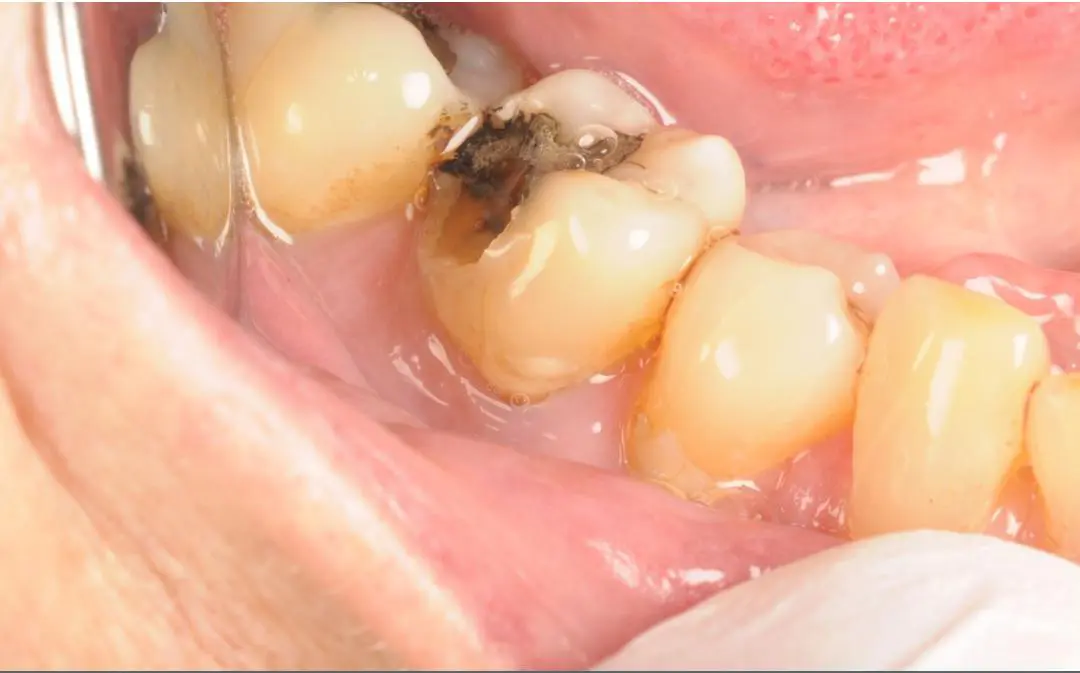
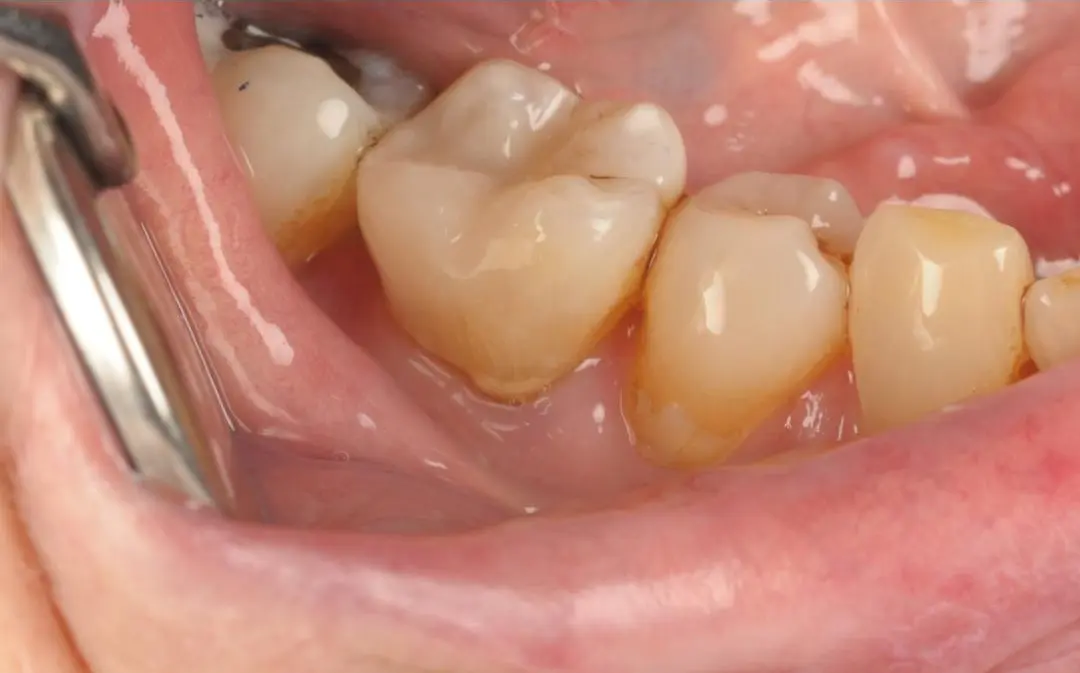
Real Patient Result: Emergency White Filling
Treatment by Dr Kamran
The most common imaging methods include:
- Periapical X-rays — small, targeted films that show the tooth and surrounding bone in detail.
- Panoramic radiographs (OPG) — a single image capturing the entire jaw, useful for assessing the position of all wisdom teeth and their relationship to nearby structures such as the inferior alveolar nerve.
- Cone-beam computed tomography (CBCT) — a three-dimensional scan that may be used in complex cases where the tooth is close to nerves or sinuses.
These images allow the dentist to classify the type and depth of impaction, assess any damage to neighbouring teeth, and plan the most appropriate management. If you are experiencing symptoms, discussing them openly with your dentist ensures that the right investigations are carried out.
Treatment Approaches for an Impacted Tooth
Treatment for an impacted tooth depends on several factors, including the severity of symptoms, the position of the tooth, the patient's overall oral health, and any associated complications. A dentist will discuss the most suitable options following a clinical assessment.
Conservative Management
If the impacted tooth is not currently causing significant problems, a dentist may recommend a monitoring approach. This can include regular clinical reviews and periodic X-rays to check that the tooth is not causing hidden damage. Good oral hygiene around the area is essential during this time.
Management of Pericoronitis
When the gum tissue around a partially erupted tooth becomes inflamed or infected, initial treatment typically focuses on managing the infection. This may involve:
- Professional irrigation (flushing) of the area beneath the gum flap.
- Advice on gentle but thorough home cleaning techniques.
- A course of antibiotics if the infection has spread or if the patient is systemically unwell.
Pericoronitis can recur, and repeated episodes may be an indication that surgical removal of the wisdom tooth could be the most appropriate long-term solution.
Surgical Extraction
Surgical removal is the most common definitive treatment for a symptomatic impacted tooth. The procedure is typically carried out under local anaesthesia, though sedation options may be available for anxious patients. During the procedure, the dentist or oral surgeon will:
- Make a small incision in the gum tissue to access the tooth.
- Remove a small amount of bone if necessary.
- Section (divide) the tooth into smaller pieces if its position makes intact removal difficult.
- Clean and close the site, often with dissolvable stitches.
Recovery times vary, but most patients can expect some swelling and discomfort for several days following surgery. Your dental team will provide detailed aftercare instructions tailored to your situation.
It is worth noting that all surgical procedures carry some degree of risk, including infection, bleeding, temporary or rarely persistent nerve disturbance, and dry socket. Your dentist will explain these risks fully before any treatment proceeds.
When Professional Dental Assessment May Be Needed
Many people try to manage dental discomfort at home with over-the-counter pain relief, and in mild cases this can provide temporary comfort. However, there are situations where seeking a professional dental evaluation is advisable:
- Pain that persists for more than two or three days despite over-the-counter pain relief.
- Swelling that is worsening or spreading to the cheek, under the jaw, or around the eye.
- Difficulty swallowing or breathing — this is uncommon but requires prompt attention.
- A fever or feeling generally unwell alongside dental pain.
- Pus or discharge from the gum area around the back teeth.
- Difficulty opening the mouth more than a couple of centimetres.
These signs may indicate that an infection is developing or that the impacted tooth is causing progressive problems. Seeking timely advice can help prevent complications and ensure you receive appropriate care.
If you are experiencing a dental emergency in London, same-day appointments may be available to help assess and manage your symptoms promptly.
Prices are indicative and may vary. A full treatment plan with associated costs will be provided following an individual clinical assessment.
Prevention and Oral Health Advice
While tooth impaction itself cannot always be prevented — jaw size and tooth development are largely determined by genetics — there are practical steps you can take to reduce the risk of complications:
- Attend regular dental check-ups. Routine examinations and X-rays allow your dentist to monitor developing wisdom teeth and identify potential impactions before symptoms arise. Learn more about maintaining your dental health through regular visits.
- Maintain thorough oral hygiene. Brushing twice daily with fluoride toothpaste and cleaning between teeth with interdental brushes or floss helps reduce bacteria around partially erupted teeth.
- Use an antiseptic mouthwash. If you know you have a partially erupted wisdom tooth, a chlorhexidine-based mouthwash (used short-term on dental advice) can help manage bacterial levels.
- Avoid poking the area with sharp objects. It can be tempting to investigate swollen gum tissue with a toothpick or similar item, but this can introduce bacteria and worsen inflammation.
- Rinse gently with warm salt water. If mild irritation develops around a wisdom tooth, gentle salt water rinses (half a teaspoon of salt dissolved in a glass of warm water) can provide temporary comfort.
Taking a proactive approach to your oral health gives you the best chance of catching problems early and keeping your teeth and gums in good condition.
Key Points to Remember
- A toothache from an impacted tooth is most commonly caused by a wisdom tooth that cannot fully erupt through the gum.
- Symptoms may include jaw pain, gum swelling, difficulty opening the mouth, and an unpleasant taste.
- Not all impacted teeth cause problems — some are discovered incidentally on X-rays and may only need monitoring.
- Treatment options range from conservative management and infection control to surgical extraction, depending on clinical findings.
- Persistent pain, spreading swelling, or signs of infection are reasons to seek a professional dental assessment.
- Regular dental check-ups and good oral hygiene are the most effective ways to reduce the risk of complications from impacted teeth.
Frequently Asked Questions
Can an impacted tooth cause pain even if it is not infected?
Yes. An impacted tooth can cause discomfort through mechanical pressure alone, even without infection. As the tooth pushes against neighbouring teeth or bone, it can create a deep, aching sensation. Pericoronitis — inflammation of the gum tissue — can also cause pain without a full-blown infection being present. However, because symptoms can change over time, it is helpful to have the area assessed by a dentist who can determine whether active treatment is needed or whether monitoring is more appropriate.
Is it always necessary to remove an impacted wisdom tooth?
Not necessarily. If an impacted wisdom tooth is not causing symptoms and is not associated with any pathology (such as cysts or damage to adjacent teeth), a dentist may recommend regular monitoring rather than immediate extraction. The decision to remove a wisdom tooth is based on individual clinical findings, including the tooth's position, the patient's symptoms, and any evidence of current or developing complications. Your dentist will discuss the benefits and risks relevant to your specific situation.
How long does recovery take after impacted tooth removal?
Recovery varies depending on the complexity of the extraction and individual healing factors. Most patients experience the greatest swelling and discomfort during the first two to three days, with gradual improvement over one to two weeks. Soft foods, gentle oral hygiene, and following your dentist's aftercare instructions can support healing. Some patients return to normal activities within a few days, while others may need a little longer. Your dental team will provide personalised recovery guidance.
Can an impacted tooth affect other teeth?
Yes, in some cases. An impacted tooth — particularly one angled towards the adjacent second molar — can exert pressure on that tooth's root, potentially leading to root resorption over time. It can also create hard-to-clean areas where decay may develop on the neighbouring tooth. This is one reason why dental professionals monitor impacted teeth with periodic X-rays, even when they are not currently causing pain.
What pain relief can I use while waiting for a dental appointment?
Over-the-counter pain relief such as paracetamol or ibuprofen (taken according to the manufacturer's instructions) can help manage discomfort temporarily. Ibuprofen also has anti-inflammatory properties that may help reduce gum swelling. Warm salt water rinses can provide additional comfort. However, pain relief is a temporary measure and should not replace a professional dental assessment, particularly if symptoms are worsening or have persisted for more than a few days.
Are impacted teeth more common at certain ages?
Impacted wisdom teeth most commonly become symptomatic between the ages of 17 and 30, as this is when the third molars typically attempt to erupt. However, impacted teeth can cause problems at any age. Some patients first experience symptoms in their 40s or 50s, sometimes triggered by changes in the surrounding bone or gum tissue. Regular dental check-ups throughout adulthood help ensure that any changes are identified promptly.
Conclusion
A toothache from an impacted tooth is a common dental concern that affects many adults, particularly in relation to wisdom teeth. Understanding the signs — from persistent jaw pain and gum inflammation to difficulty chewing — can help you recognise when it may be time to consult a dental professional.
Treatment options are varied, ranging from careful monitoring and infection management through to surgical extraction, and the right approach depends entirely on your individual circumstances. The good news is that with timely assessment and appropriate care, the discomfort associated with impacted teeth can typically be managed effectively.
Maintaining regular dental check-ups, practising thorough oral hygiene, and seeking advice early when symptoms develop are the most reliable ways to protect your oral health in the long term.
Dental symptoms and treatment options should always be assessed individually during a clinical examination.
If you are experiencing dental pain in London and would like to arrange an assessment, the team at Emergency Dentist in London is here to help.
Disclaimer
This article is for general educational purposes only and does not constitute professional dental advice, diagnosis, or treatment. Every patient's circumstances are unique; dental symptoms and treatment options should always be assessed during a clinical examination by a qualified dental professional. No specific outcomes are guaranteed. This content has been prepared in line with GDC, CQC, ASA CAP Code, and GMC communication standards. If you have concerns about your oral health, please contact a registered dentist.