
If you have noticed an unusual sour or metallic taste around an old dental crown, you are not alone. This is a concern that prompts many people to search online, often wondering whether something has gone wrong with their dental work or whether the taste signals something more significant happening beneath the surface.
A sour or metallic taste coming specifically from the margin of an old crown — the junction where the crown meets the natural tooth — can have several possible explanations. These range from the gradual breakdown of crown materials to early signs of gum changes or bacterial activity beneath the crown edge. Understanding what might be happening is an important first step.
This article explains the common dental causes behind this symptom, what it might mean for the health of the tooth and surrounding gum tissue, and when it may be appropriate to seek a professional dental assessment. While online information is helpful for background understanding, any persistent or worsening taste symptoms should always be evaluated by a qualified dental professional.
Experiencing these symptoms?
Delaying treatment can lead to tooth loss. We have slots available today.
Featured Snippet: What Causes a Metallic or Sour Taste Around a Crown Margin?
A sour or metallic taste around the margin of an old crown is often caused by a breakdown in the seal between the crown and tooth, allowing bacteria to accumulate. It may also result from corrosion of metal-based crown materials, early decay beneath the crown edge, or changes in the surrounding gum tissue.
What Is a Crown Margin and Why Does It Matter?
A dental crown is a cap placed over a natural tooth to restore its shape, strength, and function. The crown margin refers to the lower edge of the crown where it meets the prepared tooth surface, typically at or just below the gumline.
A well-fitting, well-sealed crown margin is critical for long-term success. When this seal remains intact, bacteria and food debris are prevented from seeping beneath the crown. However, over time — particularly with older restorations — the margin can become compromised. Cement can dissolve, the crown edge can lift or chip slightly, or the tooth structure beneath can change due to wear.
Meet Dr. Yasha Shirazi
Principal Dentist at Emergency Dentist London
"We treat hundreds of dental emergencies every month. The sooner you come in, the easier the fix usually is."
Book an appointment with our team →When the margin is no longer perfectly sealed, a microenvironment forms beneath the crown edge where bacteria can thrive and anaerobic activity can produce unpleasant tastes and odours. This is often the origin of the sour or metallic taste patients describe.
Common Causes of a Sour or Metallic Taste Around an Old Crown
There are several well-recognised dental explanations for this symptom:
1. Marginal Leakage and Bacterial Accumulation
Over years of use, the dental cement holding a crown in place can gradually dissolve or degrade. This creates a microscopic gap at the crown margin — too small to see but large enough for saliva and bacteria to enter. Once bacteria colonise this space, they produce acidic by-products that can cause a distinctly sour taste.
2. Corrosion of Metal-Based Crowns
Older crowns, particularly those made from metal alloys or porcelain-fused-to-metal (PFM) constructions, can undergo a process of surface oxidation or corrosion over time. This is especially relevant for crowns that are many years old and may contain alloys that react with saliva, acidic foods, or other metals in the mouth. This chemical process can produce a noticeably metallic flavour.
3. Secondary Decay Beneath the Crown Edge
Decay developing beneath or around the crown margin is a recognised risk, particularly if oral hygiene around the crown has been difficult to maintain or if the original seal has weakened. As decay progresses, it creates an environment that can produce an unpleasant taste.
4. Gum Inflammation or Early Gum Disease
Changes to the gum tissue surrounding an old crown can contribute to taste changes. Gum inflammation — known as gingivitis — can cause the tissue to bleed easily and produce a metallic or bloody taste, particularly during eating or brushing. If left unaddressed, this may progress. Learning about gum disease treatment and prevention can help you understand your options.
The Dental Science Behind It: What Is Happening at the Crown Margin?
Understanding the biology beneath an old crown helps explain the taste experience. When the cement seal at the crown margin breaks down — even minimally — oral bacteria migrate into the gap. In this enclosed space with limited oxygen, anaerobic bacteria thrive and produce volatile sulphur compounds and organic acids as metabolic by-products. These compounds are responsible for the sour, unpleasant, or metallic taste patients often report.
Additionally, the tooth structure exposed beneath a compromised crown margin is dentine — a more porous and less mineralised tissue than enamel. Dentine is more vulnerable to decay and bacterial penetration, meaning that once the margin fails, the underlying tooth can deteriorate relatively quickly. This is why a persistent taste change around a crown should not be ignored.
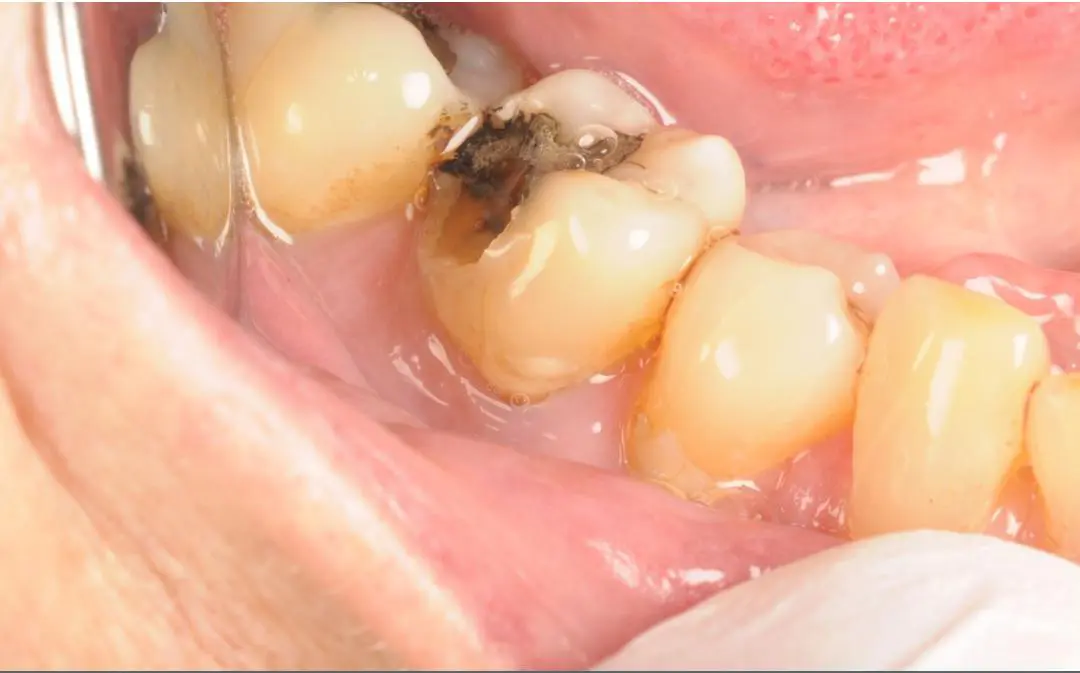
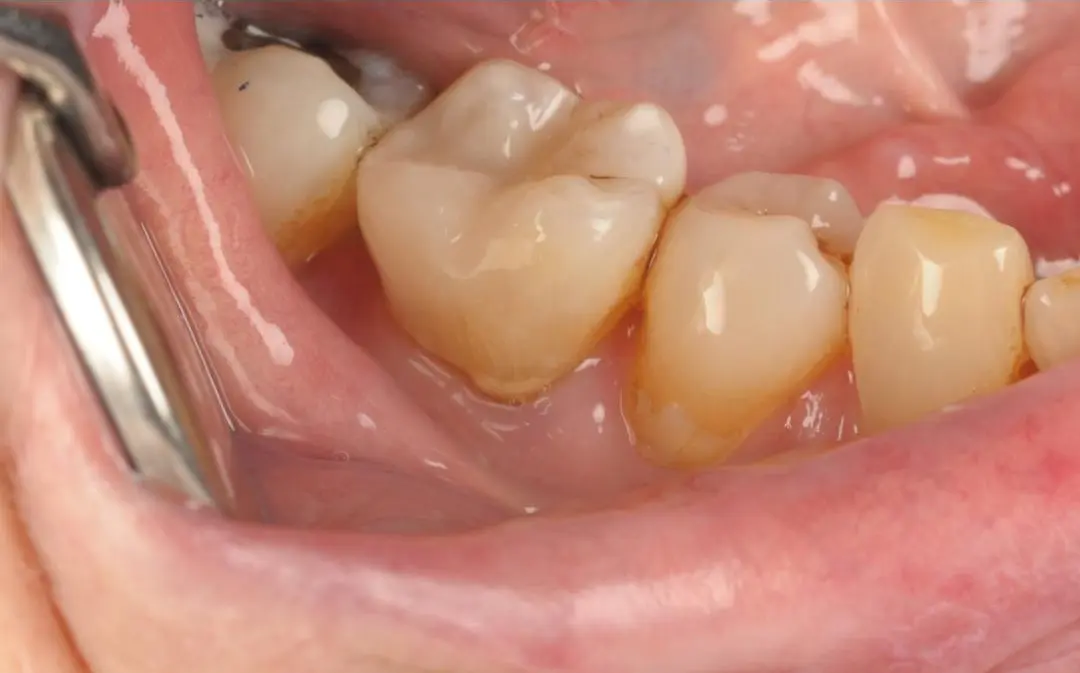
Real Patient Result: Emergency White Filling
Treatment by Dr Kamran
In metal-containing crowns, electrochemical reactions between dissimilar metals in the mouth (known as galvanic activity) can also contribute to a metallic taste, particularly when the crown is in contact with a metal filling in an opposing or adjacent tooth.
When Professional Dental Assessment May Be Appropriate
A sour or metallic taste around an old crown does not always signal an urgent emergency, but certain signs suggest that a dental appointment would be advisable sooner rather than later:
- A persistent or worsening taste that does not resolve
- Sensitivity to hot, cold, or sweet foods around the crowned tooth
- Any visible lifting, cracking, or discolouration at the crown edge
- Gum tenderness, puffiness, or bleeding around the crown
- A loose feeling in the crown when biting
- Facial swelling, pain, or any symptoms of possible infection
These signs may indicate that the crown margin has been compromised, decay has developed beneath the crown, or the tooth or surrounding tissue requires clinical attention. If you are experiencing pain alongside taste changes, emergency dental advice is available to help assess your symptoms promptly.
Prevention and Maintaining the Health of an Existing Crown
While crowns are durable restorations, their longevity depends significantly on how well they are maintained. The following habits support the health of crowned teeth and the surrounding gum tissue:
- Brush twice daily using a soft-bristled toothbrush, paying careful attention to the gumline around the crown
- Floss or use interdental brushes daily to remove plaque from the crown margin — a common area where bacteria accumulate
- Attend regular dental check-ups so that the fit and integrity of the crown can be monitored over time
- Avoid biting very hard foods directly on a crowned tooth, which may stress the margin over time
- Limit acidic and sugary foods, which can accelerate cement breakdown and increase decay risk beneath the crown edge
- Inform your dentist if you notice any taste changes, sensitivity, or changes to how the crown feels when biting
Regular hygiene appointments can also help address plaque and tartar build-up at the crown margin before it leads to gum changes or decay. Understanding routine dental check-ups and what to expect can help you plan ahead.
Key Points to Remember
- A sour or metallic taste at the margin of an old crown is a recognised dental symptom with several possible explanations
- Common causes include marginal leakage, bacterial accumulation, metal corrosion, secondary decay, and gum inflammation
- The crown margin is a vulnerable area where the seal between the crown and tooth can degrade over time
- Persistent or worsening taste changes, alongside sensitivity or gum changes, are reasons to seek a dental assessment
- Regular brushing, flossing, and routine dental check-ups are the most effective ways to maintain the health of a crowned tooth
- Treatment options depend on the underlying cause and the condition of the tooth, and can only be determined through clinical examination
Frequently Asked Questions
Is a metallic taste around a crown always serious?
Not necessarily. A mild or occasional metallic taste may simply reflect the normal presence of metal alloys in an older crown responding to acidic foods or galvanic interactions. However, if the taste is persistent, worsening, or accompanied by other symptoms such as pain, sensitivity, or swelling, it is worth having the crown examined professionally. A dentist can assess the margin, take an X-ray if needed, and identify the underlying cause before it progresses.
Can a crown be re-cemented if the margin seal has failed?
In some cases, if the crown itself is structurally sound and the underlying tooth remains healthy, a dentist may be able to remove the crown carefully, clean the area, and re-cement it using fresh dental cement. However, this depends entirely on the clinical findings during examination. If the tooth has experienced decay beneath the crown, the decay must be treated first. Whether re-cementing is appropriate can only be confirmed through professional assessment.
How long do dental crowns typically last?
Dental crowns can last many years — often between 10 and 15 years or longer — depending on the material used, the quality of the original placement, oral hygiene, and bite habits. Over time, the margin seal, the crown material itself, and the gum tissue around the crown can all change. Regular dental check-ups help monitor crown condition so that issues are identified early, before symptoms such as taste changes or sensitivity develop.
Could a sour taste around my crown indicate an infection?
A persistent sour or unpleasant taste could, in some cases, be associated with a localised infection beneath the crown or in the surrounding gum tissue. Signs that may suggest infection include persistent pain, swelling, tenderness in the gum, or a feeling of pressure. If you notice any of these signs alongside a taste change, it is advisable to seek dental advice promptly rather than waiting for a routine appointment. Early assessment is always beneficial.
Does a metallic taste mean I need a new crown?
Not automatically. The need for crown replacement depends on clinical findings. A taste change may reflect a repairable issue with the seal or a minor gum concern, or it may indicate that the crown is nearing the end of its functional life. Only a dental examination — including visual assessment and potentially X-rays — can determine whether repair, replacement, or another approach is appropriate.
Can diet or medications cause a metallic taste that feels like it comes from a crown?
Yes. Certain medications — including some antibiotics, blood pressure medicines, and dietary supplements — can cause a metallic taste in the mouth. Medical conditions such as acid reflux, dry mouth, or changes in zinc levels can also contribute. If the taste appears general rather than localised to the crown margin, it may be worth discussing this with your GP as well as your dentist to rule out systemic causes.
Conclusion
A sour or metallic taste around the margin of an old crown is a symptom that is worth taking seriously, even if it is not immediately painful. It may reflect normal ageing of crown materials, or it may indicate that the seal at the crown margin has broken down, allowing bacteria to accumulate, decay to develop, or gum tissue to become inflamed. Understanding these possibilities helps patients make informed decisions about seeking dental advice.
The good news is that many causes of this symptom are manageable when identified early. Maintaining good oral hygiene, attending regular check-ups, and being attentive to changes in how your crown looks, feels, or tastes are the most effective ways to protect your dental health in the long term.
If you are experiencing a persistent metallic or sour taste from around a crown margin, a professional assessment will provide clarity and the most appropriate guidance for your individual situation.
Dental symptoms and treatment options should always be assessed individually during a clinical examination.
Disclaimer: This article is intended for general educational purposes only and does not constitute personalised dental advice. Individual diagnosis and treatment recommendations require a clinical examination by a qualified dental professional.
Next Review Due: 22 September 2027