
Wisdom tooth discomfort is one of the most common dental concerns that brings adults to search online for urgent help. Whether you are experiencing dull aching at the back of your jaw, noticeable swelling around your gums, or a sense that something simply does not feel right in your mouth, it is entirely understandable to want answers quickly.
Many Londoners find themselves unsure whether their symptoms require urgent attention or whether they can wait for a routine appointment. The uncertainty alone can be unsettling. That is why understanding the basics of same-day wisdom tooth assessments and extractions can help you feel more informed and better prepared when deciding on your next step, particularly if you are already managing wisdom tooth discomfort in London.
This article explains what wisdom teeth are, why they sometimes cause problems, what signs may suggest a clinical assessment is worthwhile, and how same-day dental services for wisdom tooth concerns work in London. It also offers practical oral health guidance and answers some of the most frequently asked questions about wisdom tooth treatment.
Experiencing these symptoms?
Delaying treatment can lead to tooth loss. We have slots available today.
What Is a Same-Day Wisdom Tooth Assessment?
A same-day wisdom tooth assessment is a dental appointment where a clinician evaluates your wisdom teeth promptly, often on the same day you contact the practice. Following examination and any necessary imaging, the dentist can discuss whether same-day wisdom tooth extraction may be appropriate based on your individual clinical presentation.
What Are Wisdom Teeth and Why Do They Cause Problems?
Wisdom teeth — also referred to as third molars — are typically the last adult teeth to emerge. Most people have four of them, one at each corner of the mouth, and they generally appear between the ages of 17 and 25, although they can emerge later or, in some individuals, not at all.
The reason wisdom teeth so commonly cause difficulties is largely evolutionary. The modern human jaw has, over time, become smaller, which means there is often insufficient space for these final molars to emerge fully and correctly. When a wisdom tooth cannot break through the gum properly, it is described as impacted.
Meet Dr. Yasha Shirazi
Principal Dentist at Emergency Dentist London
"We treat hundreds of dental emergencies every month. The sooner you come in, the easier the fix usually is."
Book an appointment with our team →An impacted wisdom tooth may grow at an angle — towards the adjacent tooth, horizontally, or even away from neighbouring teeth — rather than emerging vertically as it ideally should. This misalignment can create pockets around the gum where bacteria accumulate more easily, increasing the risk of localised infection and inflammation.
Even wisdom teeth that do emerge fully can be difficult to keep clean due to their position at the very back of the mouth. This accessibility challenge makes them more susceptible to tooth decay and gum problems over time.
Understanding why wisdom teeth are prone to complications helps explain why professional assessment is an important step if you notice any symptoms in that area of your mouth.
Common Signs That Your Wisdom Teeth May Need Attention
Wisdom tooth problems can present in a variety of ways, and symptoms can range from mild and intermittent to more persistent and uncomfortable. The following are signs that many patients report when their wisdom teeth are causing concern.
Aching or throbbing at the back of the jaw is often one of the earliest indicators. This discomfort can sometimes radiate towards the ear or the side of the face, which can occasionally be mistaken for other conditions.
Swelling or tenderness in the gum tissue around the wisdom tooth is another commonly reported experience. The gum may appear slightly raised or reddened in the area surrounding the erupting tooth.
Difficulty opening the mouth fully, or discomfort when chewing food at the back of the mouth, may suggest localised inflammation affecting the surrounding tissues.
An unpleasant taste or smell near the back of the mouth can sometimes indicate a bacterial build-up or early infection in the tissue overlying an impacted tooth — a condition known as pericoronitis.
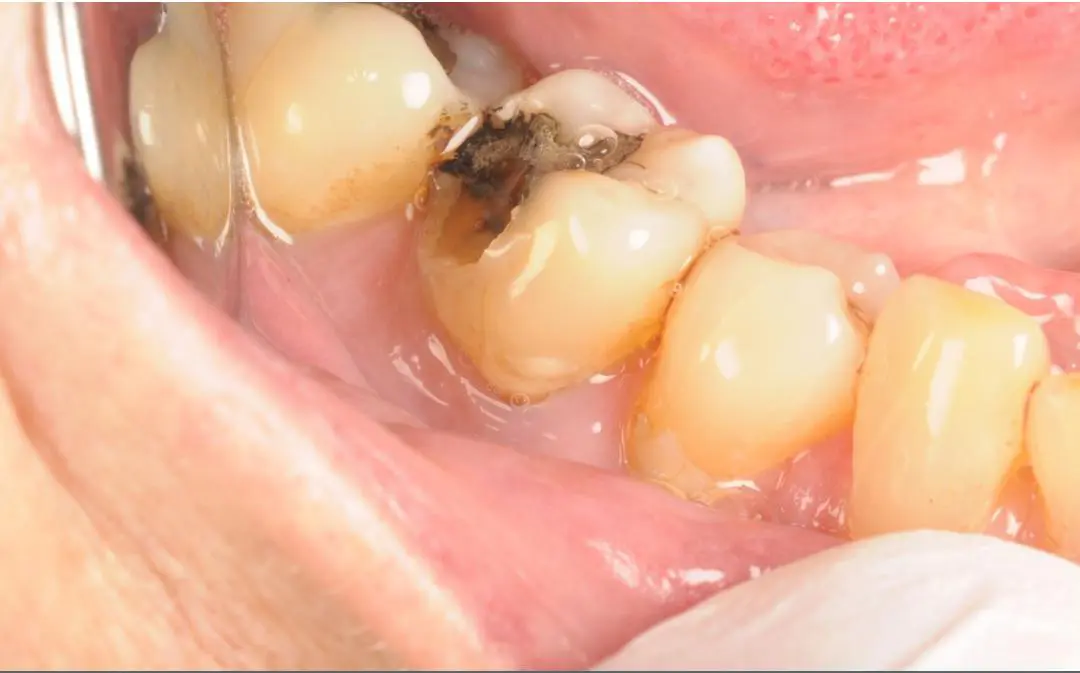
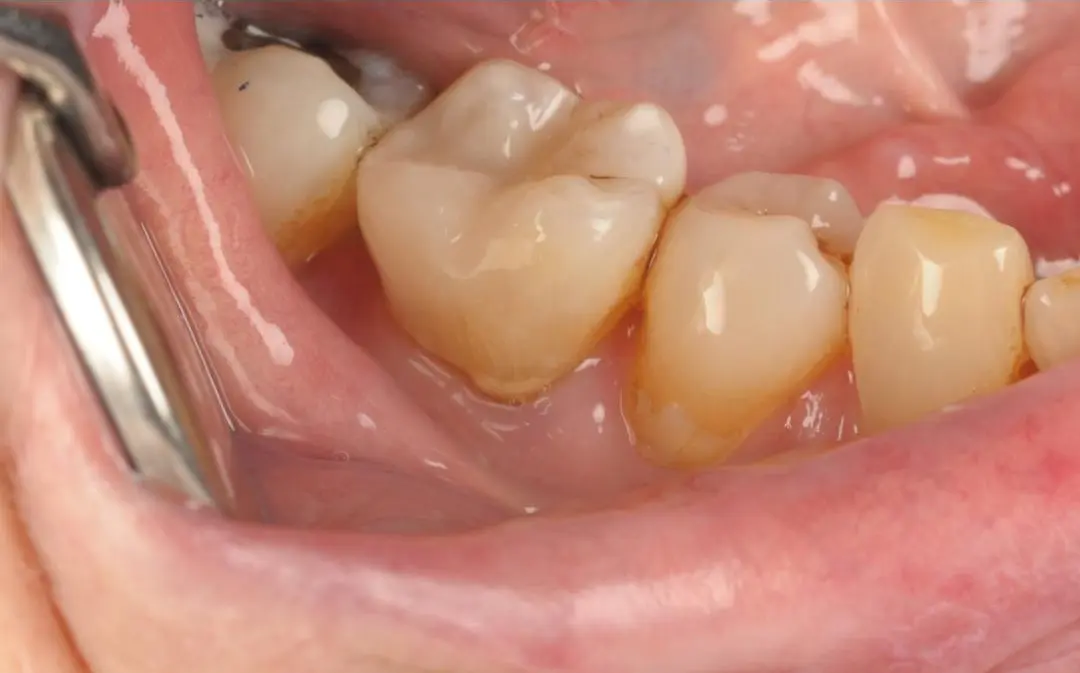
Real Patient Result: Emergency White Filling
Treatment by Dr Kamran
Headaches or general facial discomfort are occasionally associated with wisdom tooth pressure, though these symptoms have numerous possible causes and should not be attributed to wisdom teeth without a professional evaluation.
None of these symptoms automatically confirm a diagnosis. However, if you are experiencing one or more of them persistently, a clinical assessment can provide clarity and help determine whether any intervention may be appropriate.
The Dental Science Behind Impacted Wisdom Teeth
To understand why impacted wisdom teeth can create health concerns, it helps to consider what happens beneath the gum surface when a tooth cannot emerge properly.
The crown of a wisdom tooth — the visible chewing surface — develops within the jawbone before the tooth attempts to push through the overlying gum tissue. When there is insufficient space, this eruption process stalls or deviates from its correct path. The tooth becomes partially or fully trapped within the jaw or gum.
A partially erupted wisdom tooth creates what is effectively an open channel between the outer environment of the mouth and the deeper gum tissue. Bacteria naturally present in the mouth can migrate into this space, potentially causing pericoronitis — an inflammatory condition affecting the soft tissue around the partially emerged crown.
Repeated or unresolved bacterial activity in this area can, over time, contribute to bone changes around the root of the tooth, affect the health of the adjacent second molar, or occasionally form a cyst. These deeper developments are not always painful in their early stages, which is one of the reasons imaging during a clinical assessment is so valuable.
Dental X-rays — particularly a dental panoramic tomogram (DPT) or a small periapical X-ray — allow the clinician to see the position, angulation, and root development of the wisdom tooth as well as assess the surrounding bone structure. This information is essential for forming an accurate clinical picture before any treatment decisions are discussed.
When Professional Dental Assessment May Be Appropriate
If you are experiencing any of the symptoms described above, it is worth considering whether a dental assessment might be helpful. You do not need to be in severe pain to seek professional advice — many patients benefit from early evaluation precisely because it provides information before problems become more complex.
The following situations are commonly associated with wisdom tooth presentations that dental clinicians assess:
- Persistent or recurring pain at the back of the jaw that has not resolved over several days
- Visible swelling of the gum around a back tooth that is not improving
- Difficulty swallowing or opening the mouth, which may suggest more significant inflammation in the surrounding soft tissues
- Signs of possible infection, such as a bad taste in the mouth, pus near the gum line, or swelling that appears to be spreading
- Sensitivity when biting, particularly if the wisdom tooth or adjacent tooth feels different under pressure
It is important to note that these symptoms can have various causes, and a dentist can only determine the source and significance of your discomfort through a proper clinical examination.
If you are based in London and would like to understand your options for urgent dental care, you may find it useful to explore the emergency dental services available at our London clinic to understand how same-day appointments work.
Watch: Emergency Dental Care in London
How Same-Day Wisdom Tooth Assessments Work in London
For many patients in London, accessing a dental appointment quickly is a practical priority. Whether you are managing work commitments, caring for family, or simply finding that your discomfort is making it difficult to focus on daily life, same-day dental services are designed to provide timely access to professional assessment without lengthy waiting periods.
At an emergency or same-day dental appointment for wisdom tooth concerns, the clinician will typically begin by listening to your symptoms and medical history. This information helps contextualise what you are experiencing before any examination takes place.
A clinical examination will follow, during which the dentist will look at the wisdom tooth and surrounding gum tissue, check for signs of infection or inflammation, and assess the condition of adjacent teeth. Depending on the findings, dental imaging may be taken to provide a fuller picture of what is happening beneath the gum surface.
Following this assessment, the dentist will discuss their clinical findings with you clearly and explain what options may be available. If wisdom tooth extraction is considered clinically appropriate, same-day removal may be possible in certain cases, subject to clinical factors such as the position of the tooth, the extent of any infection present, and your overall health.
It is important to understand that not all wisdom tooth extractions can be completed on the same day. In some situations, a course of treatment — such as antibiotics prior to extraction — may be recommended first, or a referral to an oral surgeon may be more appropriate. The dentist will always explain the reasoning behind their recommendations.
What to Expect During a Wisdom Tooth Extraction
Understanding what a wisdom tooth extraction involves can help reduce anxiety and allow you to prepare appropriately for your appointment. The procedure itself varies depending on whether the tooth has fully erupted or is partially or fully impacted.
For a fully erupted wisdom tooth, the extraction process is similar to removing any other back tooth. The area is numbed using a local anaesthetic injection, and once the tooth and surrounding tissue are fully numb, the dentist uses instruments to gently loosen and remove the tooth from its socket. Most patients find that they feel pressure during this process rather than pain.
For a partially or fully impacted wisdom tooth, the procedure may be more involved. The dentist may need to make a small incision in the gum tissue to access the tooth, and in some cases, the tooth may be divided into sections to allow it to be removed more easily. This type of extraction is typically carried out under local anaesthetic, though sedation options may be discussed in some clinical settings.
After the tooth is removed, the area is cleaned and, where necessary, stitched. The dentist will provide clear post-operative instructions regarding pain management, dietary guidance, oral hygiene around the extraction site, and what to watch for in the days following treatment.
Recovery varies between individuals, but most patients find that any initial swelling or discomfort reduces noticeably within the first few days following an uncomplicated extraction.
For more information about how dental extractions are approached as part of urgent dental care, you can read about tooth extraction options at our emergency dental practice.
Oral Health and Prevention: Looking After Your Back Teeth
While it is not always possible to prevent wisdom tooth problems — particularly those arising from lack of space in the jaw — there are practical steps you can take to support the long-term health of your back teeth and gum tissue.
Maintaining thorough oral hygiene is an important protective measure. Using a small-headed toothbrush and gently cleaning as far back in the mouth as is comfortable twice daily helps reduce bacterial build-up around wisdom teeth. Interdental brushes or floss can also be useful for reaching the spaces between back teeth.
Regular dental check-ups allow a clinician to monitor the position and condition of your wisdom teeth over time, even before symptoms develop. Early identification of potential issues — through examination and X-rays — means that management decisions can be made in a more planned and considered way rather than under urgent circumstances.
Attending promptly if symptoms arise rather than waiting to see if discomfort resolves on its own is generally advisable. Early assessment often means that treatment options are broader and outcomes more straightforward.
Staying well-hydrated and avoiding smoking can also support gum health. Smoking in particular is associated with poorer healing outcomes and a higher risk of infection following dental procedures, so it is worth discussing this with your dentist if relevant to you.
If you would like to learn more about maintaining oral health as part of a preventative dental approach, our team provides guidance on preventative dental care for patients in London.
Key Points to Remember
- Same-day wisdom tooth assessments are available in London and allow patients to receive a professional clinical evaluation promptly when symptoms arise.
- Wisdom teeth can cause problems due to lack of space in the jaw, leading to impaction, infection, and inflammation.
- Common symptoms such as jaw aching, gum swelling, and difficulty chewing should be assessed by a dentist — they do not automatically confirm a specific diagnosis, and related signs are discussed in wisdom tooth pain and ear and jaw symptoms.
- Dental imaging is an important part of any wisdom tooth assessment, as it provides information about tooth position and surrounding bone that cannot be seen during a visual examination alone.
- Same-day extraction may be clinically appropriate in some cases, though this depends entirely on the individual clinical picture.
- Good oral hygiene and regular dental check-ups can support the health of wisdom teeth and surrounding gum tissue over time.
Frequently Asked Questions
How do I know if my wisdom tooth needs to be removed?
Only a dentist can determine whether wisdom tooth removal is clinically appropriate for your situation. There is no universal rule — some wisdom teeth that cause occasional discomfort are monitored over time, while others may be recommended for removal due to infection, significant impaction, or damage to adjacent teeth. An assessment that includes examination and dental X-rays provides the information needed to make that clinical judgement. If you are experiencing persistent symptoms, a professional evaluation is a reliable way to gain clarity about your individual situation.
Is wisdom tooth extraction painful?
During the extraction procedure itself, the area is numbed with a local anaesthetic, which means most patients experience pressure rather than pain during the removal. Some discomfort and swelling are common in the days following an extraction, particularly after a more complex procedure involving an impacted tooth. Your dentist will provide detailed aftercare advice, including appropriate pain management guidance. If discomfort after the procedure is severe or worsening rather than gradually improving, it is advisable to contact your dental practice for further advice.
What is pericoronitis and can it be treated?
Pericoronitis is a condition in which the soft gum tissue surrounding a partially erupted wisdom tooth becomes inflamed, often due to bacterial accumulation beneath the gum flap overlying the tooth. Symptoms can include localised pain, swelling, and occasionally an unpleasant taste near the back of the mouth. Management options depend on the clinical assessment and may include irrigation of the area, antibiotics where infection is present, and — in cases where the problem is recurring — consideration of whether wisdom tooth removal is appropriate. A dentist can assess whether pericoronitis is the cause of your symptoms during a clinical examination.
Can wisdom teeth cause pain even if they are not infected?
Yes. Pressure from an impacted or erupting wisdom tooth pushing against adjacent teeth and bone can cause discomfort without any infection being present. Inflammation of the surrounding gum tissue during the eruption process is also a source of discomfort in the absence of bacterial infection. Additionally, referred pain — where discomfort felt in one area originates from a different source — can occasionally make it less straightforward to identify the precise cause of jaw or facial aching. A dental assessment is the appropriate way to investigate the source of your symptoms accurately.
How long does recovery take after wisdom tooth extraction?
Recovery varies depending on factors such as the complexity of the extraction, whether the tooth was impacted, and individual healing rates. After a straightforward removal of a fully erupted wisdom tooth, many patients find that initial swelling and discomfort reduce noticeably within two to three days, with the extraction site continuing to heal over the following weeks. More complex surgical extractions involving impacted teeth may involve a slightly longer recovery period. Your dentist will provide specific aftercare instructions tailored to your procedure and will advise on what to expect and when to seek further advice if needed.
Are same-day wisdom tooth extractions available in London?
Same-day wisdom tooth extractions are available in London in certain clinical situations. Whether a same-day extraction is possible depends on the findings of the clinical assessment, including the position of the tooth, the presence or absence of active infection, your medical history, and other individual clinical factors. Your dentist will discuss what is clinically suitable following a thorough examination. In some cases, a staged approach — for example, addressing infection before extraction — may be the most appropriate plan for your circumstances.
Conclusion
Wisdom tooth concerns are among the most common reasons adults in London seek urgent dental care, and understandably so. The discomfort, uncertainty, and practical disruption associated with wisdom tooth symptoms can be significant, and knowing that same-day wisdom tooth assessments and extractions are accessible in London can provide genuine reassurance.
This article has outlined what wisdom teeth are and why they can cause difficulties, the signs that may indicate a clinical assessment is worthwhile, how same-day appointments typically work, and what wisdom tooth extraction involves. It has also offered practical guidance on supporting oral health in relation to your back teeth.
If you are experiencing persistent jaw aching, gum swelling, or any of the other symptoms discussed in this article, seeking professional dental advice is a sensible and proactive step. Early assessment generally offers the widest range of management options and allows decisions to be made in an informed, considered manner.
Dental symptoms and treatment options should always be assessed individually during a clinical examination.
Disclaimer
This article is for general educational information only and is not a substitute for professional dental advice, diagnosis, or treatment.
Treatment suitability and outcomes vary between patients and should be assessed by a qualified dental professional during a face-to-face clinical examination.
No outcomes are guaranteed or implied.
This content follows GDC communication standards, CQC patient safety principles, and ASA CAP healthcare advertising guidance.