
If you have ever winced whilst biting into a crusty piece of bread, a raw carrot, or a handful of nuts, you will know how unsettling that sudden, sharp tooth pain can feel. Many people dismiss it initially, hoping it will resolve on its own — but persistent discomfort when biting hard foods is often your body's way of signalling that something may need attention.
Pain when biting hard foods is one of the more common dental concerns prompting people across London to search online for answers. The two most frequent culprits are a cracked cusp and deep tooth decay, both of which share overlapping symptoms yet require quite different clinical approaches.
This article explains the differences between the two conditions, the underlying dental science behind each, what symptoms are worth monitoring, and when seeking a professional dental assessment may be the right step. Understanding the possible causes can help you feel more informed and less anxious before speaking with a dental professional.
Experiencing these symptoms?
Delaying treatment can lead to tooth loss. We have slots available today.
Featured Snippet: What Causes Pain When Biting Hard Foods?
Pain when biting hard foods is most commonly associated with either a cracked cusp or deep tooth decay. A cracked cusp occurs when part of a tooth's biting surface fractures, while deep decay compromises the inner layers of the tooth. Both conditions can irritate the nerve and surrounding tissue, causing sharp or lingering discomfort. A clinical examination is necessary for accurate diagnosis.
Understanding a Cracked Cusp: What It Is and Why It Happens
A cracked cusp refers to a fracture in one of the pointed or rounded raised parts of a tooth's biting surface — known as cusps. Posterior teeth, particularly the upper and lower molars and premolars, are most susceptible because they bear the brunt of chewing forces throughout daily life.
Cracked cusps do not always result from a single traumatic event. In many cases, they develop gradually due to:
Meet Dr. Yasha Shirazi
Principal Dentist at Emergency Dentist London
"We treat hundreds of dental emergencies every month. The sooner you come in, the easier the fix usually is."
Book an appointment with our team →- Repeated stress on the tooth from chewing hard or crunchy foods over time
- Large dental restorations that may alter the structural integrity of the remaining tooth
- Teeth grinding (bruxism), which places sustained pressure on tooth surfaces
- Thermal changes, where repeated exposure to hot and cold causes the tooth to expand and contract
- Ageing, which naturally reduces the resilience of tooth enamel
The pain associated with a cracked cusp is often described as a sharp, fleeting twinge that occurs specifically when biting down or releasing pressure. It may not be constant, which is part of what makes this condition tricky to identify without a professional assessment.
If you are experiencing this type of intermittent discomfort, it may be worth exploring emergency dental assessment options in London to rule out any structural concerns before they progress.
Understanding Deep Tooth Decay: How It Affects the Tooth
Dental decay — or dental caries — begins at the tooth's outer surface and progresses inward if left untreated. In its early stages, decay affects only the enamel and may cause little to no discomfort. As it advances through the dentine (the layer beneath the enamel), sensitivity begins to emerge. When decay reaches the deeper layers, approaching or involving the dental pulp, biting and chewing can become noticeably painful.
Deep tooth decay may cause pain when biting hard foods because:
- The compromised tooth structure is less able to distribute chewing forces evenly
- Bacterial activity within the decayed area can cause localised inflammation
- If the pulp becomes irritated or infected, the surrounding tissue becomes sensitised
Unlike the sharp, momentary sensation often linked to a cracked cusp, the pain from deep decay may feel more prolonged, dull, or aching. Some patients also report sensitivity to sweet foods, temperature changes, or spontaneous discomfort without any obvious trigger.
The Dental Science Behind the Pain: Tooth Anatomy Explained
To understand why these conditions cause pain, it helps to know a little about how teeth are structured.
Each tooth is made up of several distinct layers:
- Enamel — the hard, outer protective shell of the tooth
- Dentine — the layer beneath enamel, containing microscopic tubules that lead toward the nerve
- Pulp — the innermost soft tissue containing nerves and blood vessels
- Cementum — a layer covering the tooth root, anchoring it to the jawbone
When a cusp cracks, the fracture may extend through the enamel and into the dentine. Chewing forces cause the crack to flex, stimulating the dentinal tubules and triggering a pain response. In cases where the crack reaches the pulp, the discomfort may become more pronounced and persistent.
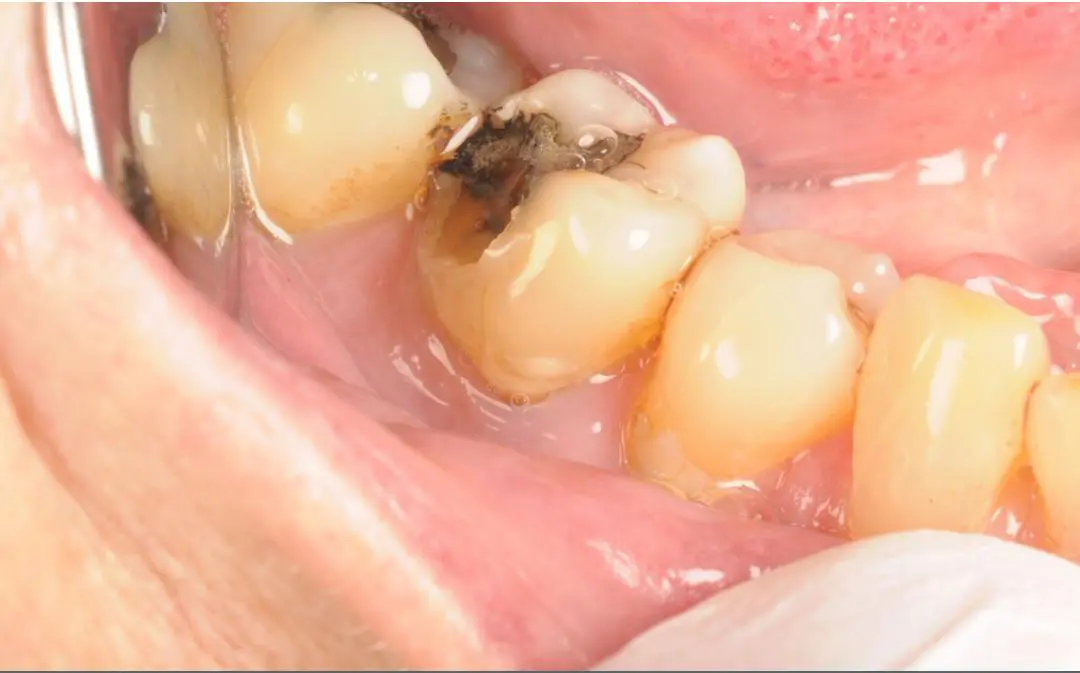
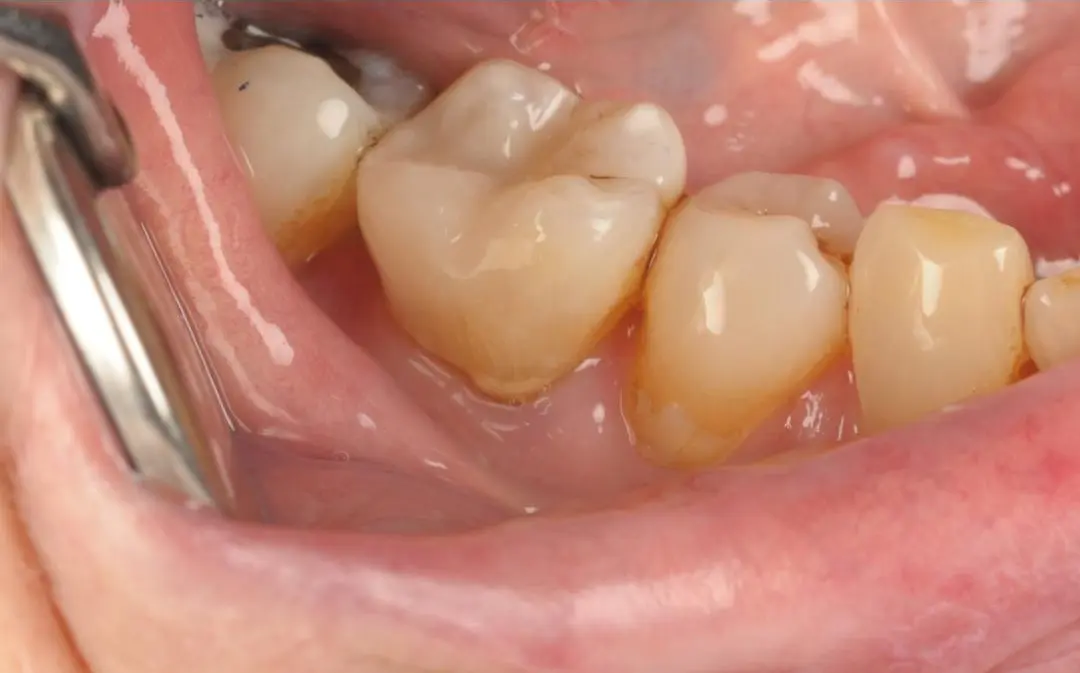
Real Patient Result: Emergency White Filling
Treatment by Dr Kamran
Similarly, as decay eats through the enamel and dentine, bacteria and their by-products move closer to the pulp, triggering an inflammatory response that the nerve tissue registers as pain.
Understanding this anatomy helps explain why early intervention matters — the deeper either condition progresses, the more complex the clinical management may become.
Symptoms Worth Monitoring
Both cracked cusps and deep tooth decay can share a number of overlapping symptoms. While this article is not a substitute for clinical diagnosis, the following signs are generally worth noting and discussing with a dental professional:
Possible signs of a cracked cusp:
- Sharp pain when biting or chewing, particularly on release of pressure
- Discomfort localised to one tooth
- Sensitivity to cold that subsides quickly
- No visible cavity or obvious damage on the tooth surface
Possible signs of deep tooth decay:
- Prolonged sensitivity to hot, cold, or sweet foods
- Dull, aching pain when chewing
- Visible dark spots, holes, or discolouration on the tooth
- Spontaneous or throbbing pain without an obvious cause
- Bad taste or odour in the area
It is worth noting that some patients experience symptoms from both conditions simultaneously, particularly when a tooth with existing decay also develops a structural crack.
When a Professional Dental Assessment May Be Appropriate
If you notice persistent pain when biting hard foods, it is generally advisable to arrange a dental examination sooner rather than later. Early assessment can help prevent a manageable issue from becoming more complex over time.
You may wish to seek professional advice if you experience:
- Pain that has lasted longer than a few days
- Swelling in the gum or jaw area
- Visible damage to a tooth
- Increased sensitivity that is worsening
- Spontaneous pain without biting
- Signs of possible infection, such as a swollen face or raised temperature
A dentist will typically use a combination of clinical examination, bite testing, and dental X-rays to assess the nature and extent of the problem. Treatment options may range from a dental crown for a cracked cusp to a tooth filling or root canal treatment for decay, depending on how far the condition has progressed.
Dental symptoms and treatment options should always be assessed individually during a clinical examination.
Prevention and Oral Health Advice
Whilst not every cracked cusp or cavity is entirely preventable, there are practical steps that may help reduce your risk:
- Attend regular dental check-ups — Routine examinations allow problems to be identified at an earlier, more manageable stage
- Avoid chewing very hard objects — Ice, boiled sweets, and hard nuts can place excessive stress on teeth
- Wear a night guard if you grind your teeth — A custom-fitted guard can protect teeth from bruxism-related wear
- Maintain a consistent oral hygiene routine — Brushing twice daily with fluoride toothpaste and flossing daily helps reduce decay risk
- Limit sugary and acidic foods and drinks — These contribute to enamel erosion and decay over time
- Ask your dentist about fissure sealants — These thin protective coatings can help shield vulnerable back teeth from decay
Visiting a dental professional for preventative dental care is one of the most effective ways to protect your long-term oral health.
Key Points to Remember
- Pain when biting hard foods is commonly linked to either a cracked cusp or deep tooth decay
- Both conditions affect the inner structures of the tooth and can irritate the dental nerve
- Symptoms of the two conditions can overlap, making clinical diagnosis essential
- Early assessment generally leads to simpler, less invasive treatment options
- Lifestyle habits such as teeth grinding and a high-sugar diet can increase risk
- Regular dental check-ups remain one of the most effective preventative measures available
Frequently Asked Questions
Can a cracked cusp heal on its own?
No — unlike some other tissues in the body, a cracked cusp will not repair itself. Teeth do not have the capacity for self-healing in the same way. Without treatment, a crack can deepen over time, potentially affecting the nerve and pulp. Early clinical assessment is important to determine the extent of the crack and the most appropriate management approach. Leaving a cracked cusp untreated may result in more complex treatment being needed at a later stage.
How is a cracked cusp different from a fully cracked tooth?
A cracked cusp typically involves a fracture limited to one of the raised points on a tooth's biting surface. A fully cracked tooth, by contrast, involves a fracture line that extends further into or through the tooth structure. The distinction matters clinically because it affects which treatments may be suitable. A dentist will assess the depth and direction of any crack during examination to determine the appropriate course of action.
Is it possible to have deep tooth decay without any pain?
Yes, this is relatively common. Decay in its early stages can progress without causing noticeable discomfort. Pain tends to emerge when the decay reaches the dentine or approaches the pulp. This is one reason why routine dental check-ups are valuable — X-rays and clinical examination can identify decay before it becomes symptomatic, potentially allowing for simpler treatment.
Can a dental crown fix a cracked cusp?
A dental crown is one treatment option that a dentist may consider for a cracked cusp, particularly when the cusp fracture has compromised the structural integrity of the tooth. The crown encases the remaining tooth structure, helping to restore function and protect it from further damage. However, suitability depends entirely on the nature and extent of the crack, as assessed during a clinical examination.
What happens if deep tooth decay is left untreated?
If deep tooth decay is not addressed, the infection can progress toward the pulp, potentially causing significant pain, abscess formation, and in some cases, the spread of infection to surrounding tissue. Treatment in advanced cases may involve root canal therapy or, where the tooth cannot be saved, extraction. Early intervention is generally associated with more conservative treatment options and may support more favourable outcomes.
How long does it take to treat a cracked cusp or deep tooth decay?
Treatment timescales vary considerably depending on the severity of the condition and the approach recommended. A straightforward restoration for early decay may be completed in a single appointment, whilst more advanced decay or a significantly cracked tooth may require multiple visits. A dentist will be able to give you a clearer indication of the likely timeline following a clinical assessment.
Conclusion
Pain when biting hard foods is not something to dismiss or simply manage with over-the-counter pain relief indefinitely. Whether the underlying cause turns out to be a cracked cusp, deep tooth decay, or another dental concern entirely, the most reliable way to understand what is happening is through a thorough clinical examination by a qualified dental professional.
Both conditions are manageable when identified early, and a range of treatment options exist depending on each patient's individual circumstances. Maintaining good oral hygiene, attending routine dental appointments, and being mindful of habits that place excessive stress on your teeth are all practical steps that support long-term dental health.
If you are experiencing persistent discomfort when biting, do not hesitate to seek professional advice. Early attention is generally preferable to waiting until symptoms worsen. Treatment suitability and clinical urgency depend on individual assessment by a qualified dental professional.
Dental symptoms and treatment options should always be assessed individually during a clinical examination.
Disclaimer: This article is intended for general educational purposes only and does not constitute personalised dental advice. Individual diagnosis and treatment recommendations require a clinical examination by a qualified dental professional.
Next Review Due: 20 November 2027