
A tooth that splits is not always dramatic. Sometimes it starts with an odd sensation while chewing — a fleeting sharpness that vanishes the moment you release the bite. Other times, it happens all at once. A loud crack during a meal, a sudden bolt of pain, and a piece of tooth that moves when you press it with your tongue.
Teeth splitting is more common than most people realise. It can happen to any tooth, at any age, and the causes range from biting into something unexpectedly hard to the slow weakening effect of an untreated cavity. A large filling that has been in place for years can leave the surrounding tooth walls thin and vulnerable. Habitual grinding wears teeth down night after night until the structure gives way.
What matters most is what happens next. A cracked tooth caught early can often be restored with straightforward treatment. Left untreated, the same crack can deepen, reach the nerve, invite infection, and ultimately lead to tooth loss. The difference between saving and losing the tooth frequently comes down to timing.
Experiencing these symptoms?
Delaying treatment can lead to tooth loss. We have slots available today.
This guide explains the different types of tooth fractures, the symptoms to recognise, and how each is treated. If you have a tooth that has cracked, split, or broken and you need to be seen today, same-day appointments are available through our emergency dental services in London.
What Is Teeth Splitting?
Teeth splitting refers to a structural failure in a tooth where a crack extends through the crown — and sometimes into the root — creating two or more distinct segments. Unlike a simple chip, a tooth split involves a fracture that penetrates deeper layers of the tooth, affecting the dentine and potentially the nerve. Treatment depends on the depth, direction, and extent of the crack on tooth surfaces.
The term covers a range of fracture types. A hairline crack in the enamel is very different from a tooth that has divided into two halves down to the root. Understanding where your situation sits on this spectrum helps you anticipate the treatment involved.
Meet Dr. Yasha Shirazi
Principal Dentist at Emergency Dentist London
"We treat hundreds of dental emergencies every month. The sooner you come in, the easier the fix usually is."
Book an appointment with our team →A crack on tooth enamel alone may cause no symptoms at all. Many people have fine craze lines across their teeth that never progress or cause problems. But when a tooth fracture extends through the enamel into the underlying dentine — or further into the pulp chamber — pain, sensitivity, and the risk of infection all increase significantly.
The distinction between a cracked tooth and a fully fractured teeth situation matters clinically. A cracked tooth still holds together — the pieces have not separated. A split tooth has divided into segments that can be independently moved. This difference determines whether the tooth can be saved or needs to be removed.
For a detailed overview of fracture classifications and how each is managed, our article on understanding tooth fractures and treatment options provides further reading.
Signs and Symptoms of Teeth Splitting
Recognising a cracked tooth early gives you the best chance of saving it. The symptoms can be subtle at first — easy to dismiss or attribute to something else. But they follow recognisable patterns.
Pain when chewing. This is the hallmark symptom. A tooth cracked through the dentine produces a sharp, sudden pain when you bite down — particularly when the force is applied at a specific angle. The pain often appears when biting and disappears when the pressure is released. It may not occur with every bite, which can make it difficult to pinpoint the problem tooth.
Sensitivity to temperature. A cracked tooth may become noticeably sensitive to hot or cold food and drink. Cold sensitivity is especially common. The crack allows temperature changes to reach the nerve more directly than intact enamel would permit.
Intermittent sharp pain. Unlike a cavity — which tends to produce a consistent ache — a cracked tooth often causes pain that comes and goes unpredictably. One meal is fine, the next sends a jolt through the tooth. This inconsistency is itself a useful diagnostic clue.
Visible crack. In some cases, you may be able to see the crack on tooth surfaces, particularly on front teeth or when the fracture is large. A visible line running across the tooth, a piece that feels loose, or a section that has clearly separated are obvious signs of fractured teeth.
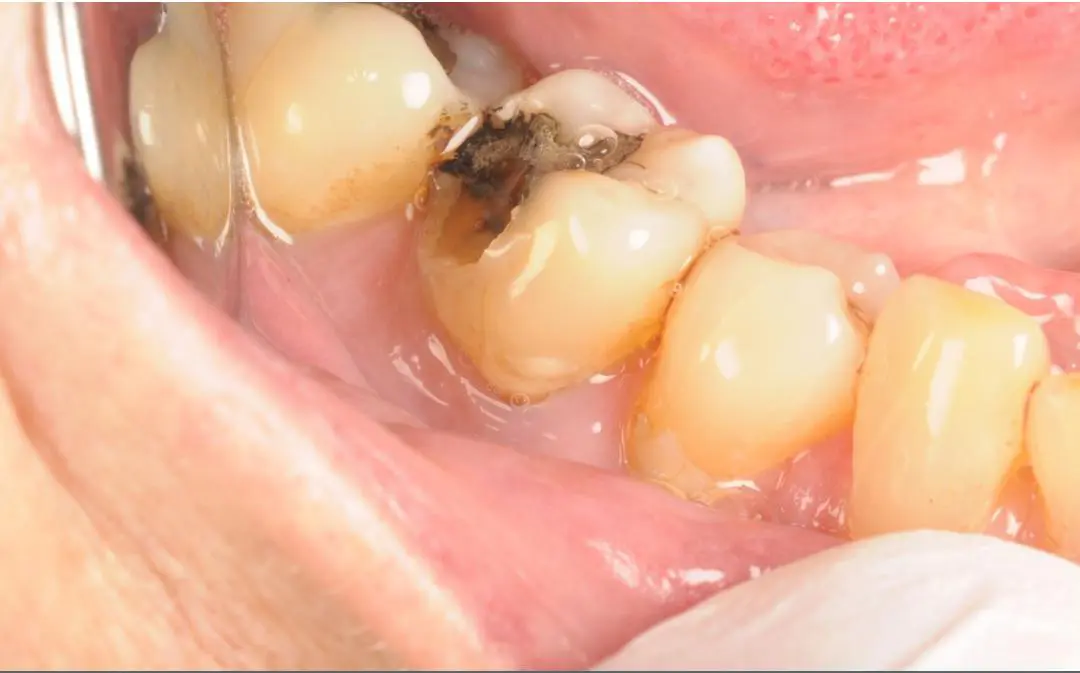
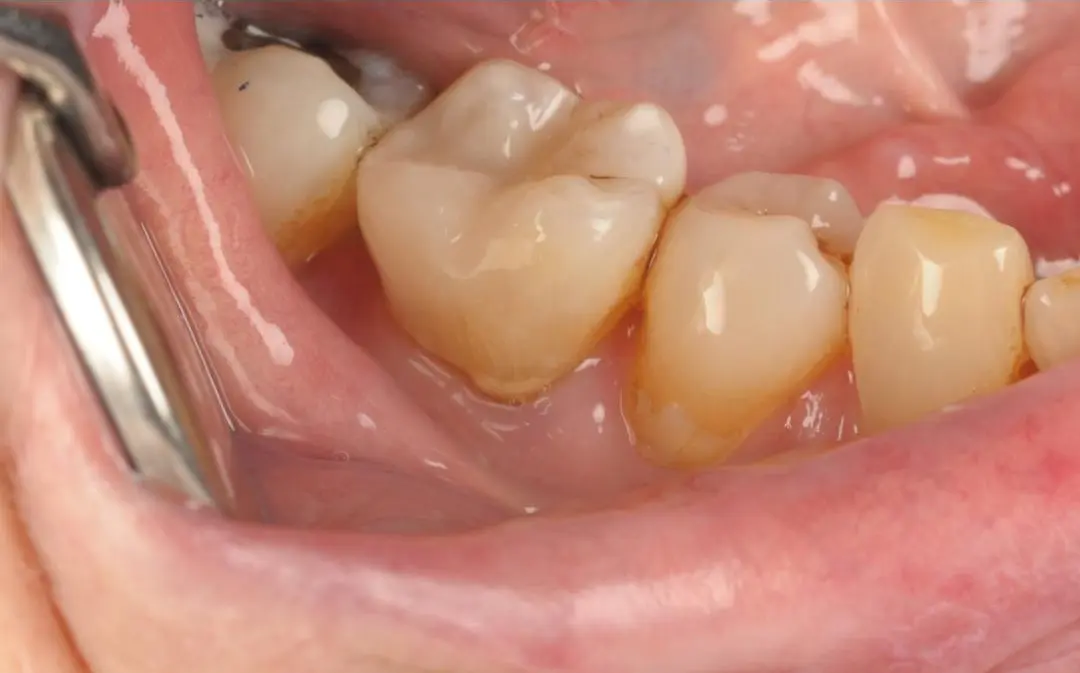
Real Patient Result: Emergency White Filling
Treatment by Dr Kamran
Gum swelling near the tooth. When a crack extends below the gum line or reaches the root, the surrounding gum tissue may become swollen and tender. This can indicate that bacteria have entered the crack and infection is developing.
If you are unsure whether your symptoms point to a crack or an infection, our guide on toothache vs dental infection — how to tell the difference helps distinguish between the two.
What Causes a Tooth to Split?
Teeth are remarkably strong, but they are not indestructible. Several factors — often working in combination — can weaken a tooth to the point where it cracks or splits.
Biting hard foods. Ice, hard sweets, popcorn kernels, olive pits, and crusty bread are common culprits. A sudden, concentrated force on one point of a tooth can exceed its structural limit. A fractured molar from biting on something unexpectedly hard is one of the most frequent presentations in emergency dentistry.
Untreated cavities. Decay hollows out the tooth from within. The walls become thinner and weaker. Eventually, normal chewing pressure — nothing unusual or excessive — is enough to cause a cracked tooth because the remaining structure can no longer support itself.
Teeth grinding. Bruxism subjects teeth to prolonged, repetitive forces that far exceed normal chewing loads. Over months and years, this constant pressure creates fatigue in the tooth structure. Micro-cracks develop, deepen, and eventually a tooth fracture occurs — often during an ordinary meal, because the damage was already done during sleep.
Large existing fillings. A filling replaces lost tooth structure but does not restore the original strength. A tooth with a large filling — particularly an old amalgam filling — has thinner walls that are more prone to flexing and cracking under load. The bigger the filling, the higher the risk.
Dental trauma. Falls, sports injuries, and accidental impacts can crack or split teeth instantly. Even a blow that does not appear severe at the time can create a hairline fracture that worsens over the following weeks.
Sudden temperature changes. Biting into something very hot immediately followed by something very cold — or vice versa — creates rapid thermal expansion and contraction in the tooth. Repeated cycles of this can contribute to enamel cracking.
Our guide on what to do if you break a tooth covers the immediate steps to take when damage occurs.
Types of Tooth Fractures
Not all cracks are the same. The type of tooth fracture determines the symptoms, the treatment options, and the long-term outlook for the tooth.
Craze lines. These are superficial cracks in the outer enamel only. They are extremely common in adult teeth and almost never cause symptoms or require treatment. You may notice them as faint vertical lines on the front surfaces of your teeth, particularly under certain lighting.
Fractured cusp. A cusp — one of the raised points on the chewing surface — can break away from the rest of the tooth. This most commonly affects teeth with large fillings. A fractured molar cusp may cause brief sharp pain during chewing but rarely affects the nerve. Treatment typically involves a crown to replace the missing section and protect the tooth.
Cracked tooth. A crack that extends vertically from the chewing surface towards the root. The tooth is still in one piece — the crack has not separated it — but the pieces flex against each other when you bite, producing the characteristic on-off pain pattern. If caught early, a crown can stabilise the tooth. If the crack reaches the pulp, root canal treatment may be needed first.
Split tooth. When a cracked tooth is not treated, the crack can progress until the tooth divides into two or more distinct segments. A tooth split in this way can sometimes be partially saved if one segment retains enough root structure — but in many cases, extraction is necessary.
Vertical root fracture. A crack that begins in the root and extends upward. These fractures can be difficult to detect because they may produce only subtle symptoms — mild soreness, intermittent gum swelling near the root. They are often discovered during investigation for a low-grade infection that does not respond to standard treatment.
Tooth broken at gum line. When the entire crown snaps off at or near the gum, only the root remains embedded in the jawbone. A tooth broken at gum line presents a challenge — but depending on the root length and condition, it may still be possible to place a post and crown rather than extract the root.
For emergency guidance on any type of dental fracture, visit our dental trauma emergency treatment page.
How to Fix a Split Tooth
The right treatment for a tooth split depends on where the crack is, how deep it goes, and how much healthy tooth structure remains. Your dentist will assess each of these factors before recommending the most appropriate option.
Dental bonding. For minor cracks that affect only the enamel or a small area of dentine, composite bonding can seal the crack and restore the tooth's surface. The resin material is applied directly, shaped to match the natural contour, and hardened with a curing light. This is the simplest and least invasive approach — suitable for small cracks that have not reached the nerve.
Dental crown. A crown is the most common treatment for a cracked tooth that still holds together. The crown covers the entire visible portion of the tooth, holding the cracked sections together and distributing biting forces evenly. This prevents the crack from progressing further. If you are wondering how to fix a split tooth that is still structurally intact, a crown is often the answer.
Root canal treatment. When a crack extends into the pulp chamber — the area containing the nerve — the pulp becomes inflamed or infected. Root canal therapy removes the damaged tissue, cleans and seals the canals, and is typically followed by a crown. This two-step approach saves the natural tooth even when the fracture has reached the nerve.
Tooth extraction. When fractured teeth have split completely through the root, or when the crack extends vertically below the bone level, saving the tooth may not be possible. Extraction removes the damaged tooth and clears any associated infection. Replacement options — including implants and bridges — can then be discussed.
For more on how broken and cracked teeth are repaired, visit our broken tooth repair treatment page. If root canal treatment is required, our root canal treatment for infected teeth page explains the procedure in detail.
When a Cracked Tooth Becomes a Dental Emergency
A small crack that causes occasional sensitivity is uncomfortable but not urgent. Certain symptoms, however, indicate the situation has escalated and requires prompt attention.
Severe tooth pain. Intense, constant pain that does not respond to over-the-counter painkillers suggests the nerve is compromised. A cracked tooth with this level of pain may have an exposed or dying nerve, which needs same-day assessment.
Sudden swelling around the tooth. Swelling in the gum, cheek, or jaw near a cracked tooth indicates that infection has taken hold. Bacteria entering through the crack reach the pulp and root, triggering an abscess. Swelling that is spreading or accompanied by feeling unwell is a clear emergency.
Infection spreading to surrounding gums. Redness, tenderness, and warmth in the tissue around the tooth — particularly if pus is visible or a foul taste is present — confirms active infection. A tooth fracture that has introduced bacteria deep into the tooth structure requires urgent treatment to prevent the infection from worsening.
Tooth broken at gum line. When the crown has sheared off completely, the exposed root and any remaining nerve tissue are vulnerable. Pain, bleeding, and sensitivity are immediate, and the risk of infection is high. Seeking care the same day is strongly recommended.
For immediate pain relief guidance, visit our pages on severe toothache relief for sudden dental pain and emergency severe toothache treatment options.
How Dentists Diagnose a Split Tooth
Diagnosing a cracked tooth can be challenging. Cracks do not always show up on standard X-rays, and the symptoms can mimic other dental conditions. Your dentist will use a combination of methods to confirm the diagnosis.
Dental examination. A thorough visual inspection under magnification and good lighting is the starting point. The dentist will look for visible crack lines, check for loose segments, and assess the condition of existing restorations that may be masking a fracture beneath.
Bite pressure testing. Using a small instrument called a Tooth Slooth — or a cotton roll positioned on individual cusps — the dentist asks you to bite down gradually. Pain that occurs when biting on a specific part of the tooth, and particularly when releasing the bite, is highly indicative of a tooth fracture running through the dentine.
Transillumination. A bright light placed against the tooth can reveal cracks that are invisible to the naked eye. Light passes through intact enamel but stops at a fracture line, creating a visible shadow. This technique is especially useful for detecting cracks in back teeth where visibility is limited.
X-ray imaging. While hairline cracks may not appear on X-rays, imaging can reveal related signs — such as widening of the ligament space around the root, bone loss at the root tip suggesting chronic infection, or a large cavity that has undermined the tooth structure. Periapical X-rays and cone beam CT scans provide different levels of detail.
Staining. In some cases, the dentist may apply a dye to the tooth surface. The dye seeps into the crack line and stains it, making even very fine fractures visible during examination.
Our complete guide to dental emergencies in London covers the full assessment process for urgent dental presentations.
What Happens If a Split Tooth Is Left Untreated?
Ignoring a cracked or split tooth does not make it better. Teeth do not heal like bone. A crack that exists today will still be there tomorrow — and without treatment, it is likely to worsen over time.
Bacteria entering the inner tooth. A crack is a doorway. Even a hairline fracture in the enamel allows bacteria from saliva and food to penetrate deeper than brushing can reach. As the bacteria colonise the dentine, they work their way towards the pulp chamber at the centre of the tooth.
Infection developing inside the pulp. Once bacteria reach the pulp, the nerve and blood vessels become inflamed and infected. The result is pulpitis — which may be reversible at first but progresses to irreversible damage without intervention. Teeth splitting further under chewing forces can accelerate this process, opening wider channels for bacterial entry.
Worsening tooth fracture. Every bite places stress on the crack. Over time, the fracture line extends — deeper into the root, wider across the crown, or in new directions. A crack that could have been stabilised with a crown may eventually require root canal treatment, and in some cases, a tooth that can no longer be restored may need to be removed.
Possible tooth loss. The end point of an untreated split tooth is often extraction. A crack that reaches below the bone level, a vertical root fracture, or a tooth overwhelmed by infection may leave no viable option for repair. Replacing a lost tooth with an implant or bridge is significantly more complex and more expensive than treating the original crack would have been.
Our article on signs a dental infection may be spreading explains when infection requires urgent attention. For infection-related treatment, visit our dental abscess treatment for infection-related tooth damage page.
Preventing Teeth Splitting
Many tooth fractures are preventable. Building a few protective habits into your daily routine significantly reduces the risk of teeth splitting.
Avoid chewing ice or hard foods. Ice, hard boiled sweets, popcorn kernels, and nut shells are among the most common causes of cracked teeth. Eating these things occasionally might seem harmless, but each bite is a gamble — especially on teeth with large fillings or previous restorations.
Treat cavities early. A small filling preserves the majority of the tooth structure and keeps the walls strong. Delaying treatment allows the decay to expand, weaken the tooth from within, and create the conditions for a cracked tooth or complete fracture.
Wear a mouthguard during sports. Contact sports, ball sports, and any activity with a risk of impact to the face warrant a mouthguard. A custom-fitted guard from your dentist offers the best protection and comfort, but even an over-the-counter option is better than none.
Consider a night guard if you grind. If you clench or grind your teeth during sleep — bruxism — the cumulative force can be enormous. A night guard cushions the teeth and distributes the load, preventing the fatigue fractures that grinding causes.
Avoid biting non-food objects. Pen caps, fingernails, thread, packaging — using your teeth as tools puts them at unnecessary risk. The forces involved are unpredictable and often concentrated on a single point.
Schedule regular dental check-ups. Your dentist can identify teeth that are at risk — those with large fillings, early cracks, worn enamel, or signs of grinding — and take preventive action before a fracture occurs.
For managing early tooth pain symptoms at home, our guide on how to stop tooth pain fast when symptoms begin offers practical advice.
When to See an Emergency Dentist for a Split Tooth
Not every cracked tooth requires an emergency appointment — but several situations call for same-day assessment.
Persistent pain while chewing. If the pain occurs every time you eat, prevents you from using one side of your mouth, or lingers after meals, the crack is likely significant enough to require prompt treatment. Continuing to chew on a cracked tooth risks worsening the fracture.
Sudden tooth fracture. A tooth that cracks or breaks during a meal, an impact, or biting on a hard object should be assessed as soon as possible. The sooner the damage is evaluated, the more options your dentist has for repair.
Tooth broken at gum line. When the visible crown has broken away entirely, the exposed root needs protection from bacteria and further damage. Same-day treatment can stabilise the situation and begin the restoration process.
Signs of infection or swelling. Any swelling, pus, fever, or foul taste associated with a cracked or fractured tooth means infection has taken hold. This requires urgent professional treatment — antibiotics alone are unlikely to fully resolve a dental infection without addressing the source.
Same-day and next-day appointments are regularly available. Our walk-in dentist in London service accepts patients without prior registration. Weekend emergency dentist appointments are available for those who cannot attend during the working week. For evening and late availability, visit our out-of-hours dentist in London for urgent treatment page.
Frequently Asked Questions
What causes teeth splitting?
Teeth splitting is caused by a combination of factors that weaken the tooth structure over time. Biting hard foods such as ice or popcorn kernels can crack a tooth suddenly. Untreated decay hollows out the tooth from within, making the walls fragile. Teeth grinding places excessive repetitive force on the enamel, creating fatigue cracks.
Large fillings — particularly old ones — reduce the remaining natural tooth structure and increase the risk of fracture. Dental trauma from falls, impacts, or accidents can also crack or split teeth instantly. In many cases, more than one factor is involved — a weakened tooth finally gives way under an otherwise normal chewing force.
How to fix a split tooth?
How to fix a split tooth depends on the severity and location of the fracture. Minor cracks confined to the enamel can be sealed with composite bonding. A cracked tooth that extends into the dentine is typically restored with a dental crown, which holds the pieces together and distributes biting forces.
If the crack has reached the nerve, root canal treatment is needed before a crown is placed. For teeth that have split completely through the root or fractured below the bone level, extraction may be the only remaining option. Early assessment gives the best chance of preserving the tooth with less invasive treatment.
Can a cracked tooth heal itself?
No. Unlike bone, tooth enamel and dentine cannot regenerate or repair themselves. A crack that exists in a tooth will remain permanently. Without treatment, the crack is likely to deepen and widen over time as chewing forces continue to stress the fracture line.
A cracked tooth needs professional dental treatment to prevent the fracture from progressing. Depending on the severity, this may involve bonding, a crown, or root canal treatment. The earlier the crack is treated, the simpler and more predictable the repair.
What is the difference between cracked tooth and tooth fracture?
The terms are closely related but describe slightly different things. A cracked tooth refers specifically to a crack that runs vertically through the crown, often extending towards the root. The tooth is still in one piece — the crack has not separated it into distinct segments.
A tooth fracture is a broader term covering any structural break in the tooth, including chips, cusp fractures, split teeth, and root fractures. A cracked tooth is one type of tooth fracture. The distinction matters because the treatment approach and prognosis differ depending on which type of fracture is present.
When should I see a dentist for a fractured molar?
You should see a dentist promptly if a fractured molar causes persistent pain when chewing, sensitivity that does not resolve within a few days, visible cracking or a loose segment, swelling in the gum nearby, or any sign of infection such as a bad taste or discharge.
A fractured molar that is left untreated can worsen rapidly because molars absorb the greatest chewing forces. Early assessment allows your dentist to stabilise the tooth — often with a crown — before the crack progresses to the point where root canal treatment or extraction becomes necessary. Our guide on 10 warning signs you need an emergency dentist immediately can help you decide when to seek urgent care.
Disclaimer
This article is for general educational purposes only and does not constitute professional dental advice, diagnosis, or treatment. Every patient's circumstances are unique; dental symptoms and treatment options should always be assessed during a clinical examination by a qualified dental professional. No specific outcomes are guaranteed. This content has been prepared in line with GDC, CQC, ASA CAP Code, and GMC communication standards. If you have concerns about your oral health, please contact a registered dentist.