
If you have ever experienced a throbbing ache in your upper jaw combined with facial pressure and congestion, you may have found yourself wondering whether the problem lies with your teeth or your sinuses. This confusion is remarkably common, and many people turn to online searches trying to make sense of overlapping symptoms before seeking professional help.
Distinguishing between a deep sinus infection and an upper tooth abscess is genuinely challenging — even for experienced clinicians — because the anatomy of the upper jaw places the roots of certain back teeth in very close proximity to the maxillary sinuses. The result is that pain signals, pressure, and swelling can feel almost identical regardless of which structure is actually affected.
This article explains how emergency dentists approach this diagnostic challenge, what clinical and radiographic tools they use, which symptoms point in each direction, and when seeking urgent professional dental assessment is the most sensible course of action. Understanding these distinctions can help you describe your symptoms more accurately and feel better prepared for your appointment.
Experiencing these symptoms?
Delaying treatment can lead to tooth loss. We have slots available today.
Featured Snippet Answer
How do emergency dentists differentiate between a deep sinus infection and an upper tooth abscess?
Emergency dentists differentiate between a deep sinus infection and an upper tooth abscess by combining a thorough symptom history with clinical tests — including percussion, palpation, and thermal sensitivity checks — alongside dental X-rays or CBCT scans. An upper tooth abscess typically produces a localised response to specific teeth, whereas a sinus infection tends to cause bilateral or diffuse pressure across the face.
Why the Two Conditions Are So Easily Confused
The upper back teeth — particularly the upper premolars and molars — have roots that sit immediately below, or in some cases actually project into, the floor of the maxillary sinuses. These are the large air-filled cavities located behind your cheekbones on either side of your nose.
Meet Dr. Yasha Shirazi
Principal Dentist at Emergency Dentist London
"We treat hundreds of dental emergencies every month. The sooner you come in, the easier the fix usually is."
Book an appointment with our team →When an abscess develops at the root tip of one of these teeth, the resulting inflammation and bacterial activity can irritate the sinus lining directly, causing congestion, facial pressure, and a feeling of fullness that closely mimics sinusitis. Conversely, when the sinuses themselves become infected — typically following a cold, flu, or allergic episode — they can exert pressure on those same root tips and generate what feels like toothache.
Both conditions can cause:
- Dull or throbbing pain in the upper jaw
- Tenderness when pressing the cheekbones
- A sensation of pressure when bending forward
- Mild temperature sensitivity around the upper teeth
Because the symptom overlap is so significant, neither condition should be self-diagnosed. An emergency dentist is trained to work through this overlap systematically and methodically.
Clinical Tests Emergency Dentists Use
When you attend an emergency dental appointment, the clinician will perform a structured series of diagnostic tests before forming any working diagnosis.
Percussion testing involves tapping individual teeth gently with a dental instrument. A tooth harbouring a periapical abscess will typically produce a sharp, localised pain response to percussive force. A sinus infection alone rarely produces this kind of pinpoint tooth-specific tenderness.
Thermal sensitivity testing uses cold or heat stimuli to assess pulp vitality. A tooth with a non-vital (dead) pulp — commonly the source of an abscess — will often show a markedly different response compared to vital teeth. Sinusitis does not affect pulp vitality.
Palpation of the surrounding gum and facial tissues helps identify swelling, fluctuance (a fluid-filled quality indicating pus), or lymph node involvement.
Bite tests can reveal whether discomfort is reproduced when the patient bites down on individual teeth, further isolating the source.
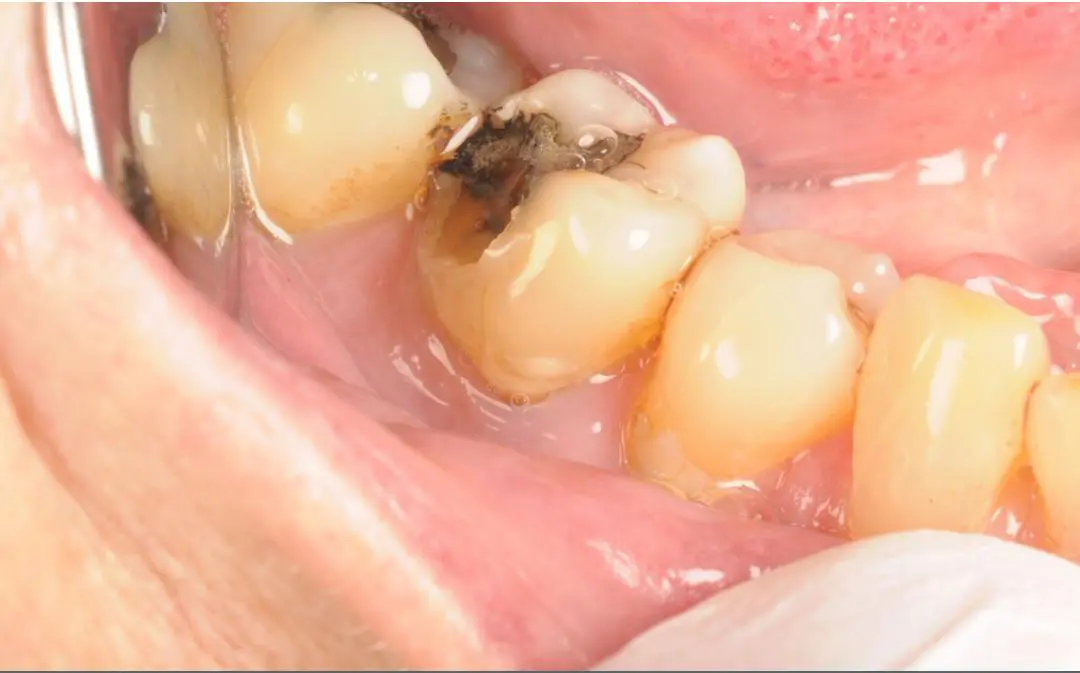
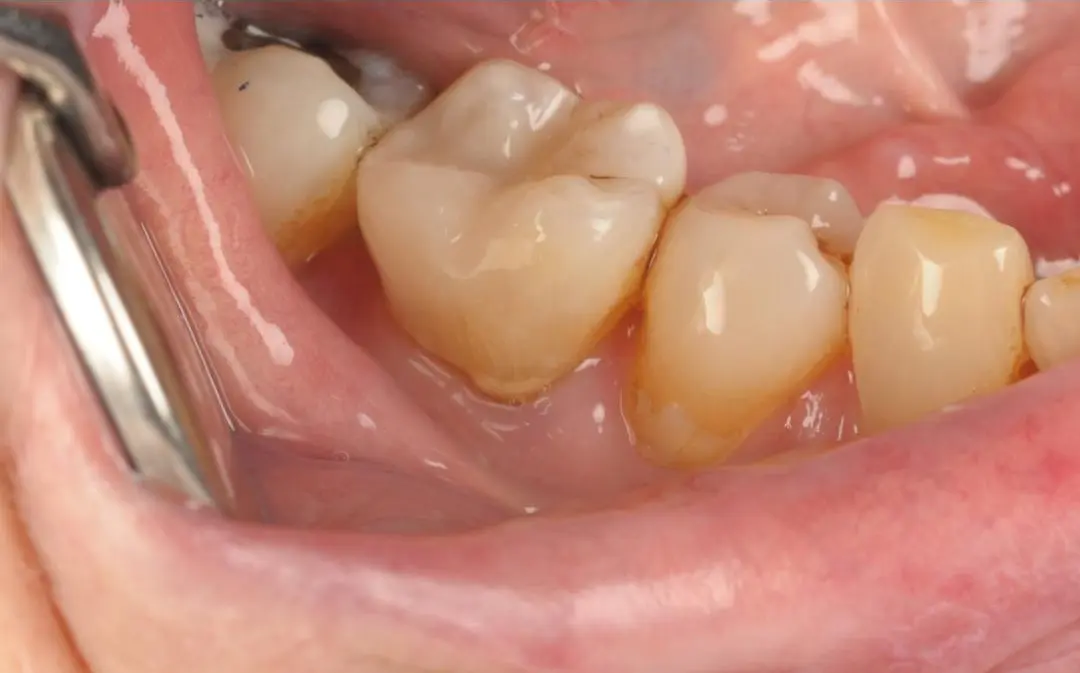
Real Patient Result: Emergency White Filling
Treatment by Dr Kamran
Together, these hands-on assessments provide a clinical picture that is considerably more informative than symptoms alone.
The Role of Dental Imaging
Clinical examination alone is rarely sufficient to confirm a diagnosis in ambiguous presentations. Dental imaging plays a central role in distinguishing between sinusitis and a dental abscess.
Periapical X-rays provide a detailed view of individual tooth roots and the surrounding bone. A periapical abscess typically shows as a darkened area (radiolucency) at the root tip, indicating bone destruction caused by infection.
Orthopantomogram (OPG or dental panoramic X-ray) gives a broader overview of the upper and lower jaws, enabling the clinician to assess multiple teeth and the lower border of the maxillary sinuses simultaneously.
Cone Beam Computed Tomography (CBCT) is increasingly available in specialist and emergency dental settings and provides a three-dimensional view of the teeth, roots, and sinuses. This is particularly valuable in complex cases where a root may appear to breach the sinus floor or where multiple upper teeth are under suspicion.
Sinus infection, when it originates from the sinus rather than a tooth, may show generalised clouding or fluid levels across the entire sinus cavity rather than isolated periapical pathology around a single tooth root.
Symptom Patterns That Help Guide Diagnosis
While no symptom is diagnostic on its own, certain patterns can steer the clinician's thinking:
Features more suggestive of sinusitis:
- Pain and pressure affecting both sides of the face simultaneously
- Nasal congestion, post-nasal drip, or purulent nasal discharge
- Symptoms that began alongside or shortly after a cold or respiratory illness
- Pain that worsens significantly when tilting the head forward
- Multiple upper teeth feel vaguely sensitive rather than one specific tooth
Features more suggestive of a dental abscess:
- Pain localised to one specific tooth or a small cluster of teeth
- A visible gum swelling, pimple-like lesion (sinus tract), or bad taste suggesting pus drainage
- Severe, spontaneous throbbing pain — particularly at night
- A history of trauma, deep decay, or recent dental work on the affected tooth
- Pain that does not resolve with decongestants or nasal rinses
If you are experiencing any combination of these symptoms, a formal assessment by a dental professional is the appropriate next step. For patients in London, access to same-day emergency dental care can help ensure that a diagnosis is reached promptly.
The Underlying Biology: Why Infections Spread This Way
Understanding a little of the anatomy helps explain why these two conditions interact so frequently.
The maxillary sinuses are pyramid-shaped cavities within the cheekbones. Their floor — the lowest point — sits directly above the upper molar and premolar roots. In many adults, one or more molar roots may actually indent or penetrate the sinus floor, with only a thin membrane of tissue separating them.
When bacteria from a deeply infected or necrotic tooth pulp travel through the root canal and exit at the root tip (a process called periapical periodontitis), they enter a space that may be millimetres away from sinus tissue. The sinus membrane can become inflamed — a condition called odontogenic sinusitis — meaning the sinus infection is actually being driven by the dental source.
This pathway also works in reverse: chronic sinusitis generating significant mucosal thickening and pressure can cause referred pain around upper tooth roots, even when those teeth are structurally healthy.
When Professional Dental Assessment May Be Needed
You should consider seeking prompt dental evaluation if you notice any of the following:
- Persistent facial or jaw pain lasting more than a few days without clear improvement
- Swelling of the face, gum, or beneath the eye
- A bad or unusual taste in the mouth that does not resolve
- Fever accompanied by dental or facial pain
- Pain that keeps you awake at night or is not adequately managed by over-the-counter painkillers
- Any previous dental treatment on the affected side of the mouth
These symptoms do not necessarily confirm a serious condition, but they warrant professional assessment. Treatment options and clinical decisions will always depend on individual examination findings, and no online resource can substitute for an in-person evaluation.
Prevention and Oral Health Advice
Preventing a dental abscess in the upper jaw — and thereby reducing the risk of sinus complications — begins with consistent oral health habits:
- Attend regular dental check-ups. Routine examinations allow decay to be identified and managed before it reaches the pulp and triggers infection.
- Address toothache promptly. Pain that lingers or worsens is rarely self-resolving and benefits from early clinical attention.
- Maintain good brushing and flossing habits. Removing plaque from all tooth surfaces, including the gumline, reduces the bacterial burden that can progress to abscess formation.
- Manage dry mouth. Certain medications reduce saliva flow, which normally protects teeth. Speak to your dentist or GP if you notice persistent dryness.
- Stay on top of your sinus health. Recurrent sinusitis should be managed appropriately, and your dentist or GP may refer you to an ear, nose, and throat (ENT) specialist if sinus symptoms are frequent.
If you have had a tooth abscess treated in the past, learning about root canal treatment may help you understand how the infection source is addressed at a structural level.
Key Points to Remember
- An upper tooth abscess and a deep sinus infection produce remarkably similar symptoms because the upper molar and premolar roots sit immediately adjacent to the maxillary sinuses.
- Emergency dentists use percussion, thermal, and palpation tests combined with dental X-rays or CBCT imaging to distinguish between the two conditions.
- Odontogenic sinusitis — sinus infection caused by a dental source — is more common than many patients realise and requires dental rather than medical treatment to resolve fully.
- Localised pain to one specific tooth, gum swelling, or pus drainage are indicators that lean towards a dental abscess rather than sinusitis.
- Bilateral facial pressure following a cold or respiratory illness is more characteristic of a primary sinus infection.
- Professional assessment is always required — self-diagnosis based on symptoms alone carries a meaningful risk of error.
Frequently Asked Questions
Can a tooth abscess cause sinus congestion?
Yes. When an abscess forms at the tip of an upper molar or premolar root, the resulting infection can spread to the adjacent maxillary sinus lining, causing it to become inflamed and congested. This is known as odontogenic sinusitis. In these cases, treating the dental source — rather than the sinus alone — is necessary for full resolution. Antibiotic treatment or decongestants may provide temporary relief but are unlikely to resolve the problem if the underlying dental infection remains untreated.
How long does it take for a dentist to diagnose a tooth abscess versus sinusitis?
In most cases, an experienced emergency dentist can form a working diagnosis within a single appointment. Clinical tests such as percussion and thermal sensitivity checks are performed chairside and take only a few minutes. Dental X-rays provide additional information within the same visit. For complex or ambiguous presentations, CBCT imaging or specialist referral may be required, which could extend the diagnostic process by a few days.
Will antibiotics alone cure an upper tooth abscess?
Antibiotics can help to manage the spread of infection and reduce acute symptoms, but they do not address the root cause of a dental abscess. The source of infection — typically dead or infected pulp tissue within the tooth — must be removed through either root canal treatment or extraction. Relying on antibiotics alone without addressing the dental source is likely to result in recurring symptoms and may allow the infection to progress.
Is sinusitis toothache dangerous?
Referred toothache from sinusitis is generally not dangerous in itself, but untreated sinusitis — particularly when caused by a dental source — can occasionally progress to more serious complications if left unmanaged for prolonged periods. Seeking timely professional assessment for persistent facial pain or pressure is always the most sensible course of action. A dentist and, where appropriate, an ENT specialist can work together to establish the correct cause and guide treatment.
What happens if a tooth abscess is not treated?
An untreated dental abscess can spread to surrounding bone, adjacent teeth, and soft tissues. In some upper jaw cases, infection can extend into the maxillary sinus, causing secondary or worsening sinusitis. In rare cases, untreated dental infections can spread more widely, underscoring the importance of seeking care when symptoms develop rather than hoping they resolve on their own. Early treatment is generally associated with simpler and more straightforward clinical management.
Can I tell the difference between a sinus headache and a dental abscess at home?
It is very difficult to reliably distinguish between the two at home. However, certain clues — such as whether pain is confined to one specific tooth, whether you can see gum swelling, or whether symptoms began alongside a cold — may point you in a general direction. Because the consequences of misidentifying an abscess as sinusitis (or vice versa) can be significant, professional clinical assessment remains the only reliable way to reach a diagnosis.
Conclusion
Differentiating between a deep sinus infection and an upper tooth abscess is one of the more nuanced diagnostic challenges in everyday emergency dental practice. The anatomical proximity of the upper back tooth roots to the maxillary sinuses means that symptoms routinely overlap, and patients understandably find it difficult to identify the true source of their discomfort without professional guidance.
Emergency dentists approach this challenge systematically — combining a detailed symptom history with hands-on clinical tests and dental imaging to identify whether infection is of dental or sinus origin. Recognising the difference matters because the treatment pathways are quite different: sinusitis may be managed medically, while a dental abscess requires addressing the infected tooth directly.
If you are experiencing persistent facial pain, jaw discomfort, or swelling that you cannot explain, seeking a dental evaluation promptly is always the appropriate step. Dental symptoms and treatment options should always be assessed individually during a clinical examination.
Disclaimer: This article is intended for general educational purposes only and does not constitute personalised dental advice. Individual diagnosis and treatment recommendations require a clinical examination by a qualified dental professional.
Next Review Due: 23 October 2027