
If you've been told you have a large cavity — or if you've noticed tooth pain, sensitivity, or visible damage — you may be wondering what treatment options are available to you. One question that comes up frequently is whether a dental crown can be placed when a cavity is already quite advanced. It's a common concern, and understandably so, since many people search online for answers before visiting a dentist.
A dental crown for a large cavity is, in many circumstances, a clinically appropriate and widely used approach to restoring a tooth that has been significantly damaged by decay. However, whether a crown is the right option depends entirely on the individual condition of your tooth, the extent of the decay, and a thorough professional assessment.
This article aims to explain what large cavities involve, how crowns work as a restorative solution, when they may or may not be suitable, and what you can do to support your oral health going forward. Understanding your options can help you feel more confident when discussing treatment with your dentist.
Experiencing these symptoms?
Delaying treatment can lead to tooth loss. We have slots available today.
Featured Snippet: Can You Get a Dental Crown If You Have a Large Cavity?
Yes, in many cases a dental crown for a large cavity is a suitable restorative option. When decay has damaged too much tooth structure for a standard filling to be effective, a crown can cover and protect the remaining tooth. However, suitability depends on individual clinical assessment and the health of the tooth root and surrounding structures.
What Is a Large Cavity and How Does It Differ from a Small One?
A cavity, or dental caries, forms when bacteria in the mouth produce acids that gradually break down the hard outer layer of the tooth — the enamel — and eventually penetrate deeper into the dentine and, if left untreated, the pulp. Small cavities are typically managed with a simple composite or amalgam filling, which replaces the lost tooth structure with a durable material.
A large cavity, by contrast, has destroyed a more significant portion of the tooth. This can mean the decay has spread broadly across the biting surface, has moved down the sides of the tooth, or has reached close to or into the inner pulp chamber. When this level of damage occurs, a conventional filling may not provide adequate structural support — the remaining tooth walls may be too thin or fragile to hold a filling reliably over time.
Meet Dr. Yasha Shirazi
Principal Dentist at Emergency Dentist London
"We treat hundreds of dental emergencies every month. The sooner you come in, the easier the fix usually is."
Book an appointment with our team →This is where a crown becomes a clinically meaningful consideration. Rather than just filling a space, a crown encases the entire visible portion of the tooth, distributing biting forces more evenly and protecting what remains of the natural tooth structure. Understanding this distinction helps patients appreciate why different sizes of cavities often call for different restorative approaches.
How Does a Dental Crown Restore a Decayed Tooth?
A dental crown is a custom-made cap, usually fabricated from porcelain, ceramic, or a metal-ceramic combination, that fits over the prepared natural tooth. The process generally involves two or more appointments. During the first, any decay is removed, the tooth is shaped to accommodate the crown, and an impression or digital scan is taken. A temporary crown is often placed while the permanent one is being made in a dental laboratory.
At the second appointment, the permanent crown is fitted, adjusted for bite alignment, and bonded securely in place. The result is a tooth that looks, functions, and feels much like a natural one.
Importantly, for a crown to be placed successfully on a tooth with a large cavity, the dentist must first ensure that enough healthy tooth structure remains to support the crown. If decay has reached the root or pulp, additional treatment — such as root canal therapy — may be required before the crown can be placed. In some situations, a post and core build-up may be needed to give the crown a stable foundation.
If you are considering restorative options, you can explore dental crown treatments to understand what the procedure typically involves.
When Might a Crown Not Be Suitable?
While a dental crown is often an effective solution for large cavities, there are clinical circumstances where it may not be the most appropriate option. If the decay has progressed to the point where the tooth cannot be saved — for instance, where the root is severely compromised or there is insufficient healthy structure remaining — extraction followed by a tooth replacement option such as a dental implant or bridge may be considered instead.
Additionally, gum health plays a role. If there is significant gum disease present, this would typically need to be addressed before any crown placement is undertaken.
This reinforces why professional assessment is essential. A dentist can only determine the best course of action after examining the tooth, reviewing X-rays, and considering your overall oral health. No online article can substitute for that clinical evaluation.
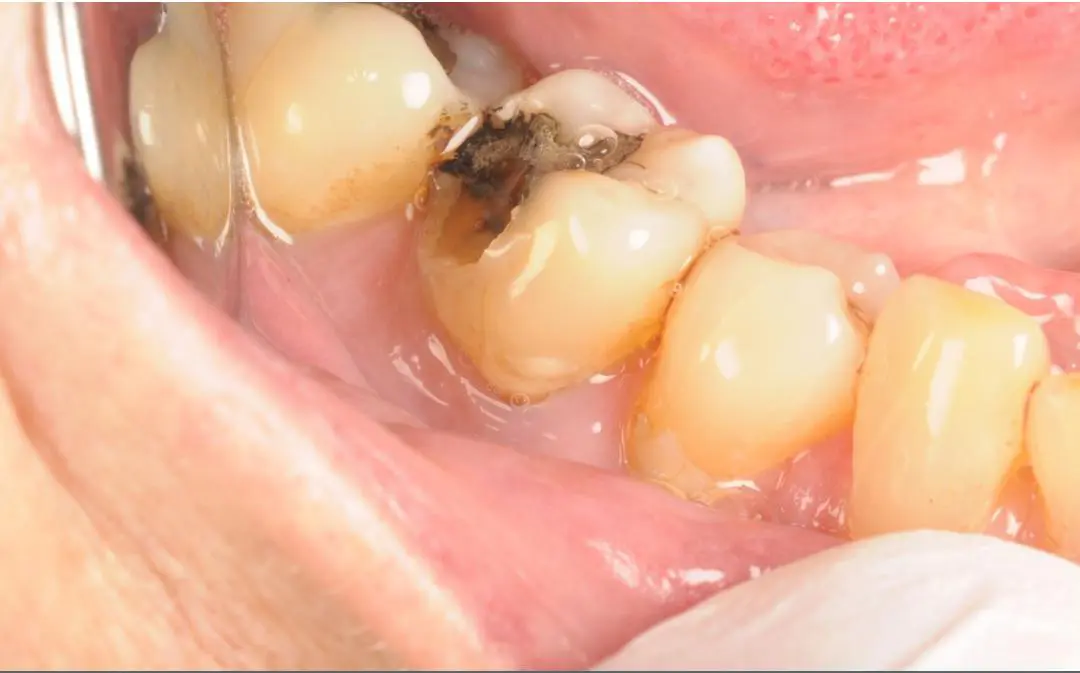
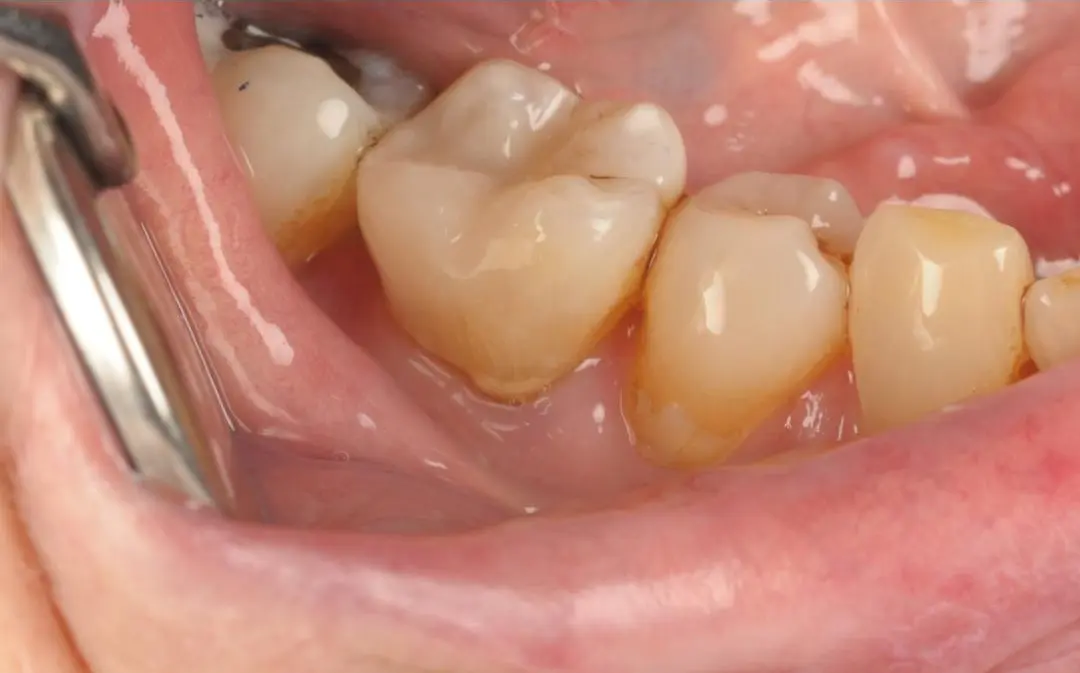
Real Patient Result: Emergency White Filling
Treatment by Dr Kamran
The Dental Science Behind Cavities and Tooth Structure
To understand why large cavities may require a crown, it helps to know a little about tooth anatomy. Each tooth has three main layers:
- Enamel — the outermost, hardest layer that protects the tooth
- Dentine — a softer, sensitive layer beneath the enamel
- Pulp — the innermost chamber containing nerves and blood vessels
When decay progresses through the enamel and into the dentine, the tooth becomes structurally weakened. Dentine is softer and more porous, meaning decay can spread more quickly once the enamel barrier is breached. If the pulp becomes involved, infection can develop, potentially causing significant discomfort and requiring root canal treatment to address the infection before restoration can occur.
Understanding this progression helps explain why early intervention is so beneficial — smaller cavities are far simpler and less costly to treat than advanced decay.
When to Seek Professional Dental Assessment
Certain symptoms may indicate that a cavity has become quite significant and that a professional evaluation would be advisable. These include:
- Persistent toothache or throbbing pain
- Sensitivity to hot, cold, or sweet foods and drinks that lingers after the stimulus is removed
- Pain when biting or chewing
- A visible hole, darkening, or rough edge on the tooth
- Swelling around the gum near the tooth
- A bad taste or smell that doesn't resolve with brushing
If you are experiencing any of these symptoms, seeking a dental assessment sooner rather than later is generally a sensible approach. Pain and sensitivity that have persisted for more than a day or two, or swelling in the face or jaw, are situations where emergency dental care may be appropriate.
None of these symptoms confirm a specific diagnosis — only a clinical examination can do that — but they are reasonable reasons to arrange an appointment.
Prevention and Oral Health Advice
While not all cavities can be entirely prevented, there are well-evidenced steps you can take to reduce your risk of developing significant decay:
- Brush twice daily with a fluoride toothpaste, using a small-headed toothbrush and gentle circular movements
- Floss or use interdental brushes daily to remove plaque from between the teeth, where a toothbrush cannot reach
- Reduce the frequency of sugary and acidic foods and drinks, rather than eliminating them entirely
- Attend regular dental check-ups, typically every six to twelve months, so that early decay can be detected and managed before it progresses
- Consider fluoride treatments or fissure sealants if your dentist advises them, particularly if you are at higher risk of decay
- Stay hydrated and consider sugar-free chewing gum after meals, which can help stimulate saliva — a natural defence against acid attack
These habits, consistently maintained, form the foundation of good preventative dental care. You can also read more about routine dental check-ups and preventative care to understand how regular monitoring supports long-term oral health.
Key Points to Remember
- A dental crown for a large cavity is often a clinically suitable restorative option when significant tooth structure has been lost
- Crowns encap the entire visible tooth, protecting weakened structure and restoring function
- Suitability depends on the amount of healthy tooth remaining, root condition, and overall gum health
- Additional treatment such as root canal therapy may be needed before a crown can be placed
- Early treatment of cavities is generally simpler, less invasive, and more cost-effective than treating advanced decay
- Regular dental check-ups and good home oral hygiene habits significantly reduce the risk of large cavities developing
Frequently Asked Questions
Can a dentist put a crown on a tooth with a very deep cavity?
In many cases, yes — but it depends on how deeply the decay has progressed. If the cavity has reached the pulp of the tooth, root canal treatment is typically carried out first to remove infected tissue and eliminate any infection. Once the tooth has been treated and is stable, a crown can usually be placed to restore its structure and function. Your dentist will assess the tooth thoroughly, including X-rays, before recommending a treatment plan.
How do I know if I need a crown rather than a filling?
Generally, a filling is suitable when the area of decay is relatively contained and sufficient tooth structure remains to support it. A crown is more commonly recommended when decay is extensive, when a large existing filling has failed, or when the tooth is at risk of fracturing. Your dentist is best placed to advise which option is appropriate following a clinical examination. There is no single rule that applies to every situation.
Is it painful to have a dental crown fitted?
The procedure is carried out under local anaesthesia, so you should not feel pain during treatment. Some patients experience mild sensitivity or tenderness in the days following crown placement, which typically settles. If you experience significant pain or discomfort after treatment, it is worth contacting your dental practice for guidance.
What happens if a large cavity is left untreated?
Leaving a large cavity untreated generally allows decay to progress further into the tooth, potentially reaching the pulp and causing infection. This can lead to abscess formation, spreading infection, and in advanced cases, tooth loss. Early professional assessment and treatment is generally preferable to waiting, as it often results in simpler and less extensive treatment being needed.
How long does a dental crown last?
Dental crowns can last many years with good oral hygiene and regular dental attendance. The lifespan varies depending on the material used, where the crown is placed in the mouth, and how well it is cared for. No restoration lasts indefinitely, and crowns may eventually require replacement. Your dentist can advise on what to expect based on your individual circumstances.
Does a crowned tooth still need to be looked after?
Yes, absolutely. While the crown itself cannot decay, the tooth root and the margin where the crown meets the gum line remain susceptible to decay and gum disease. It is important to brush and floss around crowned teeth just as carefully as natural teeth, and to attend regular dental check-ups so that the crown and surrounding tissues can be monitored.
Conclusion
A dental crown for a large cavity is a well-established and frequently appropriate restorative option that can help preserve a tooth that might otherwise be lost. When decay has progressed beyond what a standard filling can reliably address, a crown offers structural protection and functional restoration.
However, it is important to understand that no two clinical situations are identical. Whether a crown is suitable for your tooth depends on many factors, including the extent of decay, the health of the remaining tooth structure, and the condition of the surrounding gum tissue. Dental symptoms and treatment options should always be assessed individually during a clinical examination.
If you have concerns about a cavity, tooth pain, or sensitivity, arranging a professional dental assessment at your earliest convenience is always a sensible step. Early attention to dental concerns is generally associated with simpler, less extensive, and more manageable treatment pathways, though outcomes vary depending on individual clinical circumstances.
Disclaimer: This article is intended for general educational purposes only and does not constitute personalised dental or medical advice. Treatment suitability, individual diagnosis, and clinical recommendations depend on a thorough assessment by a qualified dental professional. If you are experiencing dental pain, swelling, or any urgent symptoms, please seek professional care promptly. Results and treatment pathways vary between individuals.
Next Review Due: 18 September 2027