
If you have recently noticed that opening your mouth feels stiff, uncomfortable, or unusually restricted — and you are also experiencing dental pain or swelling — you may be wondering whether these symptoms are connected. Many patients in London search online for answers when they notice unexpected jaw stiffness alongside a toothache, unsure of whether this warrants urgent dental attention.
A tooth abscess is a localised bacterial infection that can develop within or around a tooth. When left unmanaged, the infection and associated inflammation can extend beyond the tooth itself, affecting the surrounding soft tissues, jaw muscles, and nearby structures. This can, in some cases, contribute to difficulty opening the mouth — a symptom that should always be professionally assessed.
This article explains what a tooth abscess is, how it can affect jaw movement, what the common symptoms are, and when it is appropriate to seek professional dental advice. Understanding these signs may help you make informed decisions about your oral health and wellbeing.
Experiencing these symptoms?
Delaying treatment can lead to tooth loss. We have slots available today.
Featured Snippet: Can a Tooth Abscess Cause Difficulty Opening Your Mouth?
Yes, an abscessed tooth can contribute to difficulty opening your mouth. When a dental abscess causes significant swelling or infection spreads to the surrounding tissues and jaw muscles, it may lead to restricted jaw movement — a condition known as trismus. Professional dental assessment is essential if you experience this symptom.
What Is a Tooth Abscess?
A tooth abscess is a collection of pus caused by a bacterial infection. It typically forms either at the tip of a tooth's root (a periapical abscess) or in the gum tissue alongside a tooth (a periodontal abscess). In both cases, bacteria — often originating from untreated tooth decay, a cracked tooth, or advanced gum disease — invade the inner structures of the tooth or the surrounding gum and bone.
Once infection takes hold, the body's immune response triggers localised inflammation. This causes the characteristic throbbing pain, swelling, and sensitivity that many patients associate with a dental abscess. Without appropriate clinical management, the infection can progress and spread beyond its original site. Understanding how abscesses develop helps explain why jaw-related symptoms, such as difficulty opening the mouth, can sometimes follow.
Meet Dr. Yasha Shirazi
Principal Dentist at Emergency Dentist London
"We treat hundreds of dental emergencies every month. The sooner you come in, the easier the fix usually is."
Book an appointment with our team →It is worth noting that not every dental abscess will result in jaw stiffness. The likelihood depends on several factors, including the severity of the infection, the specific tooth affected, and individual patient health factors. A dental professional is best placed to assess the extent of any infection during a clinical examination.
How Can a Tooth Abscess Lead to Jaw Stiffness?
The connection between a tooth abscess and restricted jaw movement lies in the anatomy of the face and jaw. The muscles responsible for opening and closing the mouth — particularly the masseter and pterygoid muscles — are located in close proximity to the upper and lower back teeth. When infection or significant swelling develops in this region, it can place pressure on these muscles or cause them to tighten as a protective response.
This restricted mouth opening is clinically referred to as trismus. Trismus associated with a dental abscess typically develops when an infection has spread into the surrounding soft tissue spaces — areas sometimes called fascial spaces — around the jaw. In more significant cases, this spread of infection may require prompt clinical attention.
Even mild or moderate abscesses can cause some degree of jaw stiffness or discomfort when chewing or speaking, largely due to the localised inflammation placing pressure on adjacent structures. If you are concerned about dental abscess symptoms, a professional assessment will help establish the most appropriate course of action.
Common Symptoms Associated With a Dental Abscess
Whilst difficulty opening the mouth may be one possible symptom, it is rarely the only one. A dental abscess commonly presents with a combination of the following signs:
- Persistent, throbbing toothache — often described as intense and continuous
- Swelling of the face, cheek, or jaw — which may worsen over time
- Sensitivity to hot or cold — particularly if the pulp of the tooth is affected
- A bitter taste in the mouth — which may indicate the abscess has partially drained
- Swollen lymph nodes — particularly under the jaw or in the neck
- Fever or general feeling of being unwell — in more significant cases
- Difficulty swallowing — in rare, more advanced situations
It is important to note that some of these symptoms may indicate that the infection has spread beyond the tooth itself. If you are experiencing swelling alongside difficulty opening your mouth or swallowing, it is advisable to seek prompt professional dental advice. You can learn more about emergency dental care in London if symptoms feel urgent.
The Dental Science Behind Jaw Muscle Restriction
To understand why an abscess can restrict jaw movement, it helps to consider the anatomy involved. The lower back teeth — particularly the lower wisdom teeth and second molars — sit in close anatomical proximity to several important muscle groups and soft tissue spaces. When infection spreads from these teeth, it can track along tissue planes into spaces such as the masseteric space, the pterygomandibular space, or the submandibular space.
Each of these spaces contains structures that are important to normal jaw function. When infection or inflammation enters these areas, it can cause the surrounding muscles to go into protective spasm — effectively limiting their range of motion. This is the body's natural protective mechanism, but it can result in significant discomfort and functional restriction.
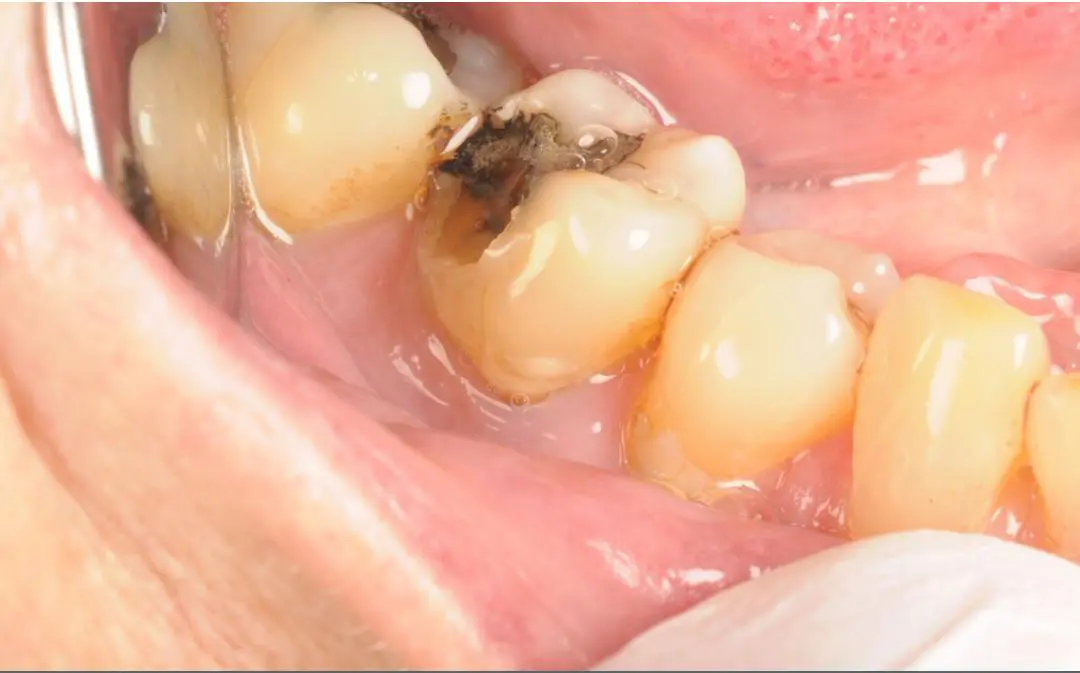
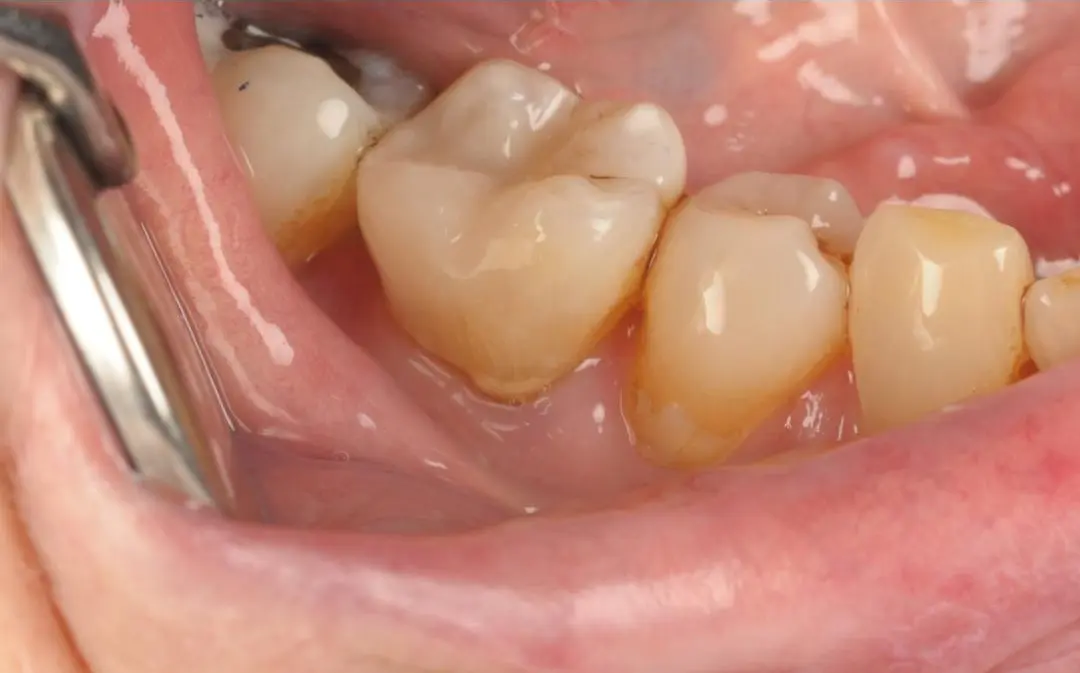
Real Patient Result: Emergency White Filling
Treatment by Dr Kamran
In clinical dentistry, the management of an abscess causing trismus will depend on the extent of the infection, the patient's overall health, and the findings of a thorough clinical and, where appropriate, radiographic examination.
When to Seek Professional Dental Assessment
Certain symptoms associated with a dental abscess suggest that professional evaluation should be sought without significant delay. These include:
- Noticeable difficulty opening your mouth that does not improve
- Facial swelling that is increasing rather than settling
- Fever alongside dental pain or swelling
- Difficulty swallowing or breathing
- Feeling generally unwell in conjunction with dental symptoms
These symptoms do not necessarily indicate a severe emergency in every case, but they do warrant timely clinical assessment so that a qualified dental professional can evaluate the extent of infection and recommend appropriate management.
It is also worth seeking an assessment even for milder symptoms — persistent dental pain, recurring swelling, or a tooth that feels different when biting — as early intervention may help prevent the infection from progressing. If you are unsure about your symptoms, speaking to a qualified dentist is always a sensible first step. You can find out more about tooth pain and dental infections to guide your understanding.
Prevention and Oral Health Advice
Whilst it is not always possible to prevent every dental abscess, several everyday habits may help reduce the risk of tooth infections developing:
- Brush your teeth twice daily using fluoride toothpaste, paying attention to the gumline
- Floss or use interdental brushes to remove plaque from between teeth, where decay often begins
- Attend regular dental check-ups — routine examinations allow your dentist to identify early signs of decay or gum disease before they develop into more significant problems
- Do not delay treatment for dental pain, sensitivity, or a cracked tooth — early management is typically simpler and more straightforward
- Avoid excessive sugar consumption, which contributes to the bacterial activity that causes tooth decay
- Stay hydrated to support saliva production, which plays a natural protective role in oral health
Maintaining consistent oral hygiene and attending routine appointments are among the most effective ways to reduce the likelihood of dental infections.
Key Points to Remember
- A tooth abscess is a bacterial infection that can cause significant pain, swelling, and, in some cases, difficulty opening the mouth
- Restricted jaw movement associated with a dental abscess is known as trismus and is related to infection spreading to nearby soft tissues and muscle groups
- Common symptoms include throbbing toothache, facial swelling, fever, and sensitivity — though not all will be present in every case
- Difficulty opening the mouth, swallowing, or increasing facial swelling are symptoms that merit timely professional dental assessment
- Early treatment of tooth decay and gum disease may reduce the risk of abscess development
- Treatment suitability and approach always depend on individual clinical assessment
Frequently Asked Questions
Is it normal to have difficulty opening my mouth with a toothache?
Some degree of jaw stiffness or discomfort can accompany dental pain, particularly if the affected tooth is in the lower jaw near the back. However, noticeable difficulty opening your mouth — especially when combined with swelling or fever — may suggest that infection has spread beyond the tooth. This warrants professional assessment rather than a wait-and-see approach, as a dentist can evaluate the extent of any infection and advise on the most appropriate management.
Can a dental abscess go away on its own?
A dental abscess is unlikely to resolve without clinical intervention. Whilst the pain may temporarily ease if the abscess ruptures and drains, the underlying infection typically remains present. Without treatment, infection can spread or recur. It is always advisable to seek professional dental advice rather than waiting for symptoms to resolve independently. A dentist can assess the situation and discuss appropriate treatment options based on your individual clinical circumstances.
How is a dental abscess typically treated?
Treatment for a dental abscess depends on its severity and location, as determined by clinical examination. Options may include drainage of the abscess, root canal treatment to address infection within the tooth, or in some cases, extraction of the tooth. Antibiotics may be prescribed when infection has spread beyond the local area. Any treatment plan should be guided by a qualified dental professional following a thorough assessment.
How quickly should I seek dental care if I suspect an abscess?
If you are experiencing significant swelling, fever, difficulty opening your mouth, or difficulty swallowing in addition to dental pain, it is advisable to seek dental advice promptly. Many dental practices, including emergency dental clinics, can offer same-day or urgent appointments for these types of symptoms. Even without these more significant signs, persistent dental pain or swelling should be assessed by a dentist at the earliest convenient opportunity.
Can a tooth abscess affect the neck or throat?
In more advanced cases, a dental infection that has spread to the soft tissue spaces around the jaw can occasionally extend toward the neck region. This is uncommon but represents a situation where prompt clinical attention is particularly important. Symptoms that may suggest infection has spread include swelling extending below the jaw, difficulty swallowing, or changes in breathing. If you experience any of these alongside dental symptoms, seek professional assessment without delay.
Will I always need antibiotics for a dental abscess?
Not every dental abscess requires antibiotic treatment. Antibiotics are typically reserved for situations where infection has spread beyond the tooth, where there are signs of systemic involvement such as fever, or where local drainage alone is insufficient. The decision about whether antibiotics are appropriate is a clinical one, made by a qualified dental professional based on individual assessment. Antibiotics alone do not address the underlying source of infection, so dental treatment remains an important component of management.
Conclusion
A tooth abscess is more than a source of dental pain — in some cases, it can affect jaw function, cause facial swelling, and lead to difficulty opening the mouth, a symptom known as trismus. Understanding the connection between dental infection and jaw muscle restriction can help patients recognise when professional assessment is warranted.
If you are experiencing difficulty opening your mouth alongside dental pain or swelling, it is sensible to seek advice from a qualified dental professional. Early evaluation typically allows for more straightforward management and reduces the risk of infection progressing further.
Maintaining good oral hygiene, attending regular dental check-ups, and addressing dental concerns promptly remain the most reliable ways to protect your oral health and reduce the likelihood of abscess formation.
Dental symptoms and treatment options should always be assessed individually during a clinical examination.
Disclaimer: This article is intended for general educational purposes only and does not constitute personalised dental advice. Individual diagnosis and treatment recommendations require a clinical examination by a qualified dental professional.
Next Review Due: 26 October 2027