
Many people assume that once a tooth has been crowned, it is fully protected and largely immune to further dental problems. This is a common and understandable belief — after all, a dental crown is designed to encase and shield the underlying tooth structure. However, a question that frequently arises in dental consultations and online searches is: can an abscess develop under an old dental crown?
The short answer is yes, it can. A dental abscess under a crown is more common than many patients realise, and understanding why it happens is important for maintaining long-term oral health. This article explains the causes behind this condition, the symptoms you might notice, how it is typically managed by dental professionals, and the preventative steps that can help reduce your risk. If you are experiencing discomfort around a crowned tooth, reading this information may help you understand your situation better — though a professional clinical assessment remains essential.
Featured Snippet Answer
Can an abscess develop under an old dental crown?
Experiencing these symptoms?
Delaying treatment can lead to tooth loss. We have slots available today.
Yes, an abscess can develop under an old dental crown. Even though a crown covers the visible tooth, the underlying tooth root and surrounding tissues remain vulnerable to bacterial infection. If decay develops beneath the crown, or if the tooth's nerve becomes infected, a dental abscess may form, causing pain, swelling, or sensitivity.
Why a Crowned Tooth Is Still Vulnerable to Infection
A dental crown sits over the remaining natural tooth structure, which is known as the tooth preparation or abutment. Whilst the crown provides a strong outer layer, it does not make the underlying tooth biologically inert. The tooth root, pulp tissue, and surrounding periodontal structures remain living and can still be affected by bacteria.
Over time, the seal between a crown and the tooth margin can weaken. This allows oral bacteria to penetrate into microscopic gaps, reaching the tooth structure beneath. Once bacteria gain access, they can cause secondary decay — decay that forms below the existing crown without being immediately visible. If this process progresses far enough, it can reach the inner pulp of the tooth, leading to pulp infection and, ultimately, abscess formation.
Meet Dr. Yasha Shirazi
Principal Dentist at Emergency Dentist London
"We treat hundreds of dental emergencies every month. The sooner you come in, the easier the fix usually is."
Book an appointment with our team →Additionally, teeth that were root-treated before being crowned can still develop periapical abscesses — infections at the tip of the tooth root — if the root canal treatment was not fully successful or if bacteria re-enter the root canal system over time.
Understanding the Infection Process: The Dental Science Explained
To understand why an abscess can form under a crown, it helps to know a little about tooth anatomy. Every tooth has an outer layer of enamel (or dentine, once a crown is placed), beneath which lies the dentine — a porous, yellowish tissue. Deeper still is the pulp chamber, which contains nerves, blood vessels, and connective tissue.
When bacteria breach the crown margin and invade the dentine, they can track inward toward the pulp. If the pulp becomes infected, the body responds with inflammation. Because the pulp is enclosed within a rigid tooth structure, this inflammation cannot expand easily, leading to pressure, pain, and potential tissue death.
Once the pulp tissue dies, the bacterial infection can progress through the root canal, exiting at the apex (tip) of the root into the surrounding bone. This results in a periapical abscess — a collection of pus surrounded by inflamed tissue. In some cases, the infection may also involve the gum tissue around the tooth, leading to a periodontal abscess.
If you have previously had emergency dental treatment for a painful tooth, it is worth being aware that crowned teeth may still require monitoring over time.
Common Symptoms That May Indicate a Problem
Recognising the potential signs of an abscess beneath a crown is important, as early professional assessment can help prevent the condition from progressing. Symptoms may vary between individuals and are not always severe in the early stages.
Symptoms that may suggest a problem with a crowned tooth include:
- Persistent aching or throbbing pain around the crowned tooth, particularly if it worsens over time
- Sensitivity to temperature, especially lingering sensitivity to heat or cold
- Pain when biting or applying pressure to the area
- Swelling in the gum tissue or cheek near the affected tooth
- A small, pimple-like bump on the gum (sometimes referred to as a dental sinus or fistula), which may occasionally discharge a salty or unpleasant-tasting fluid
- A general sense of tooth discomfort that was not previously present
It is worth noting that some abscesses — particularly those in root-treated teeth — may cause little or no pain initially. This is one reason why regular dental examinations and dental X-rays remain valuable, even when no obvious symptoms are present.
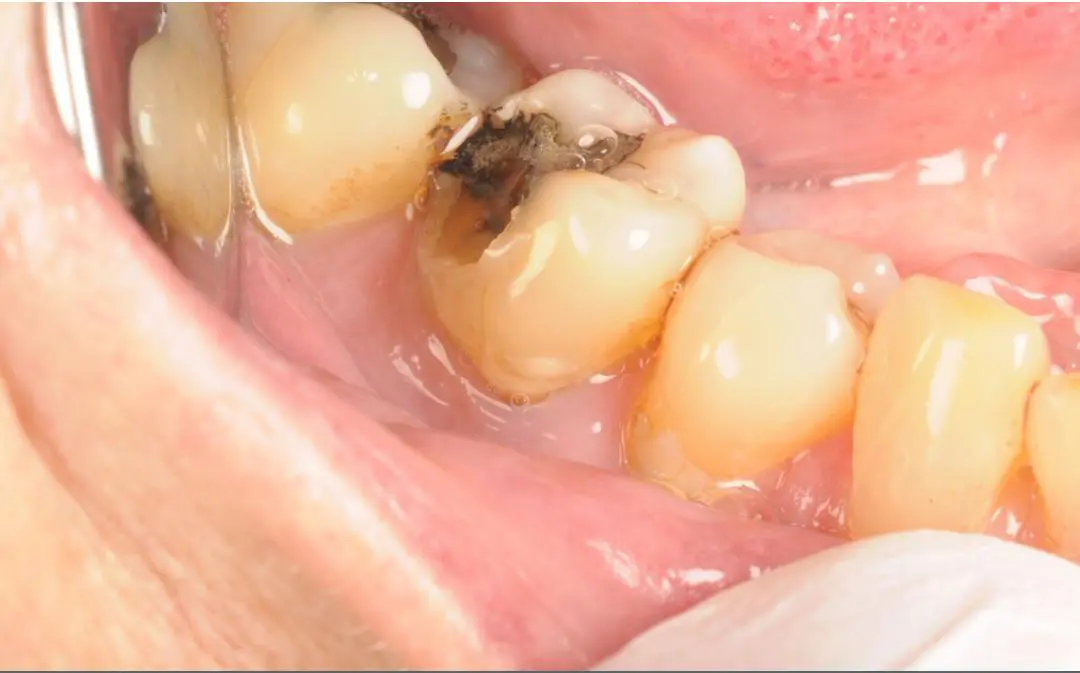
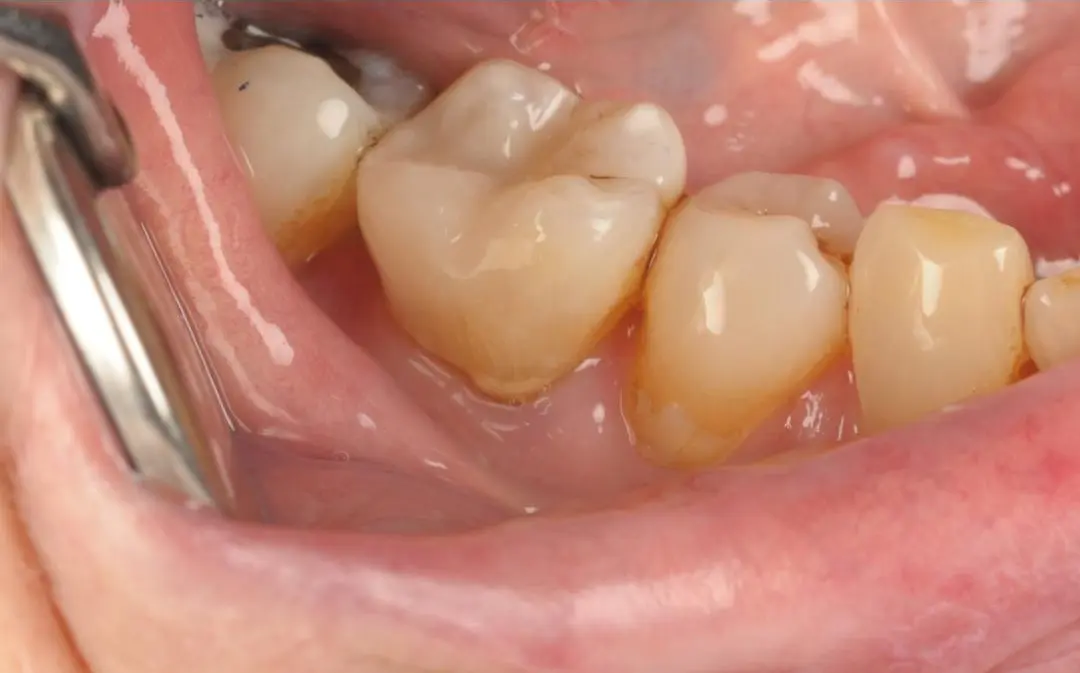
Real Patient Result: Emergency White Filling
Treatment by Dr Kamran
When Professional Dental Assessment May Be Needed
If you notice any of the symptoms described above, or if you have a general concern about a crowned tooth that has been in place for many years, arranging a professional dental assessment is a sensible step.
In particular, you should consider seeking dental advice if you experience:
- Persistent or worsening pain around a crown that does not settle within a few days
- Visible swelling in the gum, jaw, or face
- Difficulty swallowing or opening your mouth, as this may suggest a more significant infection requiring urgent attention
- A recurring unpleasant taste or discharge from the gum near a crowned tooth
- General symptoms such as fever or feeling unwell, which may accompany a spreading dental infection
It is important to note that dental abscesses do not resolve on their own and generally require professional treatment. Antibiotics, where prescribed, may help manage the bacterial infection temporarily but are not a standalone cure. A dental professional will assess the tooth using clinical examination and X-rays to determine the most appropriate course of action.
If you are experiencing urgent dental symptoms in London, our emergency dental services are available to provide prompt clinical assessment.
Treatment Approaches for an Abscess Under a Crown
Treatment for an abscess beneath a dental crown depends on the nature and extent of the infection, the condition of the underlying tooth, and individual clinical factors. A qualified dental professional will assess each case individually before recommending any treatment pathway.
Common treatment options that may be considered include:
Root Canal Treatment (Re-treatment): If the tooth has not previously been root-treated, or if an existing root canal requires revision, the dentist may recommend endodontic treatment to remove the infected pulp tissue, clean and disinfect the root canal system, and seal it to prevent further bacterial entry. The crown may need to be removed to gain access, and a new crown may subsequently be required.
Dental Extraction: In some situations — for example, where the tooth structure is severely compromised by decay, or where infection has caused significant bone loss — extraction may be considered the most clinically appropriate option. Your dentist will always explain all available options before any irreversible treatment is undertaken.
Prescription Antibiotics: These may be used alongside dental treatment to help manage bacterial infection, but they are supportive rather than curative when structural dental treatment is needed.
Crown Replacement: Where a poorly fitting or failing crown margin has contributed to bacterial ingress, replacement of the crown may form part of the overall treatment plan once the infection has been addressed.
For further information about tooth restoration options following treatment, you may find it helpful to explore our dental crowns service page.
Prevention and Oral Health Advice
Whilst it is not always possible to prevent every dental complication, there are practical steps that may help reduce the risk of problems developing beneath a dental crown.
Maintain excellent oral hygiene: Brush twice daily with fluoride toothpaste and clean between teeth using floss or interdental brushes. Pay particular attention to the gum margin around crowned teeth, where plaque can accumulate.
Attend regular dental check-ups: Routine examinations allow your dentist to monitor the condition of existing crowns, identify early signs of crown margin failure, and take X-rays to detect any changes in the underlying tooth or surrounding bone.
Act promptly if symptoms arise: If you notice any discomfort, sensitivity, or change in how a crowned tooth feels, seek professional advice sooner rather than later. Early assessment is generally associated with a wider range of treatment options.
Avoid habits that stress crowns: Habitual tooth grinding (bruxism) and biting hard objects can place excessive force on crowns, potentially weakening the crown-to-tooth seal over time. If you grind your teeth, speak to your dentist about whether a protective night guard may be appropriate.
Limit sugary food and drinks: A diet high in fermentable sugars contributes to the oral bacterial environment that drives tooth decay, including decay that may develop beneath a crown.
If you are interested in understanding more about root canal treatment as it relates to crowned teeth, our service pages provide additional information.
Key Points to Remember
- Yes, an abscess can develop under an old dental crown — the tooth root and surrounding structures remain susceptible to infection even when a crown is in place.
- The crown margin is a common entry point for bacteria, particularly in older crowns where the seal may have weakened over time.
- Symptoms may include pain, swelling, temperature sensitivity, or a gum sinus — though some abscesses may initially be symptom-free.
- Treatment depends on the clinical findings and may include root canal treatment, crown replacement, or in some cases, extraction.
- Regular dental examinations and X-rays are valuable for monitoring the condition of crowned teeth, even in the absence of obvious symptoms.
- Good oral hygiene and a balanced diet can help reduce the risk of decay developing beneath existing dental restorations.
Frequently Asked Questions
Can a tooth that has had a root canal still develop an abscess under a crown?
Yes. A tooth that has previously undergone root canal treatment no longer contains living pulp tissue, but the surrounding bone and periodontal tissues remain susceptible to infection. If bacteria re-enter the root canal system — for example, through a leaking crown margin or a failed root filling — a periapical abscess may develop at the root tip. This may sometimes be detected on a routine dental X-ray before significant symptoms develop, which is one reason why ongoing monitoring of root-treated teeth is recommended.
How would I know if an abscess is forming under my crown rather than elsewhere in my mouth?
Localising dental pain can be challenging, as discomfort may sometimes radiate to nearby teeth or the jaw. However, signs specifically suggesting a problem beneath a crown may include tenderness when pressing directly on the crowned tooth, swelling adjacent to that tooth, or a visible pimple-like lesion on the gum near the crown. Your dentist can use clinical examination and X-rays to identify the precise source of an infection. Self-diagnosis is not recommended, and professional assessment is the most reliable way to determine the cause of dental symptoms.
Is it possible for an abscess under a crown to spread?
An untreated dental abscess is a bacterial infection and, like any infection, it has the potential to spread if left unaddressed. In most cases, the infection remains localised to the tooth and surrounding tissues. However, in less common circumstances, dental infections can spread to adjacent structures. If you notice facial swelling, difficulty swallowing, or feel generally unwell alongside dental pain, you should seek prompt professional dental or medical attention. These symptoms may indicate that an infection requires more urgent management.
Will I always feel pain if I have an abscess under a crown?
Not necessarily. Teeth that have previously been root-treated do not contain nerve tissue within the pulp chamber, which means that the typical sharp or throbbing pain associated with pulpitis may not be present. Some periapical abscesses in root-treated teeth are identified incidentally on dental X-rays during routine examinations, with the patient reporting little or no discomfort. This underlines the importance of attending regular dental appointments even when you feel no pain, as asymptomatic dental pathology can still progress if undetected.
How long does it take for an abscess to develop under a crown?
The timeframe varies considerably and depends on multiple factors, including the extent of marginal leakage, the patient's oral hygiene, diet, immune response, and the condition of the underlying tooth. In some cases, decay beneath a crown may develop gradually over several years before an abscess forms. In others, particularly if there is a significant gap in the crown margin, progression may be faster. There is no universal timeline, which is why regular monitoring by a dental professional is the most reliable way to identify problems at an early, manageable stage.
Can a new crown prevent an abscess from forming again?
Replacing a failing or poorly-fitting crown can help restore the marginal seal and reduce the risk of further bacterial ingress. However, whether a new crown alone is sufficient depends on the condition of the underlying tooth structure and whether any existing infection has been fully addressed beforehand. Your dentist will assess the tooth comprehensively and may recommend additional treatment — such as root canal therapy — before placing a new crown, to support the most appropriate clinical outcome. No dental restoration can be guaranteed to prevent all future complications, so ongoing oral hygiene and regular check-ups remain important.
Conclusion
An abscess developing under an old dental crown is a genuine dental concern that patients and clinicians should be aware of. Whilst a crown provides significant structural protection for a tooth, it does not render the underlying tooth or surrounding tissues immune to infection. Bacterial ingress through weakened crown margins, secondary tooth decay, or the re-infection of previously root-treated teeth can all lead to abscess formation — sometimes with limited initial symptoms.
Understanding the potential causes and signs of this condition allows patients to seek professional advice in a timely manner, which generally supports a wider range of management options. Regular dental examinations, attentive oral hygiene, and prompt action when symptoms arise all contribute to maintaining the long-term health of crowned teeth.
If you have any concerns about a crowned tooth, or if you are experiencing dental discomfort that has not resolved, it is always advisable to arrange a professional dental assessment at your earliest convenience.
Dental symptoms and treatment options should always be assessed individually during a clinical examination.
Disclaimer: This article is intended for general educational purposes only and does not constitute personalised dental advice. Individual diagnosis and treatment recommendations require a clinical examination by a qualified dental professional.
Next Review Due: 28 October 2027