
Many people with older or sizeable dental restorations find themselves wondering whether their filling might actually be doing more harm than good. If you have ever experienced a sharp twinge when biting down, or noticed a new sensitivity in a tooth that was previously treated, you are not alone. These sensations can prompt understandable concern — and often lead patients to search online for answers before picking up the phone to their dentist.
The relationship between a large filling and tooth cracking is a genuinely important topic in dental health. A filling is designed to restore a damaged tooth, but when a restoration becomes very large, it can alter the structural dynamics of the tooth around it. Over time, this may place the remaining natural tooth structure under increased mechanical stress.
This article explains how large fillings can contribute to cracking, what signs and symptoms may be worth monitoring, and when seeking a professional dental assessment could be beneficial. Understanding this issue helps patients make more informed decisions about their dental health.
Experiencing these symptoms?
Delaying treatment can lead to tooth loss. We have slots available today.
Featured Snippet Answer
Can a large filling crack the tooth around it?
Yes, a large filling can contribute to tooth cracking. When a filling occupies a significant portion of a tooth, the remaining natural tooth structure becomes thinner and more vulnerable to fracture under biting forces. A large filling may also transmit stress differently across the tooth, increasing the risk of cracks forming in the surrounding enamel and dentine over time.
Why Filling Size Matters for Tooth Integrity
Not all fillings carry the same risk. Small, conservative restorations — particularly those placed in the early stages of tooth decay — typically leave plenty of healthy tooth structure intact. However, when decay is extensive, or when an old filling is replaced and found to be larger than expected, the remaining walls of natural tooth can become quite thin.
Meet Dr. Yasha Shirazi
Principal Dentist at Emergency Dentist London
"We treat hundreds of dental emergencies every month. The sooner you come in, the easier the fix usually is."
Book an appointment with our team →Think of a tooth like a hollow cylinder. The more material removed from the inside — whether by decay or drilling — the weaker the outer walls become. A large filling, regardless of whether it is made from amalgam or composite resin, sits within this hollowed space and can act as a wedge under the force of chewing.
Amalgam fillings, which were commonly used for many decades, are also slightly rigid and do not flex with the tooth in the same way natural dentine does. This mismatch in flexibility can increase stress on the surrounding tooth structure, particularly during repetitive biting movements. Composite resin fillings bond more closely to the tooth, but very large composite restorations may still leave insufficient natural structure to absorb normal chewing forces effectively.
It is worth noting that a filling alone does not mean cracking will occur — many factors influence this outcome, including bite patterns, tooth grinding, and the overall condition of the tooth.
The Dental Science Behind Tooth Cracking
To understand why large fillings can lead to cracking, it helps to consider the anatomy of a natural tooth. Each tooth is composed of three main layers: the outer enamel, the underlying dentine, and the innermost pulp chamber containing nerves and blood vessels.
Enamel is the hardest substance in the human body, but it is also brittle. It is supported from beneath by dentine, which is slightly more flexible and acts as a shock absorber. When a large portion of dentine is removed during cavity preparation, enamel cusps lose much of their support. These cusps — the raised points on the biting surface of back teeth — are then more susceptible to fracture under load.
Cracks can be classified according to their depth and location. Superficial craze lines affect only the outer enamel and are generally not clinically significant. However, deeper cracks extending into dentine can cause sensitivity and pain, particularly when the crack flexes under biting pressure. In more advanced cases, a crack may extend towards or into the pulp, potentially leading to infection or tooth loss if left unaddressed.
This is why dentists sometimes recommend a dental crown for a tooth with a large existing filling — the crown wraps around the remaining tooth structure, helping to hold it together and distribute biting forces more evenly. If you would like to understand more about how crowns protect structurally compromised teeth, the dental crowns treatment page provides further information.
Signs and Symptoms That May Suggest a Cracked Tooth
Cracked tooth syndrome — the clinical term for pain and sensitivity associated with a crack — can present in a variety of ways. Symptoms are not always consistent, which sometimes makes this condition easy to overlook or attribute to other causes.
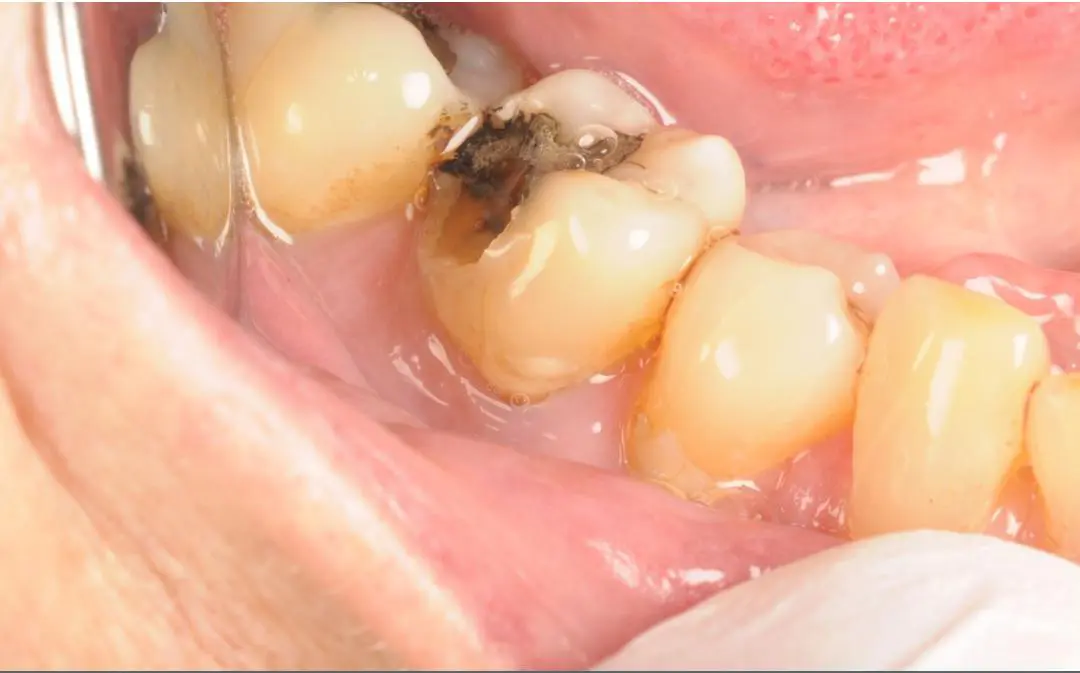
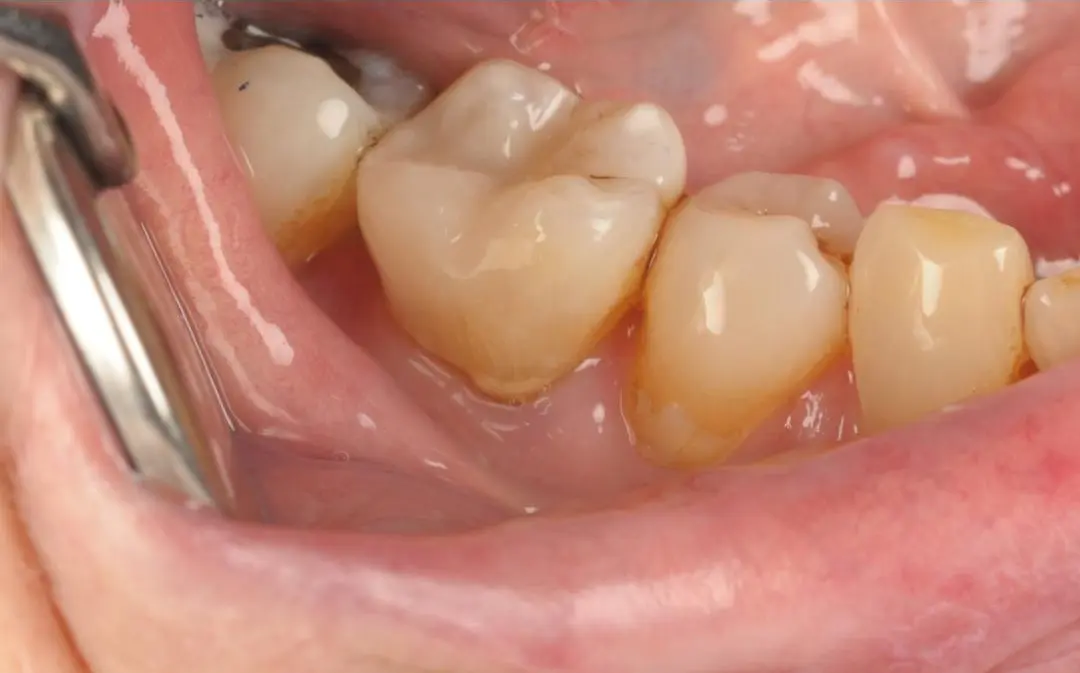
Real Patient Result: Emergency White Filling
Treatment by Dr Kamran
Common signs that may indicate a crack in or around a large filling include:
- Pain when biting or chewing, particularly when releasing pressure rather than applying it
- Sharp, fleeting sensitivity to cold temperatures that passes quickly
- Localised tooth sensitivity that is difficult to pinpoint precisely
- Discomfort when eating certain foods, such as hard or crunchy items
- Occasional aching with no obvious trigger
Importantly, these symptoms do not automatically confirm a crack is present — they may also be related to other dental conditions. This is why a professional examination is important for accurate assessment. If you are experiencing any of the above, it may be helpful to read more about emergency dental pain assessment to understand your options.
When Professional Dental Assessment May Be Appropriate
Whilst not all symptoms require urgent attention, there are certain situations where booking a dental appointment sooner rather than later would be advisable.
Consider seeking professional assessment if you notice:
- Persistent or worsening pain around a tooth with a large filling
- Sudden, sharp pain when biting that was not present before
- Swelling around the gum near the affected tooth
- Temperature sensitivity that lingers for more than a few seconds
- Visible changes to the tooth, such as a visible line or a piece of tooth that appears to have chipped away
- A previous filling that feels loose or has partially come out
These symptoms may indicate that the tooth requires further evaluation. A dentist can use clinical examination, bite tests, and dental X-rays to assess the extent of any damage. Early assessment may provide more restorative options and help preserve the tooth where possible.
Never imply self-diagnosis based on symptoms alone. Dental symptoms and treatment options should always be assessed individually during a clinical examination.
Preventative Measures and Oral Health Advice
Whilst it may not always be possible to prevent tooth cracking entirely — particularly in teeth with existing large restorations — there are several steps patients can take to support the long-term health of restored teeth.
Attend regular dental check-ups. Routine examinations allow your dentist to monitor existing fillings, identify early signs of wear or cracking, and recommend intervention before problems become more complex.
Discuss protective options for large fillings. If a tooth has a particularly large filling, your dentist may recommend a dental crown as a protective measure, even before symptoms arise.
Address tooth grinding (bruxism). Grinding or clenching the teeth places significantly higher forces on restorations and surrounding tooth structure. If you suspect you grind your teeth — particularly at night — speak with your dentist about a custom-fitted night guard. Teeth grinding treatment options may be worth exploring if this applies to you.
Avoid habits that increase fracture risk. Chewing ice, opening packaging with your teeth, or habitually biting hard objects can accelerate the risk of cracking in already vulnerable teeth.
Maintain good oral hygiene. Keeping teeth free from further decay reduces the likelihood of fillings needing to be enlarged or replaced in the future.
Key Points to Remember
- A large filling can reduce the amount of natural tooth structure remaining, increasing vulnerability to cracking under biting forces.
- Amalgam and composite fillings behave differently to natural dentine, which can create stress concentrations in the surrounding tooth.
- Symptoms of a cracked tooth may include sharp pain on biting, cold sensitivity, and localised discomfort that is difficult to pinpoint.
- Not all symptoms confirm a crack — professional assessment is needed for accurate diagnosis.
- Dental crowns are commonly recommended to protect teeth with large fillings and reduce fracture risk.
- Regular dental check-ups and addressing tooth grinding can help support the longevity of restored teeth.
Frequently Asked Questions
How do I know if my large filling has caused a crack?
Common signs include sharp pain when biting or releasing pressure, sensitivity to cold that passes quickly, and localised discomfort. However, these symptoms can also relate to other dental conditions. A dentist can perform specific bite tests and clinical examinations to assess whether a crack is present and how extensive it may be. Self-diagnosis based on symptoms alone is not reliable, so professional assessment is always recommended if you are experiencing discomfort around a previously filled tooth.
Can a cracked tooth around a filling be repaired?
The treatment options available depend on the location, depth, and extent of the crack. Superficial cracks may require no active treatment beyond monitoring. Cracks extending into dentine may be managed with a crown to stabilise the tooth. Deeper cracks involving the pulp may require root canal treatment before a crown is placed. In cases where the crack extends below the gum line or through the root, extraction may unfortunately be the only option. A dentist will advise on the most appropriate course of action following clinical assessment.
Is it common for a tooth to crack around a large amalgam filling?
Yes, it is a relatively well-recognised clinical occurrence. Amalgam was the standard filling material for many decades and, whilst durable, it does not bond to tooth structure in the same way modern composite resin does. Over years of biting forces, the rigid nature of amalgam can contribute to stress fractures in the surrounding tooth walls. This is one reason why dentists may recommend replacing large old amalgam fillings with a crown if the remaining tooth structure appears thin or compromised.
Does a large composite filling carry the same cracking risk as amalgam?
Composite resin bonds directly to tooth structure, which can provide some additional support compared to amalgam. However, very large composite restorations still leave reduced natural tooth structure, which remains the primary factor in cracking risk. The size of the restoration — rather than the material alone — is generally the more significant variable. Your dentist will be able to assess whether a composite filling is sufficient or whether additional protection such as a crown would be more appropriate.
Can I prevent a tooth with a large filling from cracking?
Whilst outcomes cannot be predicted with certainty, certain steps may help reduce risk. Attending regular dental check-ups allows early identification of wear or structural concerns. Wearing a night guard if you grind your teeth can significantly reduce the forces placed on filled teeth overnight. Avoiding habits such as chewing hard objects and discussing protective options such as crowns with your dentist are also sensible precautions. Maintaining good oral hygiene reduces the likelihood of further decay developing around existing restorations.
When should I contact a dentist about pain around a large filling?
If you experience pain that is persistent, worsening, or significantly interfering with eating or daily life, it is advisable to contact a dental practice promptly. Similarly, if you notice swelling, a bad taste, or visible changes to a tooth with a large filling, these may warrant earlier assessment. Most dental practices can offer emergency or urgent appointments for patients experiencing acute discomfort. Early evaluation may provide more restorative options to be discussed with your dentist.
Conclusion
A large filling can indeed place the surrounding natural tooth structure under increased mechanical stress, and over time this may contribute to cracking. Understanding the relationship between filling size, tooth anatomy, and fracture risk helps patients make more informed decisions about their dental health and the restorations they already have in place.
The most important step any patient can take is to attend regular dental check-ups and to raise any concerns — such as new sensitivity, pain on biting, or changes in how a tooth feels — with their dentist promptly. Early assessment may allow for a wider range of restorative options to be considered and may help avoid more complex treatment in the future.
If you are in London and concerned about a tooth with a large filling, please do not hesitate to contact a qualified dental professional for an individual assessment.
Dental symptoms and treatment options should always be assessed individually during a clinical examination.
Disclaimer: This article is intended for general educational purposes only and does not constitute personalised dental advice. Individual diagnosis and treatment recommendations require a clinical examination by a qualified dental professional.
Next Review Due: 14 October 2027