
Many people are surprised when a toothache begins to spread, causing discomfort not just in the tooth itself, but extending into the jaw, ear, or even the temple area. This unexpected spread of pain often prompts people to search online, wondering whether their symptoms are serious and what might be causing them.
A dental abscess is one of the more common causes of this type of radiating pain. It is a pocket of bacterial infection that develops within or around a tooth, and when left unaddressed, the associated discomfort can extend well beyond the immediate site. Understanding how a dental abscess causes pain in the jaw or temple can help patients make more informed decisions about when to seek professional advice.
This article explains what a dental abscess is, how infection leads to wider facial pain, what symptoms patients may experience, and when a professional dental assessment may be appropriate. It is not intended to replace clinical evaluation, but rather to provide educational context for those experiencing concerning symptoms.
Experiencing these symptoms?
Delaying treatment can lead to tooth loss. We have slots available today.
What Is a Dental Abscess?
Featured Snippet Answer
Can a dental abscess cause pain in the jaw or temple?
Yes, a dental abscess can cause pain that radiates to the jaw, temple, ear, and neck. The infection creates pressure within surrounding tissues, and the nerves in the facial region are closely interconnected. This referred pain — where discomfort is felt away from the actual source — is a recognised feature of dental abscess symptoms.
How Does a Dental Abscess Form?
A dental abscess typically develops when bacteria enter the pulp — the soft inner tissue of a tooth — through tooth decay, a cracked tooth, or advanced gum disease. Once inside, bacteria multiply rapidly, triggering an immune response. The body attempts to contain the infection by producing pus, which accumulates and creates a pressurised pocket.
Meet Dr. Yasha Shirazi
Principal Dentist at Emergency Dentist London
"We treat hundreds of dental emergencies every month. The sooner you come in, the easier the fix usually is."
Book an appointment with our team →There are two primary types of dental abscess:
- Periapical abscess — forms at the tip of the tooth's root, often as a result of untreated tooth decay or a dead tooth pulp.
- Periodontal abscess — develops in the gum tissue alongside a tooth, commonly associated with gum disease.
Both types can cause significant local pain, swelling, and — importantly — referred pain that travels to surrounding structures. The pressure generated by a growing abscess, combined with the dense network of nerves in the face and jaw, explains why symptoms can appear to move or spread. If you are concerned about symptoms that may relate to infection, understanding the role of emergency dental treatment may be a helpful first step.
Why Does Abscess Pain Spread to the Jaw and Temple?
The Science Behind Referred Dental Pain
The trigeminal nerve is the primary sensory nerve of the face and is responsible for transmitting sensation from the teeth, gums, jaw, sinuses, and much of the scalp — including the temple region. When an abscess generates intense or sustained pressure, the trigeminal nerve can relay pain signals across multiple branches simultaneously.
This is known as referred pain: discomfort that is perceived in a location away from its actual origin. A lower molar abscess, for example, may generate pain that seems to radiate upwards into the temple or backwards into the ear. An upper tooth abscess may produce sensations that feel like sinus pressure or headache.
Additionally, jaw muscles may tighten in response to infection and pain, creating secondary muscular discomfort. Lymph nodes in the neck or under the jaw may also swell as the immune system responds. This combination of nerve-referred pain, muscle tension, and lymphatic activity helps explain why a seemingly localised dental infection can produce such widespread facial symptoms.
Recognising the Symptoms of a Dental Abscess
Being aware of the symptoms associated with a dental abscess may help patients seek timely dental advice. Common signs can include:
- Persistent, throbbing toothache that may intensify when lying down
- Swelling in the face, cheek, or jaw
- Pain that radiates to the jaw, ear, neck, or temple
- Sensitivity to hot or cold temperatures
- Pain when biting or chewing
- A bad taste in the mouth, sometimes accompanied by an unpleasant smell
- Fever or feeling generally unwell
- Swollen or tender lymph nodes beneath the jaw or in the neck
It is important to note that symptoms vary between individuals and that a clinical examination is necessary to determine the underlying cause of any pain. Never assume that pain in the jaw or temple is automatically dental in origin — other conditions such as temporomandibular joint (TMJ) disorders or tension headaches can produce similar sensations.
When to Seek Professional Dental Assessment
If you are experiencing any of the following, it would be advisable to contact a dental professional:
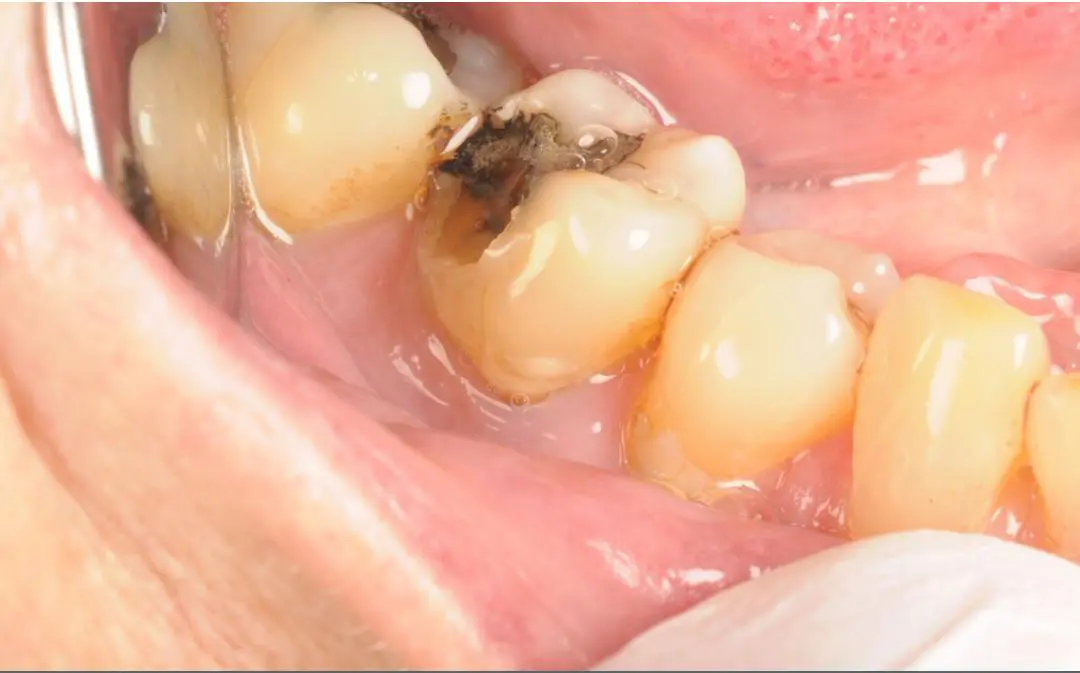
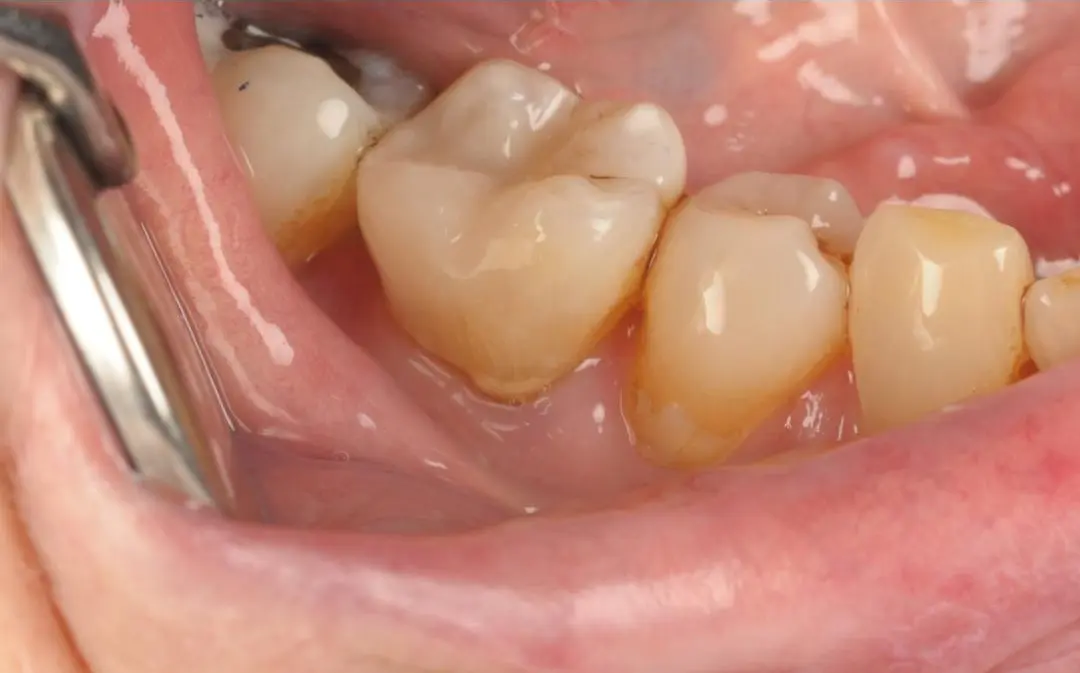
Real Patient Result: Emergency White Filling
Treatment by Dr Kamran
- Pain that has persisted for more than one to two days without improvement
- Facial swelling, particularly if it is spreading
- Difficulty swallowing or opening the mouth
- Fever accompanying dental pain
- A foul taste or discharge from around a tooth
- Pain that is spreading to the jaw, neck, or temple
These situations warrant professional evaluation. Dental infections do not resolve on their own and, in some cases, can develop into more significant health concerns if left untreated. A dentist can assess the severity of the infection and discuss appropriate treatment options based on a thorough clinical examination.
Patients in London who require urgent attention can access same-day emergency dental appointments to have symptoms assessed promptly.
Treatment Approaches for a Dental Abscess
Treatment for a dental abscess is determined by the nature and extent of the infection, and will always be based on individual clinical assessment. Options a dentist may discuss include:
- Drainage of the abscess — the dentist may make a small incision to allow pus to drain, relieving pressure and pain.
- Root canal treatment — if the tooth can be saved, this procedure removes the infected pulp, cleans the root canals, and seals the tooth. For more information about what this involves, the root canal treatment page offers a helpful overview.
- Tooth extraction — in cases where the tooth cannot be preserved, extraction may be recommended.
- Antibiotics — these may be prescribed in certain situations, particularly if the infection has spread, though antibiotics alone are not typically sufficient to resolve an abscess.
Treatment outcomes depend on the individual case, and no outcome can be guaranteed. A dentist will provide personalised guidance following examination.
Prevention and Oral Health Advice
While not all dental abscesses can be prevented, maintaining good oral hygiene significantly reduces the risk of developing the decay and gum disease that commonly lead to infection.
Practical steps to support oral health include:
- Brushing teeth thoroughly twice daily using fluoride toothpaste
- Cleaning between teeth daily using floss or interdental brushes
- Attending regular dental check-ups so that early signs of decay or gum disease can be identified and managed
- Reducing the frequency of sugary foods and drinks, which contribute to tooth decay
- Attending promptly to cracked or damaged teeth, which can allow bacteria to enter the pulp
Early professional intervention is the most effective way to prevent a minor dental issue from progressing to a painful abscess.
Key Points to Remember
- A dental abscess is a bacterial infection that can develop in or around a tooth.
- Abscess pain can radiate to the jaw, temple, ear, and neck due to the extensive network of facial nerves.
- Swelling, throbbing pain, fever, and a bad taste in the mouth are common indicators.
- Dental infections do not resolve on their own and require professional assessment.
- Treatment is determined individually following clinical examination and may include drainage, root canal treatment, or extraction.
- Good oral hygiene and regular check-ups help reduce the risk of abscess development.
Frequently Asked Questions
Can a dental abscess cause a headache or temple pain?
Yes, it is possible. The trigeminal nerve connects the teeth and jaw to broader areas of the face, including the temple region. When an abscess generates pressure or sustained pain signals, these can be perceived as headache or temple pain — a phenomenon known as referred pain. However, headache and temple pain can also have other causes, so a clinical examination is essential to determine the source of your symptoms and rule out alternative explanations.
How quickly can a dental abscess become serious?
The progression of a dental abscess varies depending on the individual, the type of infection, and the bacteria involved. Some abscesses develop slowly over weeks, while others can escalate more rapidly. If you notice swelling spreading into the face or neck, difficulty swallowing or breathing, or feel significantly unwell alongside dental pain, it is important to seek dental or medical attention promptly. These symptoms may indicate that the infection has spread beyond the immediate tooth area.
Will a dental abscess go away without treatment?
No. A dental abscess does not resolve on its own. While symptoms may fluctuate — and the pain may temporarily subside if the abscess partially ruptures — the underlying infection remains and can worsen over time. Professional dental treatment is necessary to properly address the source of the infection and prevent further complications. If you are experiencing symptoms consistent with an abscess, please contact a dental professional for assessment.
Can I take painkillers while waiting for a dental appointment?
Over-the-counter pain relief such as paracetamol or ibuprofen (where appropriate and not contraindicated for your personal health circumstances) may help manage discomfort while awaiting a dental appointment. However, these medications do not treat the infection itself. You should always follow the manufacturer's dosage instructions and consult a pharmacist if you are unsure whether a particular medication is suitable for you. Seek dental assessment as soon as possible rather than relying solely on pain management.
Is jaw pain always related to a dental abscess?
Not necessarily. Jaw pain can result from a range of causes, including temporomandibular joint (TMJ) disorders, teeth grinding (bruxism), sinus problems, muscle tension, or other dental conditions. A dental abscess is one possible cause of jaw pain, but a professional examination is required to identify the actual source. Self-diagnosis based on symptoms alone is not recommended. A dentist can assess your jaw, teeth, and surrounding tissues to provide an accurate clinical picture.
What happens if a dental abscess is left untreated?
If left untreated, a dental abscess can lead to the spread of infection to surrounding bone, teeth, and soft tissues. In some cases, infection can travel to the neck, jaw, or — in rare but serious instances — to other areas of the body. Early dental treatment is the most effective way to manage an abscess and reduce the risk of complications. If you have symptoms that suggest a dental infection, please seek a professional assessment without delay.
Conclusion
A dental abscess can indeed cause pain that extends well beyond the affected tooth, including the jaw, temple, ear, and neck. This is largely due to the intricate network of facial nerves — particularly the trigeminal nerve — which can carry pain signals across broad areas of the face and head. Understanding this connection helps explain why dental infections sometimes feel like headaches, earaches, or jaw problems.
If you are experiencing persistent pain, swelling, or symptoms that seem to be spreading, it is advisable to seek a professional dental assessment. Dental infections do not self-resolve and are best managed with timely, appropriate clinical treatment.
Dental symptoms and treatment options should always be assessed individually during a clinical examination.
If you have concerns about symptoms you are experiencing, our team at Emergency Dentist in London is available to help provide prompt, professional assessment.
Disclaimer: This article is intended for general educational purposes only and does not constitute personalised dental advice. Individual diagnosis and treatment recommendations require a clinical examination by a qualified dental professional.
Next Review Due: 26 October 2027