
Many people are surprised to discover that a tooth can effectively "die" without causing obvious, immediate pain. It is one of the most frequently searched dental concerns online — and understandably so. When there is no discomfort, it can be difficult to know whether a problem exists at all, or when to seek professional advice.
A dead tooth, sometimes referred to as a non-vital tooth, occurs when the internal tissue — the pulp — loses its blood supply and nerve function. This can happen following trauma, untreated decay, or infection. Without the nerve functioning, the usual pain signals that alert us to a problem may be absent or significantly reduced.
Understanding whether a dead tooth can remain pain-free, and for how long, is important. Recognising subtle warning signs early allows patients to seek timely dental assessment before more serious complications develop.
Experiencing these symptoms?
Delaying treatment can lead to tooth loss. We have slots available today.
This article explains what a dead tooth is, how it progresses, what to watch for, and when a professional dental evaluation is appropriate.
Featured Snippet: Can a Dead Tooth Stay Pain-Free?
Yes, a dead tooth can remain entirely pain-free for a period of time. Once the pulp loses its nerve supply, pain signals may cease. However, the absence of pain does not indicate the tooth is healthy. Infection and structural deterioration can continue silently, potentially leading to abscess formation or a dental emergency if left unassessed.
What Is a Dead Tooth?
A dead tooth — clinically referred to as a non-vital tooth — is one in which the pulp tissue inside the tooth has ceased to function. The pulp contains blood vessels and nerves responsible for keeping the tooth alive and sensing temperature, pressure, and pain.
Meet Dr. Yasha Shirazi
Principal Dentist at Emergency Dentist London
"We treat hundreds of dental emergencies every month. The sooner you come in, the easier the fix usually is."
Book an appointment with our team →There are two primary causes of pulp death:
- Dental trauma: A knock or impact to the tooth can disrupt its blood supply. This may occur following a sports injury, fall, or accident. The tooth may darken in colour over time as the internal tissue breaks down.
- Untreated decay or infection: Bacteria from deep cavities can penetrate the pulp chamber, triggering infection and eventually destroying the pulp tissue.
In either scenario, the nerve within the tooth stops transmitting signals. This is why patients are sometimes unaware a problem exists — the very mechanism that alerts us to dental issues is no longer functioning effectively.
Understanding the underlying dental anatomy helps explain why this happens. Each tooth has a hard outer layer of enamel, a middle layer of dentine, and at its core, the pulp. When the pulp is compromised, the outer structure of the tooth may remain intact temporarily, concealing the internal deterioration.
Why a Dead Tooth May Feel Pain-Free
The absence of pain in a non-vital tooth is, paradoxically, one of the key reasons it can go undetected. Once the nerve inside the pulp dies, the tooth can no longer send pain signals in the usual way. Patients may notice:
- No sensitivity to hot or cold
- No aching or throbbing
- No obvious discomfort when biting
This can create a false sense of reassurance. However, within the tooth and surrounding bone, biological processes continue. Bacteria may remain active. The breakdown of pulp tissue can create conditions favourable to infection — even in the absence of pain.
Over time, a low-grade infection may develop, spreading towards the root tip and into the surrounding jaw tissue. At this stage, symptoms may eventually emerge, including localised swelling, a change in tooth colour, or a sensation of pressure. By the time pain does return — often through pressure from a developing abscess — the situation may be more complex than it would have been if assessed earlier.
If you are concerned about changes to a tooth following an accident or injury, our emergency dental service in London can provide timely assessment and guidance.
Recognising the Subtle Signs
Although a dead tooth may not cause immediate pain, there are often subtle indicators worth noting:
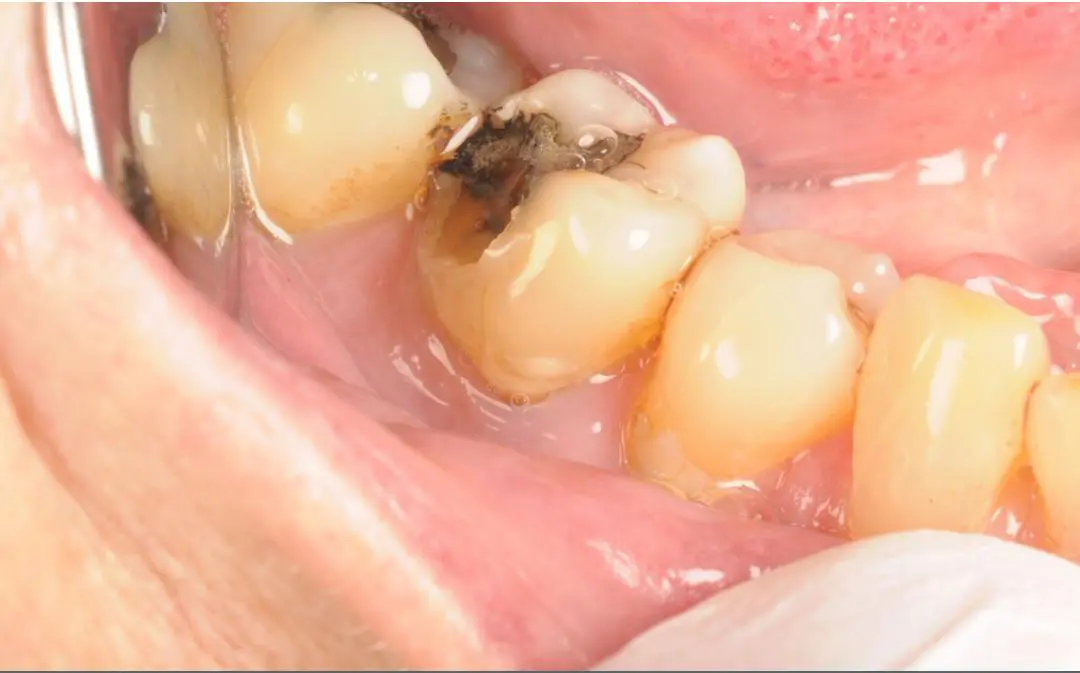
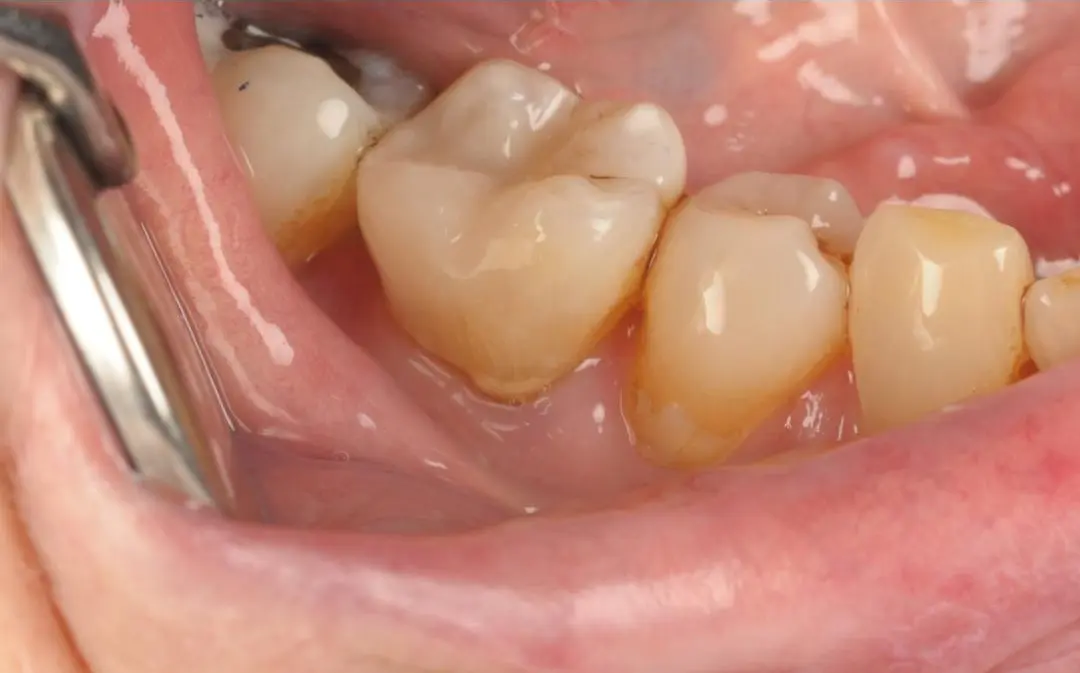
Real Patient Result: Emergency White Filling
Treatment by Dr Kamran
- Tooth discolouration: A darkening of the tooth — from yellow to grey or brown — is one of the more common early signs. This occurs as the internal tissue breaks down and pigments are released into the dentine.
- Mild, intermittent discomfort: Some patients notice occasional pressure or a dull ache that comes and goes.
- Sensitivity to pressure: Biting or chewing may feel slightly different, even without sharp pain.
- Gum changes: A small pimple-like swelling on the gum (a dental sinus or fistula) near the affected tooth may appear, indicating that an infection is attempting to drain.
- Bad taste or odour: This may suggest bacterial activity within or around the tooth.
None of these signs are definitive without examination, but they are useful prompts to seek professional advice.
When Professional Dental Assessment May Be Appropriate
There are several situations in which seeking a dental assessment sooner rather than later is advisable:
- Following dental trauma: Even if a tooth struck during an accident appears and feels normal, an evaluation is worthwhile. Pulp damage following injury can take weeks or months to become apparent.
- Visible tooth darkening: Discolouration without a clear cosmetic explanation is worth investigating.
- Gum swelling near a specific tooth: Localised swelling, particularly if it appears suddenly, may indicate infection.
- A persistent unusual taste or smell: These may suggest bacterial activity beneath the surface.
- A tooth that was painful and then suddenly stops hurting: In some cases, pain subsiding abruptly can indicate that the pulp has died rather than the problem having resolved.
Dental symptoms and treatment options should always be assessed individually during a clinical examination. If you experience any of the above, contacting a dental professional promptly is always a sensible course of action.
For patients in London experiencing sudden dental symptoms, understanding when to seek emergency dental care can help you make informed decisions quickly.
Treatment Approaches for a Non-Vital Tooth
Treatment for a dead tooth depends on the clinical findings at the time of examination. General options a dentist may discuss include:
- Root canal treatment: This involves removing the affected pulp tissue, cleaning and disinfecting the root canals, and sealing the tooth. This allows the tooth structure to be retained. Many patients are relieved to learn the procedure is typically comfortable with appropriate local anaesthesia.
- Extraction: In cases where the tooth cannot be saved due to significant structural compromise or advanced infection, removal may be recommended. Replacement options such as a dental implant or bridge may then be discussed.
- Monitoring: In some clinical situations, particularly where a tooth shows signs of non-vitality but no active infection, a period of careful monitoring may be appropriate.
Treatment suitability is always determined through clinical examination and, where necessary, dental X-rays. No specific outcome or approach can be guaranteed in advance of a thorough assessment.
Learning more about root canal treatment and what to expect may help patients feel better prepared before a dental appointment.
Prevention and Oral Health Maintenance
While not all causes of pulp death are preventable, several measures can meaningfully reduce risk:
- Regular dental check-ups: Routine examinations allow early detection of decay before it reaches the pulp.
- Prompt treatment of decay: Addressing cavities early reduces the likelihood of deep infection.
- Wearing a mouthguard during contact sports: Custom-fitted mouthguards can significantly reduce the risk of dental trauma.
- Practising good daily oral hygiene: Brushing twice daily with fluoride toothpaste and regular interdental cleaning supports overall tooth health.
- Attending promptly after dental injury: Even if a knocked tooth seems unaffected, professional review within 24 to 48 hours is advisable.
Preventative dentistry is always preferable to managing complications that develop over time.
Key Points to Remember
- A dead tooth occurs when the pulp tissue loses its blood and nerve supply.
- The absence of pain does not mean a tooth is healthy — infection can develop silently.
- Common indicators include tooth discolouration, gum changes, and occasional pressure.
- Dental trauma is a significant cause of pulp death, even when initial symptoms are absent.
- Treatment options, such as root canal treatment or extraction, depend on clinical assessment.
- Regular dental check-ups and wearing protective mouthguards can help reduce risk.
Frequently Asked Questions
How long can a dead tooth remain pain-free?
There is no fixed timeframe. A non-vital tooth can remain entirely symptom-free for weeks, months, or occasionally longer. This varies depending on whether bacteria are present, the extent of any developing infection, and individual factors. The absence of pain is not a reliable indicator of tooth health. Regular dental check-ups remain important even when no discomfort is felt, as changes within the tooth or surrounding bone may only be visible on X-ray.
Can a dead tooth cause health problems beyond the mouth?
Dental infections originating from a non-vital tooth have the potential to spread to surrounding structures if left unmanaged. In rare cases, untreated dental abscesses can lead to more serious complications. This is one of the reasons why professional assessment is recommended when symptoms such as swelling, fever, or a persistent bad taste are present alongside a suspected problem tooth. A dentist can advise on the appropriate course of action based on your individual clinical situation.
Will a dead tooth always need to be removed?
Not necessarily. Whether a tooth can be retained depends on the extent of structural damage, the presence and severity of infection, and the overall condition of the tooth. Root canal treatment is one approach that aims to preserve the natural tooth. However, where significant damage has occurred, extraction may be the recommended option. Treatment decisions are always made on an individual basis following clinical examination and, in most cases, dental X-rays.
What does a dead tooth look like?
A non-vital tooth often changes colour over time. This typically presents as a gradual darkening from the usual off-white or cream colour to shades of yellow, grey, or brown. The discolouration occurs as the internal tissue breaks down. Not all discoloured teeth are non-vital, and other causes of staining exist, so professional assessment is always the appropriate way to determine the cause of any visible change.
Is it possible for a dead tooth to become infected without any symptoms?
Yes. A non-vital tooth that has lost its nerve supply may develop infection at the root tip or in the surrounding bone without producing noticeable pain. The infection may only become apparent through dental X-ray findings, visible gum changes such as a sinus tract, or eventually through swelling. This reinforces the importance of attending regular dental appointments, where changes may be identified before a symptomatic emergency develops.
Can children experience dead teeth as well as adults?
Yes. Children can develop non-vital teeth, most commonly following trauma to baby teeth or permanent teeth. A knocked tooth in a child should always be assessed by a dental professional promptly, even if the tooth appears unaffected immediately after the incident. Delayed assessment can result in complications affecting both the primary and developing permanent dentition.
Conclusion
A dead tooth presents a genuinely counterintuitive clinical situation — the absence of pain can create a false sense of security, while the underlying tooth and surrounding structures may be undergoing gradual deterioration. Understanding that a non-vital tooth can remain pain-free for a significant period, and recognising the subtle indicators that warrant professional review, is an important part of maintaining long-term dental health.
Early assessment generally offers a wider range of options and a more favourable opportunity for a positive outcome. Waiting until pain or swelling becomes severe may limit the choices available and increase the complexity of any treatment required.
If you have noticed any changes to a tooth — particularly discolouration, gum changes, or a history of dental trauma — seeking professional dental advice is always a sensible step. Dental symptoms and treatment options should always be assessed individually during a clinical examination.
Disclaimer: This article is intended for general educational purposes only and does not constitute personalised dental advice. Individual diagnosis and treatment recommendations require a clinical examination by a qualified dental professional.
Next Review Due: 30 October 2027
Disclaimer
This article is for general educational purposes only and does not constitute dental advice, diagnosis, or treatment. Every patient is different, so symptoms and treatment options should be assessed by a qualified dental professional during a clinical examination. No specific outcomes are guaranteed.