
Discovering that a tooth has broken beneath the gum line can be a worrying experience. Many patients in this situation immediately wonder whether the tooth can still be saved — or whether extraction is the only option. It is entirely understandable to search online for answers, particularly when you are in discomfort or uncertain about what the next steps should be.
A broken tooth below the gum line presents a more complex clinical situation than a fracture visible above the gumline. The position of the break, the depth of the fracture, and the condition of the surrounding structures all play a significant role in determining whether treatment is possible.
This article explains the factors dentists consider when assessing a subgingival tooth fracture, how root canal treatment may be relevant, and what other clinical options might exist. Understanding this information may help you ask better questions when you attend a dental consultation.
Experiencing these symptoms?
Delaying treatment can lead to tooth loss. We have slots available today.
If you are experiencing pain, swelling, or discomfort related to a broken tooth, it is advisable to seek professional dental advice promptly.
Featured Snippet: Can a Broken Tooth Below the Gum Be Saved?
In some cases, a broken tooth below the gum can be saved, depending on how far below the gum line the fracture extends and whether the root remains intact. Root canal treatment may address infection within the tooth, but restorability depends on clinical assessment of the fracture depth, bone levels, and remaining tooth structure.
Understanding Why Teeth Break Below the Gum Line
Teeth can break at or below the gum line for several reasons. Decay that has progressed deep into the tooth structure can weaken it to the point of fracture. Physical trauma — such as a blow to the mouth, a fall, or biting down on something unexpectedly hard — can cause a tooth to snap at a level that is not immediately visible to the patient.
Meet Dr. Yasha Shirazi
Principal Dentist at Emergency Dentist London
"We treat hundreds of dental emergencies every month. The sooner you come in, the easier the fix usually is."
Book an appointment with our team →Old, large dental restorations can also contribute to structural vulnerability over time. When a filling takes up a significant proportion of a tooth, the remaining natural tooth structure becomes thinner and more prone to cracking or breaking under normal biting forces.
In some patients, teeth that have previously had root canal treatment and have not been protected with a crown may be at increased risk of fracturing. These teeth can become more brittle over time because the pulp tissue, which normally provides some hydration and sensory feedback, has been removed.
Understanding the cause of the fracture can help a dentist assess the likelihood of successful treatment and the measures that may help prevent similar problems in future.
What Happens Inside a Broken Tooth?
To understand why root canal treatment may or may not be relevant, it helps to know a little about tooth anatomy. Each tooth has several layers. The outermost layer visible above the gum is enamel — the hardest substance in the human body. Beneath that is dentine, a slightly softer but still firm tissue. At the centre of the tooth lies the pulp — a soft tissue containing nerves, blood vessels, and connective tissue that extends down through the root canals.
When a tooth breaks, the pulp may become exposed or compromised, particularly if the fracture is deep. Bacteria from the mouth can enter through the fracture, leading to pulp inflammation or infection. This is where root canal treatment becomes relevant. The procedure involves removing the infected or inflamed pulp tissue, cleaning the root canal system, and sealing it to prevent further bacterial entry.
However, root canal treatment addresses what is happening inside the tooth. It does not resolve structural problems caused by how the tooth has fractured. A tooth can be root-treated successfully but still be impossible to restore if the fracture extends too far below the bone level.
The Role of Root Canal Treatment in Subgingival Fractures
Root canal treatment may be a component of saving a broken tooth below the gum line, but it is rarely the only consideration. When the fracture line is shallow — meaning it sits just slightly below the gumline — other procedures may be used alongside root canal treatment to expose more of the tooth structure and allow a crown or other restoration to be placed.
One such procedure is crown lengthening, a surgical technique where a periodontist or oral surgeon adjusts the gum and sometimes the underlying bone to expose more of the tooth's surface. This can create enough structure for a restoration to grip onto securely. For patients considering this option, learning more about what restorative dentistry procedures may involve can be helpful when discussing treatment planning.
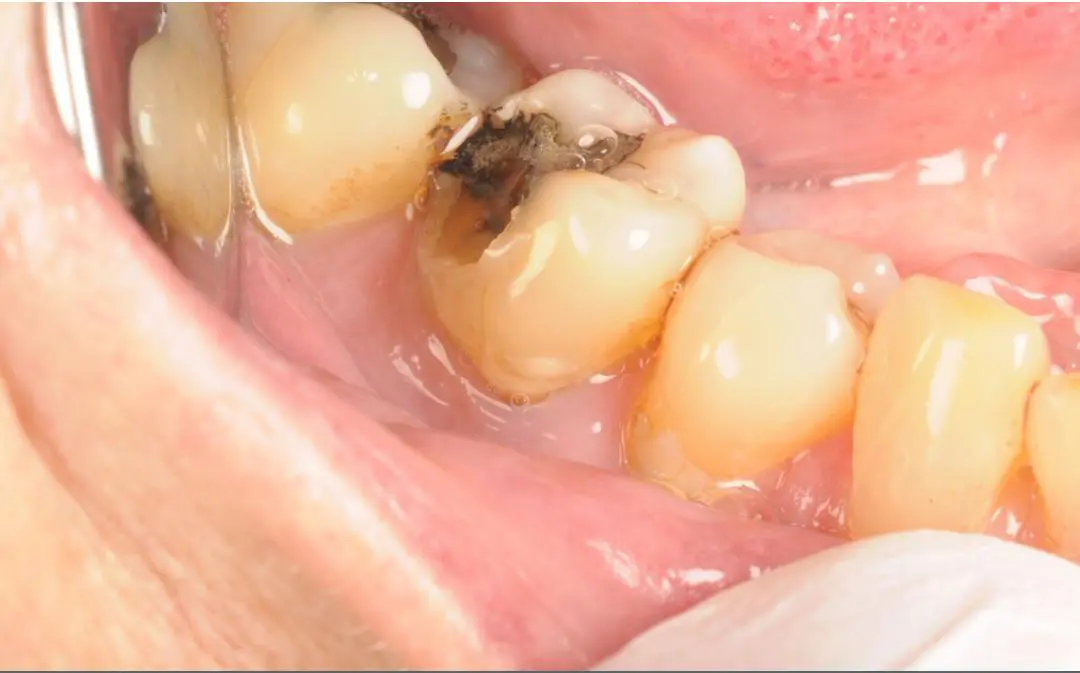
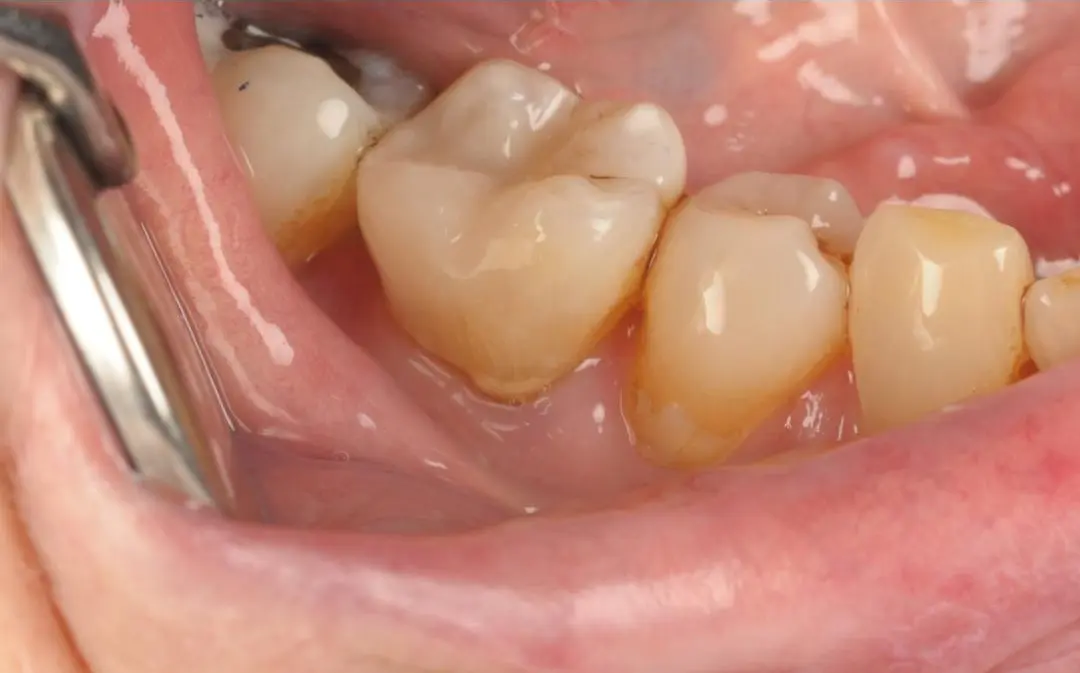
Real Patient Result: Emergency White Filling
Treatment by Dr Kamran
When the fracture is very deep — extending into or below the bone — the prognosis is generally less favourable. In these situations, even with root canal treatment, there may not be sufficient tooth structure remaining to support a lasting restoration, and extraction may be the more appropriate clinical recommendation.
The decision will always depend on a thorough assessment by a qualified dental professional, including clinical examination and dental X-rays.
Signs That a Broken Tooth May Need Prompt Attention
Not every broken tooth causes obvious immediate pain, particularly if the fracture develops gradually. However, certain signs suggest that dental evaluation should not be delayed.
These include:
- Persistent or throbbing pain around a specific tooth, particularly if it worsens over time
- Swelling of the gum, cheek, or jaw near the affected area
- Sensitivity to temperature — especially lingering sensitivity to cold or heat — that does not settle quickly
- A visible fragment of tooth that has come away, or a sharp edge felt with the tongue
- Discharge or an unpleasant taste near a tooth, which could indicate infection
- Discolouration of a tooth, which can sometimes be a sign of internal pulp changes
If you notice any of these symptoms, seeking emergency dental care from a qualified dentist is an appropriate step. These signs do not necessarily mean the worst outcome, but they do warrant timely clinical assessment.
Clinical Assessment: What a Dentist Will Evaluate
When a patient presents with a tooth broken below the gum line, the dentist will need to carry out a thorough assessment before recommending any treatment. This typically includes a visual examination of the area, gentle probing around the tooth to assess the depth and direction of the fracture, and dental radiographs (X-rays) to evaluate the root, surrounding bone, and any signs of infection.
The key factors influencing treatment options include:
- Fracture depth — how far below the gum line and bone the fracture extends
- Root length — whether enough root remains to support a restoration
- Bone levels — the health and height of the bone surrounding the tooth
- Pulp status — whether infection or inflammation is present
- Adjacent teeth and bite — how the tooth relates to surrounding structures
These findings guide the dentist's recommendation. Some cases are straightforward; others require input from a specialist such as an endodontist or periodontist. If you are considering root canal treatment, understanding what the procedure involves can help you prepare for a consultation.
Preventing Tooth Fractures: Practical Oral Health Advice
While not all tooth fractures can be prevented, there are practical steps that may reduce the risk:
- Attend regular dental check-ups so that decay and structural weaknesses are identified and addressed early, before they progress to fracture
- Wear a custom-fitted mouthguard during contact sports or activities where dental trauma is a possibility
- Discuss a nightguard with your dentist if you grind your teeth during sleep (bruxism), as this places significant repetitive force on tooth structure
- Avoid habits such as chewing ice, opening packaging with your teeth, or biting very hard foods — particularly if you have existing restorations or weakened teeth
- Restore weakened teeth promptly — large fillings or teeth that have been root-treated should ideally be protected with a crown to reduce fracture risk
- Maintain a good oral hygiene routine to minimise decay, which can structurally compromise teeth over time
These are general preventative measures. Your dentist can offer specific advice based on your individual oral health circumstances. Patients interested in protecting their teeth long-term may find it useful to explore preventative dental care options available at their practice.
Key Points to Remember
- A broken tooth below the gum line may or may not be saveable — this depends entirely on the depth and direction of the fracture, as assessed clinically.
- Root canal treatment may be part of the solution, but it addresses internal infection rather than structural restorability.
- Procedures such as crown lengthening may help expose more tooth structure in appropriate cases.
- Dental X-rays and a thorough clinical examination are essential before any treatment decision can be made.
- Common signs such as persistent pain, swelling, or sensitivity near a tooth warrant timely dental assessment.
- Regular dental check-ups and protective measures can help reduce the risk of future tooth fractures.
Frequently Asked Questions
Can a tooth that has broken under the gum always be saved?
Not always. Whether a broken tooth below the gum line can be saved depends on the depth of the fracture, the condition of the root, and the surrounding bone levels. Fractures that extend very deep below the bone are generally more difficult or impossible to restore predictably. A dentist will assess these factors through clinical examination and X-rays before recommending a course of action. Treatment suitability varies from patient to patient and cannot be determined without a proper clinical assessment.
Will I need root canal treatment if my tooth breaks below the gum?
Not necessarily. Root canal treatment is indicated when the pulp — the inner tissue of the tooth — has become infected or significantly inflamed. If the broken tooth's pulp is still healthy and unaffected, root canal treatment may not be required. However, fractures that expose or compromise the pulp frequently do lead to infection over time. A dentist will assess the pulp status as part of the overall evaluation of your tooth.
How painful is a broken tooth below the gum line?
Pain levels vary considerably. Some patients experience significant discomfort immediately after a fracture, particularly if the pulp or nerves become exposed. Others experience little pain initially, especially if the fracture has developed gradually. Swelling, throbbing, or sensitivity to temperature are common accompanying symptoms. It is worth seeking dental assessment regardless of pain severity, as the absence of pain does not necessarily mean the tooth is unaffected.
How long does treatment for a subgingival tooth fracture take?
This depends on what treatment is required. Root canal treatment alone is typically completed over one to three appointments. If crown lengthening is also needed, there is usually a healing period of several weeks before a final restoration can be placed. Your dentist or specialist will outline an estimated treatment timeline based on your specific clinical situation during your consultation.
What happens if a broken tooth below the gum is left untreated?
If a fractured tooth with pulp involvement is left without treatment, infection may develop or worsen. This can lead to an abscess — a localised collection of bacteria — which may cause increasing pain, swelling, and in some cases spread to surrounding structures. Leaving a significantly damaged tooth untreated for an extended period may also reduce the chances of it being restorable. Early dental assessment generally offers more treatment options.
Is extraction always the outcome for teeth broken below the gum?
Not always, though extraction is sometimes the most appropriate clinical recommendation. When a tooth cannot be predictably restored — due to the depth of the fracture or insufficient remaining structure — extraction may offer a more reliable long-term solution than attempting a complex restoration with a poor prognosis. Your dentist will discuss all available options, including tooth replacement options such as implants or bridges, so that you can make an informed decision.
Conclusion
A broken tooth below the gum line is understandably a concerning situation, and it is natural to want to know whether the tooth can be saved. The answer is that it depends — on the depth of the fracture, the health of the root, the surrounding bone, and whether infection is present. Root canal treatment can address internal infection and form part of a broader treatment plan in suitable cases, but it is not a universal solution for all subgingival fractures.
What matters most is receiving a thorough clinical assessment without unnecessary delay. The earlier a dentist can evaluate the situation, the more treatment options are likely to be available.
Dental symptoms and treatment options should always be assessed individually during a clinical examination.
If you are concerned about a broken tooth or are experiencing pain, swelling, or any of the symptoms described in this article, we encourage you to contact a qualified dental professional for a proper evaluation.
Disclaimer: This article is intended for general educational purposes only and does not constitute personalised dental advice. Individual diagnosis and treatment recommendations require a clinical examination by a qualified dental professional.
Next Review Due: 22 October 2027
Disclaimer
This article is for general educational purposes only and does not constitute dental advice, diagnosis, or treatment. Every patient is different, so symptoms and treatment options should be assessed by a qualified dental professional during a clinical examination. No specific outcomes are guaranteed.