
Few dental problems cause as much discomfort — or anxiety — as a severe toothache after a filling has fallen out. One moment you are eating, drinking, or going about your day, and the next you notice something hard in your mouth that should not be there. Within minutes or hours, the exposed tooth can become intensely sensitive or painful. It is one of the most common reasons people search for emergency dental help, and understandably so.
A lost filling leaves the inner structure of your tooth unprotected. The tooth may react to temperature, pressure, air, and food in ways that feel sharp, throbbing, or relentless. Understanding why this happens, what you can do to manage the discomfort in the short term, and when to seek professional care can help you navigate the situation calmly and effectively.
This article explains the causes of a severe toothache after a filling fell out, the dental science behind the pain, practical steps you can take at home, and how an emergency dentist can resolve the problem. Whether the filling came out today or a few days ago, this guide covers what you need to know.
Experiencing these symptoms?
Delaying treatment can lead to tooth loss. We have slots available today.
Why Does a Severe Toothache Occur After a Filling Falls Out?
Quick answer: A severe toothache after a filling fell out occurs because the inner layers of the tooth — the dentine and sometimes the pulp — are suddenly exposed. Dentine contains thousands of microscopic tubules that connect directly to the tooth's nerve. Without the protective barrier of the filling, these tubules transmit temperature, pressure, and chemical signals to the nerve, causing sharp or throbbing pain. Prompt dental assessment can restore the tooth and relieve discomfort.
Understanding Tooth Structure and Why Exposure Causes Pain
To understand why a lost filling causes such intense pain, it helps to know what lies beneath the surface of a tooth. A tooth has several distinct layers, each with a different role.
Enamel is the hard, white outer shell. It is the hardest substance in the human body and protects the tooth from daily wear, temperature extremes, and bacteria. Enamel has no nerve supply, which is why biting and chewing are normally painless.
Meet Dr. Yasha Shirazi
Principal Dentist at Emergency Dentist London
"We treat hundreds of dental emergencies every month. The sooner you come in, the easier the fix usually is."
Book an appointment with our team →Dentine sits beneath the enamel. It is softer and more porous, with a yellowish colour. Crucially, dentine is permeated by thousands of microscopic tubules — tiny channels that run from the outer surface of the dentine all the way to the pulp chamber at the centre of the tooth. These tubules contain fluid, and when that fluid moves — in response to heat, cold, sweet substances, or air — it stimulates nerve endings within the pulp.
Pulp is the innermost part of the tooth. It contains the blood supply and nerve tissue. The pulp is what allows you to feel sensation in a tooth. When the dentine is exposed after a filling falls out, the pulp receives a flood of signals through those thousands of tubules. The result is pain — sometimes sharp and sudden, sometimes a deep, persistent ache.
When a filling was originally placed, it was because the enamel had been breached — usually by decay. The filling replaced the lost tooth structure and sealed the dentine from the oral environment. When that filling falls out, the dentine is exposed once again, and the tooth essentially loses its protective barrier overnight.
Common Reasons Why Fillings Fall Out
Fillings are designed to last, but they are not permanent. Understanding why they fail can help you recognise risk factors and take preventative steps in the future.
Wear and age. All filling materials degrade over time. Amalgam (silver) fillings and composite (tooth-coloured) fillings both have a finite lifespan. After years of chewing forces, temperature changes, and chemical exposure from food and drink, the bond between the filling and the tooth can weaken. Small gaps develop at the margin, allowing bacteria to seep underneath. Eventually, the filling loosens and falls out.
Recurrent decay. New decay can develop around or beneath an existing filling. This undermines the tooth structure that supports the filling, causing it to loosen. The decay may not be visible from the outside, which is why regular dental examinations — including X-rays — are important for detecting problems early.
Biting forces. Teeth at the back of the mouth endure significant chewing pressure. If a filling is large — particularly one that replaces a substantial portion of the tooth — the remaining tooth structure may not be strong enough to withstand these forces indefinitely. Clenching or grinding (bruxism) places additional stress on fillings and can accelerate their failure.
Trauma. A knock to the face, biting down unexpectedly on something hard, or an accident can dislodge a filling immediately.
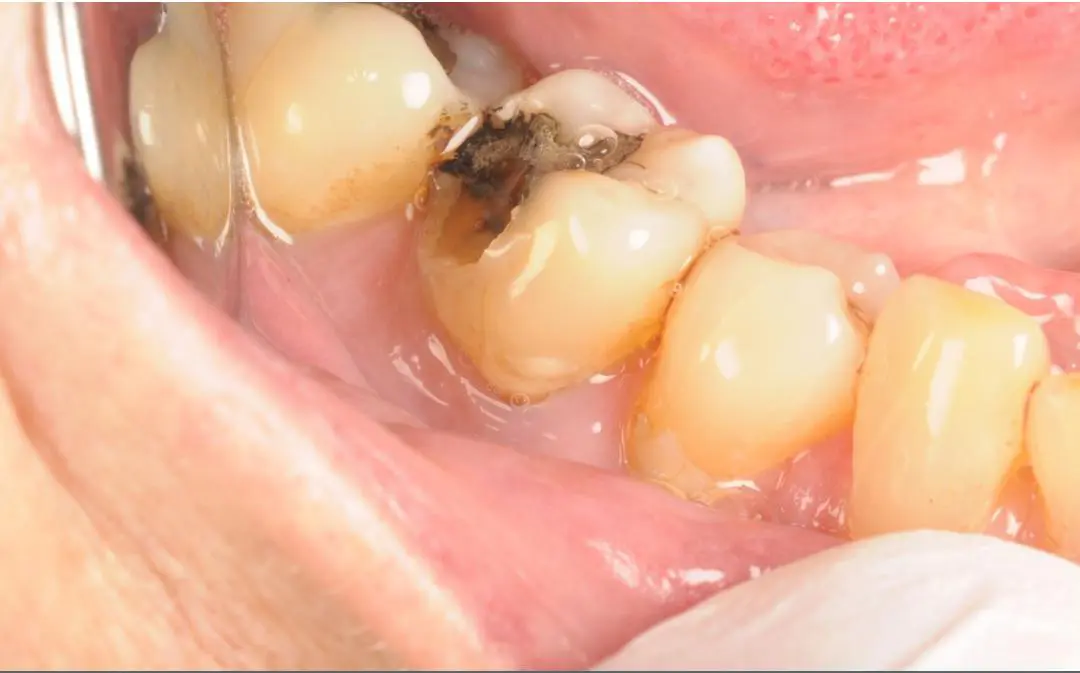
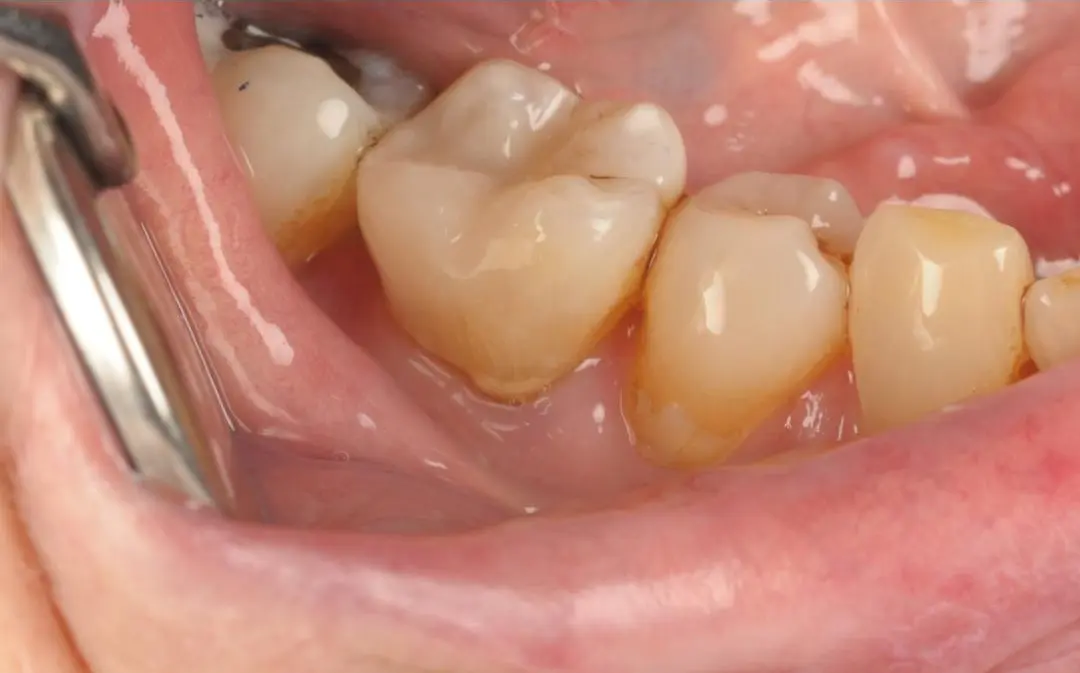
Real Patient Result: Emergency White Filling
Treatment by Dr Kamran
Temperature cycling. Repeatedly consuming very hot followed by very cold food or drink causes the filling material and the tooth to expand and contract at slightly different rates. Over time, this thermal cycling can break the seal between filling and tooth.
What Does the Pain Feel Like?
The type and intensity of pain after a filling falls out varies depending on the depth of the original cavity, how much dentine is exposed, and whether the pulp is involved.
Sharp sensitivity. This is the most common type. You may feel a sudden, intense jolt when cold air hits the tooth, when you drink something hot or cold, or when sweet or acidic food touches the exposed area. The pain is usually brief — lasting seconds — but can be very sharp.
Throbbing ache. If the exposure is deeper, or if bacteria have reached the pulp, you may experience a persistent, throbbing pain that does not depend on a trigger. This type of pain may worsen at night or when you lie down, as changes in blood flow to the head can increase pressure within the tooth.
Pain on biting. Without the filling to distribute chewing forces evenly, biting down on the affected tooth can cause discomfort. The remaining tooth structure or the exposed dentine may flex under pressure, triggering pain.
Constant dull ache. A low-level, ongoing ache may indicate that the pulp is inflamed (pulpitis). If the inflammation is reversible, prompt treatment can resolve the problem. If it has progressed to irreversible pulpitis, root canal treatment may be needed. Our severe toothache treatment service can assess and manage this effectively.
Immediate Steps to Take When a Filling Falls Out
While you wait for a dental appointment, there are practical steps you can take to manage your discomfort and protect the tooth.
1. Stay calm. A lost filling is a common dental problem and is usually straightforward to treat. It is not a medical emergency in most cases, but it does need professional attention to prevent the situation from worsening.
2. Keep the area clean. Rinse your mouth gently with warm salt water (half a teaspoon of salt in a glass of warm water). This helps remove debris from the cavity and has a mild antibacterial effect. Avoid vigorous swishing, which could irritate the exposed area.
3. Use temporary filling material. Over-the-counter temporary filling kits are available from most pharmacies in London, including Boots and Superdrug. These contain a soft, putty-like material that you press into the cavity to create a temporary seal. This reduces sensitivity by covering the exposed dentine and helps protect the tooth from bacteria and food debris until your dental appointment.
4. Take appropriate pain relief. Ibuprofen is often effective for dental pain as it reduces both pain and inflammation. Paracetamol is an alternative if ibuprofen is not suitable for you. Follow the dosage instructions on the packaging. Do not exceed the recommended dose, and do not place aspirin directly on the gum — this can cause a chemical burn to the soft tissue.
5. Avoid triggers. Steer clear of very hot, very cold, sweet, or acidic food and drink on the affected side. Chew on the opposite side of your mouth. Breathing through your nose rather than your mouth can help reduce sensitivity caused by cold air hitting the tooth.
6. Do not attempt to glue the filling back in. Household adhesives are not designed for oral use and can be harmful. If you still have the filling, keep it in a clean container to show your dentist — they may be able to assess the type and condition of the original material.
How Long Can You Leave a Tooth Without a Filling?
This is one of the most frequently asked questions, and the answer depends on several factors. However, the general guidance is clear: the sooner the tooth is restored, the better the outcome.
In the short term — a day or two — a lost filling is unlikely to cause irreversible damage, provided you keep the area clean and protect it with temporary filling material. However, the longer the tooth remains open, the greater the risks:
Bacterial infection. An exposed cavity provides a direct pathway for bacteria to reach the deeper layers of the tooth. Once bacteria reach the pulp, infection can develop, leading to an abscess. This significantly increases the complexity and cost of treatment.
Further tooth fracture. A tooth that has lost a filling is structurally weakened. Without the filling to reinforce it, the remaining walls of the tooth are more likely to crack or break, potentially making the tooth unrestorable.
Increased sensitivity and pain. Over time, the exposed dentine becomes more reactive. What starts as mild sensitivity can progress to constant, debilitating pain as inflammation in the pulp worsens.
The advice is straightforward: contact a dentist as soon as you can. For our lost filling and crown replacement service, same-day appointments are available for patients in discomfort, subject to availability.
What Will the Dentist Do?
During your emergency dental appointment, the dentist will carry out a thorough assessment to determine the best course of action. The approach depends on what they find.
Clinical examination. The dentist will examine the tooth visually, check for signs of decay, fracture, or infection, and assess the condition of the remaining tooth structure. An X-ray is usually taken to evaluate the roots and the bone surrounding the tooth, and to check whether the pulp has been affected.
New filling. If the tooth structure is sound and there is no significant new decay, a new filling can usually be placed during the same appointment. The dentist will remove any softened or decayed tooth tissue, clean the cavity, and place a new restoration.
Crown. If the tooth has lost a substantial amount of structure — particularly if the filling was large or if the remaining walls are thin — the dentist may recommend a crown rather than another filling. A crown covers the entire biting surface of the tooth and provides significantly more strength and protection.
Root canal treatment. If the pulp has become irreversibly inflamed or infected, root canal treatment may be necessary before the tooth can be restored. This involves removing the infected pulp tissue, cleaning and shaping the root canals, and sealing them to prevent reinfection. The tooth is then restored with a filling or crown.
Extraction. In some cases — particularly if the tooth is severely decayed, fractured below the gum line, or has extensive infection — extraction may be the most appropriate option. The dentist will always explain the alternatives and help you make an informed decision.
When Professional Dental Assessment May Be Needed
While a lost filling always warrants a dental appointment, certain signs indicate that you should seek care more urgently:
Pain that is constant, severe, or worsening despite pain relief
Swelling of the gum, cheek, or face near the affected tooth
A bad taste in the mouth or pus around the tooth — signs of possible infection
Fever alongside dental pain
Difficulty eating, drinking, or sleeping due to the pain
Visible dark discolouration or a large cavity where the filling was
Part of the tooth has broken away along with the filling
If you experience facial swelling that is spreading rapidly, difficulty swallowing, or difficulty breathing, call 999 or attend A&E immediately — these symptoms may indicate a serious infection that requires urgent medical attention.
For all other dental symptoms, calling NHS 111 can provide guidance on accessing urgent dental care. Alternatively, contacting an emergency dental practice directly is the most efficient route to same-day assessment and treatment.
Prevention: Reducing the Risk of Fillings Falling Out
While you cannot guarantee a filling will last indefinitely, there are practical steps you can take to maximise the lifespan of your dental restorations.
Attend regular dental check-ups. Routine examinations allow your dentist to monitor existing fillings, detect early signs of wear or marginal breakdown, and replace restorations before they fail unexpectedly. Most dentists recommend check-ups every six to twelve months, depending on your individual risk profile.
Maintain good oral hygiene. Brushing twice daily with fluoride toothpaste and cleaning between teeth with floss or interdental brushes helps prevent recurrent decay — one of the main reasons fillings fail. An electric toothbrush can be particularly effective at removing plaque from around the edges of fillings.
Address teeth grinding. If you clench or grind your teeth — particularly at night — speak to your dentist about a custom-made night guard. Bruxism places enormous stress on fillings and can shorten their lifespan considerably.
Be mindful of what you eat. Very hard foods (ice, boiled sweets, popcorn kernels) and very sticky foods (toffee, chewy sweets) are common causes of filling failure. Being cautious with these items — particularly on teeth with large fillings — can help protect your restorations.
Consider upgrading old fillings. If you have amalgam fillings that are many years old and showing signs of wear — surface cracks, discolouration, or chipping — ask your dentist whether proactive replacement is advisable before they fail on their own.
Key Points to Remember
A severe toothache after a filling fell out is caused by exposed dentine transmitting pain signals directly to the nerve of the tooth
Temporary filling material from a pharmacy can provide short-term relief by sealing the cavity until your dental appointment
The longer a tooth remains without a filling, the greater the risk of infection, further fracture, and more complex treatment
Same-day emergency dental appointments are available for lost fillings, subject to availability
Treatment may involve a new filling, a crown, root canal treatment, or extraction — depending on the clinical findings
Regular dental check-ups are the most effective way to detect and address filling problems before they cause pain
Frequently Asked Questions
Can a lost filling cause a dental infection?
Yes, it can. When a filling falls out, the cavity that was previously sealed is now open to the oral environment. Bacteria from food, saliva, and plaque can enter the exposed dentine and gradually work their way towards the pulp — the living tissue at the centre of the tooth. If bacteria reach the pulp, infection can develop. This may lead to a dental abscess, which typically causes severe throbbing pain, swelling, and sometimes fever. Seeking dental treatment promptly after a filling falls out significantly reduces the risk of infection developing.
How long does temporary filling material last?
Over-the-counter temporary filling material is designed as a short-term measure — typically lasting from a few days up to a couple of weeks. It provides a protective seal over the exposed cavity but is not a substitute for a professional dental filling. The material is softer than permanent filling materials and will gradually break down with chewing and exposure to saliva. It is best used as a bridge until your dental appointment, which should ideally be within a few days of the filling falling out.
Is it safe to eat on a tooth that has lost a filling?
It is generally advisable to avoid chewing on the affected side until the tooth has been professionally restored. Eating on a tooth with a lost filling can push food debris into the open cavity, increasing the risk of infection. Hard or crunchy foods may also cause further damage to the weakened tooth structure. If you must eat before your appointment, choose soft foods and chew on the opposite side. If you have placed temporary filling material over the cavity, avoid hard or sticky foods that could dislodge it.
Do I need a crown after a filling falls out, or can I just get another filling?
This depends on the amount of remaining tooth structure and the size of the original cavity. If the cavity is small and the surrounding tooth walls are strong, a new filling is usually sufficient. However, if the filling was large — or if additional tooth structure has been lost due to decay or fracture — a crown may be recommended. A crown covers the entire biting surface of the tooth and distributes chewing forces more evenly, providing greater long-term protection. Your dentist will assess the tooth and recommend the most appropriate restoration based on their clinical findings.
Can I use clove oil for toothache from a lost filling?
Clove oil contains eugenol, a natural compound with mild analgesic and antiseptic properties. It has been used traditionally for temporary dental pain relief. You can apply a small amount to a cotton ball and place it gently on the affected area. It may provide short-term relief from sensitivity, though results vary. Clove oil should be used sparingly — excessive application can irritate the gum tissue. It is a temporary measure only and does not replace professional dental treatment. Over-the-counter pain relief such as ibuprofen or paracetamol is generally more effective for managing dental pain.
Conclusion
A severe toothache after a filling fell out is an unpleasant experience, but it is also one of the most treatable dental problems. The pain is caused by the sudden exposure of the sensitive inner layers of the tooth, and the solution — in most cases — is a straightforward dental restoration. Taking prompt action to protect the tooth, managing your pain effectively, and seeing a dentist as soon as possible gives you the best chance of a simple, successful outcome.
Leaving a tooth without a filling for an extended period increases the risk of complications, including infection, further structural damage, and the need for more extensive treatment. If your filling has fallen out and you are in discomfort, professional dental assessment is the most effective next step.
Dental symptoms and treatment options should always be assessed individually during a clinical examination. If you are experiencing a severe toothache after a filling fell out, a clinical assessment can identify the cause of your pain and guide you towards the most appropriate treatment for your situation.
For more information about how emergency dental appointments work, visit our complete guide to dental emergencies in London.
Disclaimer: This article is for general information only and does not replace professional dental advice. Always consult a qualified dentist for diagnosis and treatment.
Article reviewed: March 2026 · Next review due: March 2027
This article was written by the Emergency Dentist London editorial team and medically reviewed by a GDC-registered dental professional. It is intended for general informational purposes and should not replace individual advice from your dentist or GP. Emergency Dentist London is a CQC-registered dental practice.
Sources: NHS — Fillings · NHS — Toothache · General Dental Council · British Dental Association
🦷 Filling Fallen Out? We Can Help Today
Same-day emergency appointments available at our South Kensington practice, subject to availability. No registration required.
🖞 Call us now: 020 3137 6356
Watch: Your Emergency Dental Appointment Explained
Disclaimer
This article is for general educational purposes only and does not constitute professional dental advice, diagnosis, or treatment. Every patient's circumstances are unique; dental symptoms and treatment options should always be assessed during a clinical examination by a qualified dental professional. No specific outcomes are guaranteed. This content has been prepared in line with GDC, CQC, ASA CAP Code, and GMC communication standards. If you have concerns about your oral health, please contact a registered dentist.