
A red swollen flap over tooth can feel surprisingly uncomfortable for something that looks quite small. Patients often describe a tender flap of gum at the back of the mouth, discomfort when chewing, food getting stuck in the same place, or a bad taste that seems to return even after brushing. It is exactly the sort of symptom that sends people online looking for answers, particularly when they are unsure whether they are dealing with simple irritation or the start of an infection.
In many cases, this type of gum flap is linked to a partially erupted wisdom tooth. When a tooth has only come through the gum part-way, a soft tissue flap can remain over part of the biting surface. Food debris, plaque, and bacteria may collect beneath it, creating a local food trap that is difficult to clean thoroughly. That can lead to inflammation and, in some cases, a local infection called pericoronitis.
This article explains why a swollen gum flap can develop, how food trapping may contribute to infection, what symptoms to look out for, which treatments a dentist may consider, and when professional dental advice may help. As always, treatment suitability depends on individual clinical assessment.
Experiencing these symptoms?
Delaying treatment can lead to tooth loss. We have slots available today.
Can a red swollen flap over a tooth be caused by trapped food and infection?
A red swollen flap over tooth may be caused by trapped food, bacteria, and inflammation around a partially erupted tooth, most often a wisdom tooth. When debris collects beneath the gum flap, the area can become irritated or infected, leading to tenderness, swelling, and sometimes a bad taste or difficulty chewing.
Why a red swollen flap over tooth can develop
A flap of gum over a tooth usually develops when the tooth has not fully erupted through the gum line. This is particularly common with lower wisdom teeth, which often emerge later than the rest of the adult teeth and may not have enough space to come through completely. When only part of the crown is visible, the remaining gum tissue may sit over the top like a small hood or pocket.
That tissue is sometimes called an operculum. On its own, it is not always a sign of infection. However, because it creates a narrow sheltered space, it can become a place where food particles, plaque, and bacteria collect very easily. A toothbrush often cannot reach properly underneath it, so even people with otherwise good oral hygiene may struggle to keep the area clean.
Meet Dr. Yasha Shirazi
Principal Dentist at Emergency Dentist London
"We treat hundreds of dental emergencies every month. The sooner you come in, the easier the fix usually is."
Book an appointment with our team →This is why a flap that began as a simple tissue issue can gradually become red, swollen, and sore. The irritation may start as minor inflammation from trapped food, then become more pronounced if bacteria continue to build up. In some patients, the opposing upper tooth may also bite onto the swollen flap and worsen the irritation further.
What is the condition called when food gets trapped under the gum flap?
When inflammation or infection develops around a gum flap covering a partially erupted tooth, dentists often call it pericoronitis. This is most commonly associated with wisdom teeth, though similar soft tissue irritation can occasionally occur elsewhere. For a fuller explanation of the condition itself, see our guide to pericoronitis and wisdom tooth infection.
Pericoronitis ranges from mild to more uncomfortable flare-ups. In a mild episode, the gum may simply look red and puffy, feel tender, and trap food repeatedly. In a more active episode, the area may become increasingly painful, develop an unpleasant taste, or feel difficult to clean. Some patients also notice pain spreading into the jaw, ear, or throat on the same side.
A key point is that pericoronitis does not always start dramatically. Sometimes the first clue is just repeated food trapping in the same spot. That is why patients often search for phrases like swollen flap over wisdom tooth, gum flap over back tooth, or food stuck under gum near molar before they ever hear the clinical name.
If symptoms are centred around an erupting or partially impacted wisdom tooth, treatment options may overlap with wisdom tooth pain relief, depending on the examination findings.
Symptoms that may suggest the flap is becoming infected
A red gum flap does not always mean infection is present, but certain symptoms make infection or active inflammation more likely. The area may feel tender when you chew or brush, and you may notice that food keeps packing into the same pocket. Some patients report a bad taste from the back of the mouth, especially if fluid or pus is draining from beneath the flap. If that taste is one of the main concerns, this article on a bad taste from an infected wisdom tooth area may also help clarify why it happens.
Other possible signs include:
- redness and puffiness around the flap
- soreness when biting down on the back teeth
- pain radiating towards the jaw or ear
- bad breath that seems to return quickly
- difficulty opening the mouth fully
- swelling extending into the cheek or under the jaw
- swollen glands or feeling slightly unwell
Not all of these symptoms appear in every case. Some episodes remain mild and localised, while others become more uncomfortable over a short period. If swelling is spreading, or if there is pus, increasing pain, or feverishness, a dentist may need to assess whether the problem is still a local gum flap issue or whether broader dental abscess treatment may need to be considered.
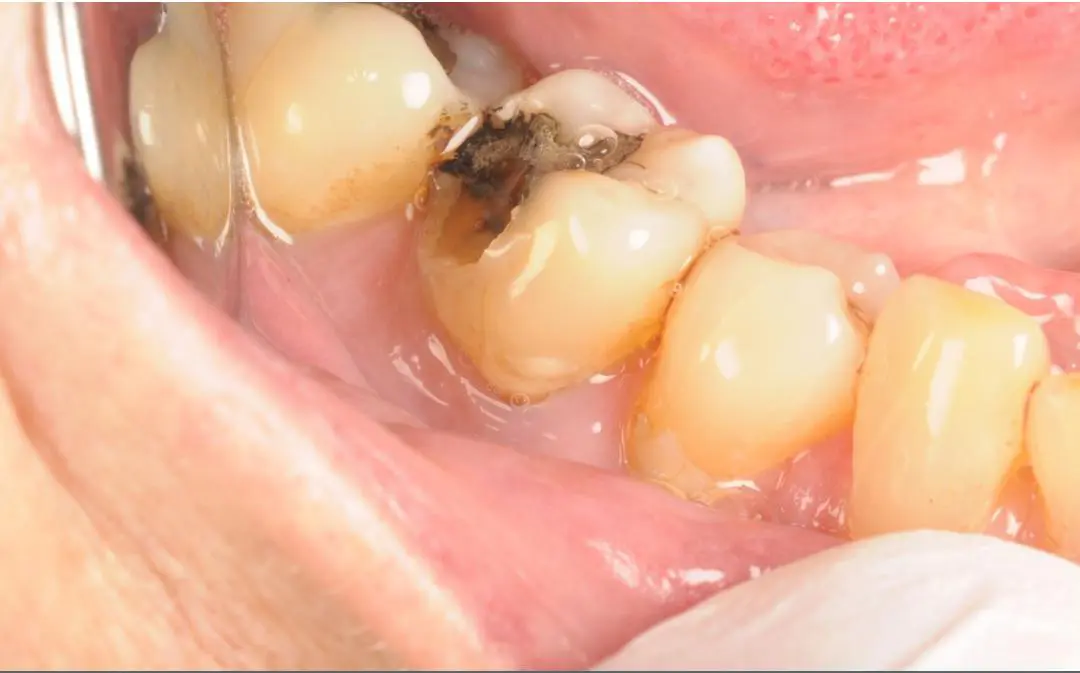
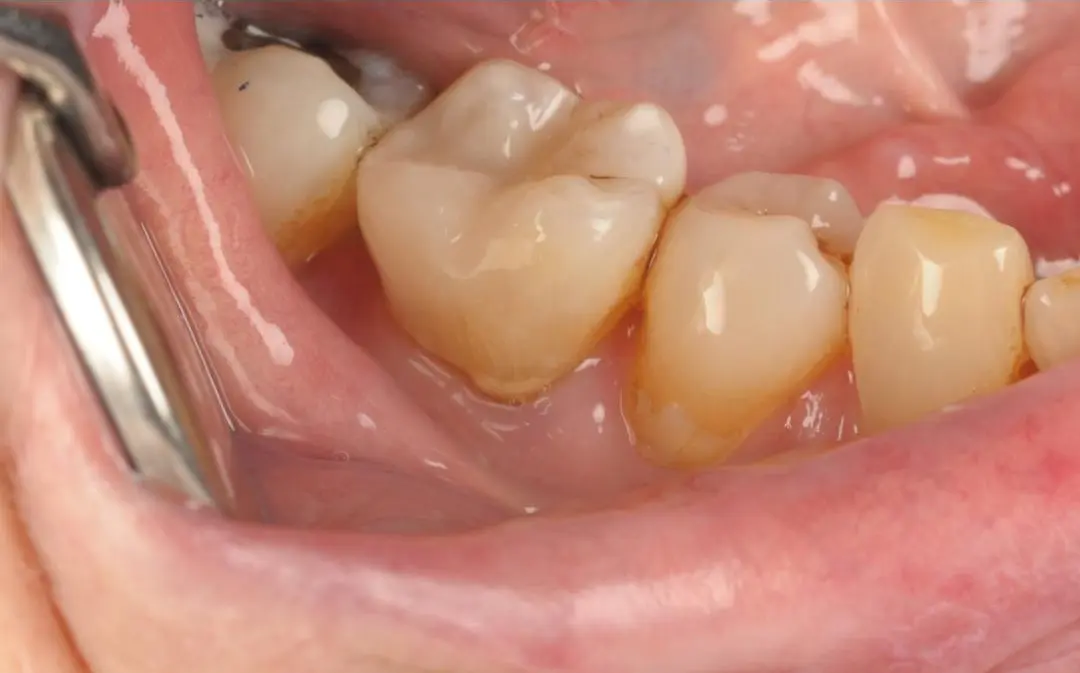
Real Patient Result: Emergency White Filling
Treatment by Dr Kamran
The dental science behind food trapping and gum flap infection
The reason this problem develops is largely anatomical. A partially erupted tooth creates a sheltered space beneath the overlying gum tissue. That space is warm, moist, and difficult to access, making it ideal for bacterial accumulation.
Your mouth naturally contains many types of bacteria. Most are harmless when oral hygiene is stable and surfaces are easy to clean. But when food debris and plaque remain trapped under the flap, bacteria multiply in a low-oxygen environment. The body responds by sending blood flow and immune cells to the area. That response is useful, but it also causes the gum to look redder, swell more, and feel tender.
If the bacterial load continues to build, the tissue may become more inflamed and may start to discharge fluid or pus. This is why patients can notice an unpleasant taste as well as swelling. In some cases, the upper tooth repeatedly biting onto the swollen operculum adds mechanical trauma, which keeps the cycle going.
Put simply, the flap itself is not the whole problem. The combination of partial eruption + food trap + bacterial growth + tissue trauma is what turns a small flap of gum into a painful pericoronitis flare-up.
How a dentist may assess and treat the problem
Assessment usually begins with a clinical examination of the flap, the tooth beneath it, the surrounding gum tissue, and the opposing tooth. Dentists often check whether the tooth is only partly erupted, whether there is pus or discharge, whether the area is being traumatised during biting, and whether nearby teeth are also being affected. An X-ray may be recommended to understand the tooth position and whether the wisdom tooth is impacted.
Treatment depends on the severity of the problem. In some cases, the main immediate step is careful irrigation and cleaning to flush trapped debris from beneath the flap. Home care advice may then be given to help keep the area cleaner while it settles. Where infection appears more active, antibiotics may sometimes be prescribed, although they do not remove the underlying food trap by themselves.
Longer-term management can vary. If the tooth is likely to erupt fully and symptoms are mild, monitoring may be reasonable. If the flap keeps becoming inflamed, the dentist may discuss removing the flap or removing the tooth altogether, depending on the clinical findings. If significant pain is the main issue, patients may first present through a severe toothache treatment assessment so the area can be examined and stabilised.
When professional dental assessment may be needed
Professional dental assessment may be appropriate if the gum flap remains swollen for more than a few days, repeatedly traps food, or becomes increasingly painful. A review is also sensible if you notice a bad taste, bleeding, discharge, difficulty chewing, or symptoms that keep returning around the same tooth.
It becomes more important to seek prompt advice where there is:
- swelling that is spreading into the cheek or jaw
- difficulty opening the mouth normally
- pain that interferes with eating or sleep
- fever, swollen glands, or a general unwell feeling
- an unpleasant taste suggesting discharge from the area
- repeated flare-ups around a partially erupted wisdom tooth
These symptoms do not automatically confirm a diagnosis, but they do suggest the area would benefit from proper examination rather than repeated self-treatment alone. A dentist can determine whether the issue is local inflammation, active pericoronitis, trauma from the bite, or another condition entirely.
Prevention and oral health advice
Although you cannot always prevent a wisdom tooth from only partially erupting, you can reduce the chance of repeated food trapping and irritation. Gentle but thorough cleaning around the back teeth is important, especially if you already know a wisdom tooth is coming through or tends to trap food. A small-headed toothbrush or single-tuft brush may make access easier than a larger brush.
Warm saltwater rinses can sometimes help cleanse the area temporarily when mild irritation starts. Some patients are also advised by their dentist to use a short course of an antiseptic mouthwash, though this should follow professional guidance rather than becoming a permanent substitute for brushing. The aim is to reduce the bacterial load, not to mask a problem that keeps recurring.
It also helps to avoid poking aggressively under the flap with sharp objects, as this may damage the tissue and worsen inflammation. Regular dental check-ups are valuable because the dentist can monitor whether the tooth is likely to erupt fully or whether it is repeatedly causing a food trap. If episodes keep returning, discussing a longer-term plan early can be easier than waiting for a painful flare-up.
Key Points to Remember
- A red swollen flap over tooth is often linked to a partially erupted wisdom tooth.
- Food, plaque, and bacteria can collect beneath the flap and trigger inflammation or infection.
- The clinical name for this common problem is pericoronitis.
- Symptoms may include tenderness, swelling, bad taste, repeated food trapping, and difficulty chewing.
- Treatment depends on clinical assessment and may involve cleaning, short-term medication, or discussion of flap removal or extraction.
- Good cleaning around the area and early dental review may reduce the chance of recurrent flare-ups.
Frequently Asked Questions
Is a swollen flap over a tooth always an infection?
No. A swollen gum flap is not always infected. Sometimes the tissue is simply irritated because the tooth is only partly erupted and the area is being rubbed during chewing. However, because this flap can trap food and bacteria so easily, infection can develop if the area stays inflamed. The presence of a bad taste, discharge, persistent tenderness, or increasing swelling makes infection more likely, but only a clinical examination can confirm the cause and what treatment, if any, is appropriate.
What is the flap of gum over a wisdom tooth called?
The flap is usually called an operculum. It is a fold of gum tissue that remains over part of a tooth that has only partially erupted, most often a wisdom tooth. On its own, an operculum is not necessarily harmful, but it can create a sheltered pocket where food debris and bacteria collect. That is why patients with an operculum sometimes experience repeated irritation, unpleasant taste, or pericoronitis if the area becomes inflamed or infected.
Can food trapped under a gum flap cause a bad taste?
Yes. Food trapped beneath a gum flap can break down and combine with bacterial build-up, which may produce a bad taste or unpleasant odour. If the tissue is also inflamed or infected, fluid or pus may drain from the area and make the taste more noticeable. A bad taste is not specific to one diagnosis, but when it occurs with swelling or soreness around a partly erupted wisdom tooth, it is a common reason for dental assessment.
Will antibiotics get rid of the problem permanently?
Not usually on their own. Antibiotics may help control an active infection when a dentist decides they are appropriate, particularly if swelling or systemic symptoms are present. However, they do not remove the underlying pocket where food and bacteria are becoming trapped. If the gum flap remains and the tooth position continues to create the same food trap, symptoms may return. That is why dentists often combine short-term relief of infection with discussion of longer-term management options.
Can I clean under the flap myself?
You can often improve hygiene around the area gently, but it is important not to traumatise the tissue. Careful brushing with a small-headed brush and warm saltwater rinses may help reduce debris around the flap. Trying to dig sharply underneath it with hard objects is not advisable, because this may injure the gum and worsen the inflammation. If food keeps getting stuck in the same place or the area remains sore, professional cleaning and assessment are usually safer and more effective.
Does a gum flap over a tooth always mean the tooth must be removed?
No. Some partially erupted teeth can be monitored if symptoms are mild and the tooth appears likely to come through fully. In other cases, recurrent pericoronitis, persistent food trapping, or poor tooth position may lead the dentist to discuss removing the flap or removing the tooth. The best option depends on the tooth position, how often the symptoms recur, and whether the tooth is causing problems for surrounding tissues. Dental symptoms and treatment options should always be assessed individually during a clinical examination.
Conclusion
A red swollen flap over tooth is a common reason people seek dental advice, particularly when food keeps packing underneath it or the area starts to taste unpleasant and feel sore. In many cases, the problem relates to a partially erupted wisdom tooth and a local condition called pericoronitis, where trapped debris and bacteria inflame the gum flap.
Although some episodes begin mildly, repeated food trapping and swelling are good reasons not to ignore the area. Early assessment can clarify whether the tissue simply needs improved cleaning, short-term treatment, or a longer-term plan for the flap or tooth itself.
Looking after the back teeth carefully and seeking advice when symptoms persist can help prevent a small local irritation from becoming a more uncomfortable problem. Dental symptoms and treatment options should always be assessed individually during a clinical examination.
Disclaimer
This article is for general educational purposes only and does not constitute professional dental advice, diagnosis, or treatment. Every patient's circumstances are unique; dental symptoms and treatment options should always be assessed during a clinical examination by a qualified dental professional. No specific outcomes are guaranteed. This content has been prepared in line with GDC, CQC, ASA CAP Code, and GMC communication standards. If you have concerns about your oral health, please contact a registered dentist.