
Introduction
Few situations feel quite as stressful as biting into a canapé at a wedding reception and suddenly realising your dental crown has come loose—or fallen out entirely. It is a surprisingly common scenario, and if it has happened to you, you are certainly not alone. Many people search online for advice on a lost crown at a wedding or similar social event because they need reassurance and practical guidance quickly, often outside normal surgery hours.
A dental crown coming off can happen for a number of reasons, and understanding what to do in those first moments can make a real difference to the outcome. This article explains why crowns become dislodged, what steps you can take immediately, when an emergency dental repair in London may be appropriate, and how to look after your tooth until you can see a dentist. Knowing the basics can help you stay calm and protect the underlying tooth structure while you arrange a professional assessment.
Whether you are a wedding guest, part of the bridal party, or simply attending a special occasion, the information below is designed to help you make informed decisions about your dental health.
Experiencing these symptoms?
Delaying treatment can lead to tooth loss. We have slots available today.
What Should You Do If a Crown Falls Off at a Wedding?
If a dental crown falls off during a wedding or social event, keep the crown safe, avoid chewing on the exposed tooth, and contact an emergency dentist in London as soon as possible. A lost crown requires professional assessment to determine whether it can be re-cemented or whether a replacement is needed. Temporary dental cement from a pharmacy may offer short-term protection until your appointment.
Why Dental Crowns Can Come Loose Unexpectedly
Dental crowns are designed to be durable restorations, but they are not indestructible. Over time, the dental cement that bonds a crown to the prepared tooth underneath can weaken. This process is gradual and often goes unnoticed until the crown shifts or detaches completely—sometimes at the most inconvenient moment.
Several factors may contribute to a crown becoming loose:
Meet Dr. Yasha Shirazi
Principal Dentist at Emergency Dentist London
"We treat hundreds of dental emergencies every month. The sooner you come in, the easier the fix usually is."
Book an appointment with our team →- Age of the restoration "– Crowns that have been in place for many years may eventually require replacement as the bonding material deteriorates.
- Underlying decay "– If tooth decay develops beneath or around the margins of a crown, it can compromise the seal and reduce retention.
- Dietary habits "– Sticky or particularly hard foods can place additional stress on a crowned tooth.
- Teeth grinding (bruxism) "– Habitual clenching or grinding, often during sleep, places significant lateral forces on crowns and may loosen them over time.
- Structural changes "– The underlying tooth structure may change shape slightly over the years, affecting how well the crown fits.
At a wedding, where guests are often eating a variety of foods—from chewy steak to sticky toffee pudding—the conditions can be just right for a weakened crown to finally give way. Understanding these causes can help you appreciate why the situation is usually not a sign of anything alarming, but it does warrant timely professional attention.
What to Do Immediately When a Crown Falls Off
If your crown comes off during a social event, staying calm is the most helpful first step. A lost crown, while inconvenient, is generally manageable if you take the right precautions.
Step 1: Retrieve and protect the crown
If you can locate the crown, place it somewhere safe—wrap it gently in a tissue or put it in a clean container. Your dentist may be able to re-cement it if both the crown and the underlying tooth are in suitable condition.
Step 2: Examine the area gently
Using a mirror, look at the exposed tooth. If it appears intact without sharp edges or significant damage, that is a positive sign. Avoid probing the area with your tongue excessively, as this can cause irritation.
Step 3: Avoid chewing on that side
Until you can see a dentist, try to eat on the opposite side of your mouth. Stick to softer foods and avoid anything very hot, cold, or sugary, as the exposed tooth may be sensitive.
Step 4: Consider a temporary measure
Pharmacies often stock temporary dental cement or denture adhesive, which can be used to hold the crown loosely in place as a short-term measure. However, this is not a permanent fix and should not replace a proper dental appointment. If the crown came loose while eating rather than during a special event, our guide on a lost crown while eating covers the same immediate precautions.
Step 5: Arrange a dental assessment
Arrange lost filling and crown replacement as soon as you are able to. Many practices offer same-day or next-day emergency appointments for situations like this.
The Anatomy of a Crowned Tooth: Understanding the Clinical Picture
To appreciate why a lost crown needs attention, it helps to understand what lies beneath the restoration.
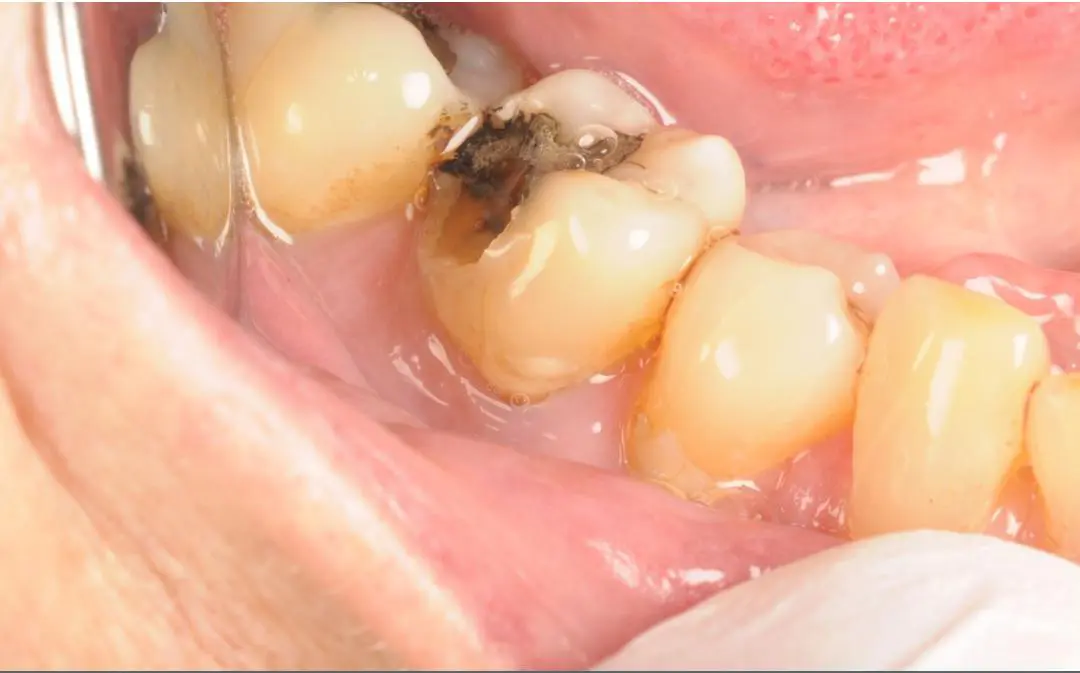
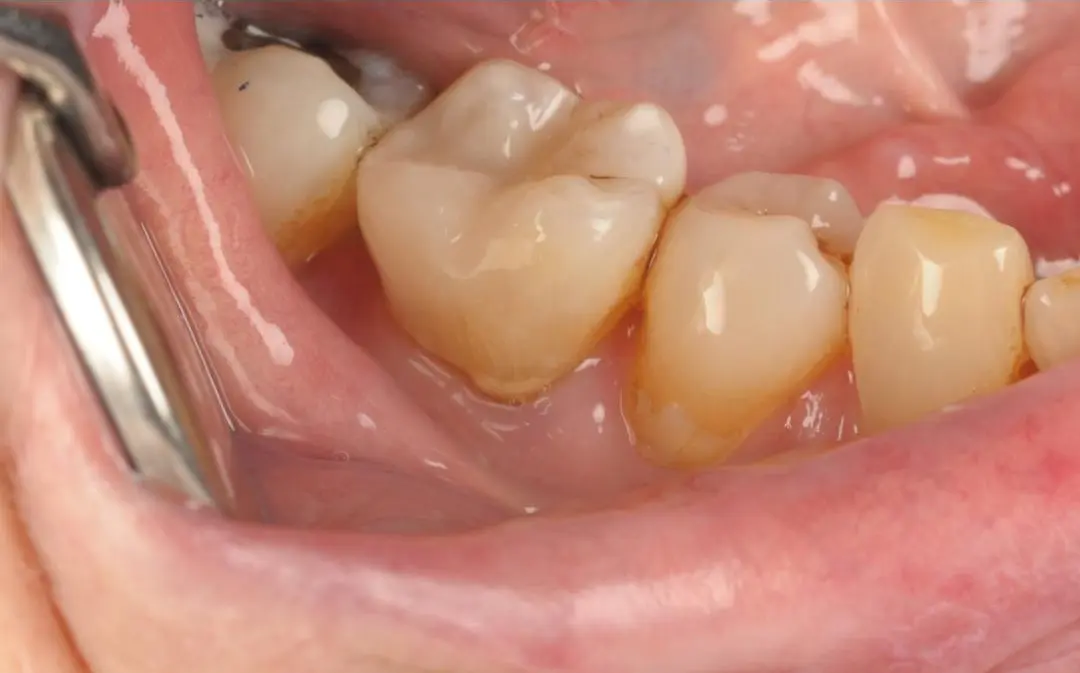
Real Patient Result: Emergency White Filling
Treatment by Dr Kamran
A dental crown is essentially a custom-made cap that fits over a tooth that has been prepared—meaning a dentist has reshaped the natural tooth to create a core structure onto which the crown sits. This preparation removes a layer of enamel, meaning the underlying dentine is exposed when the crown is not in place.
Dentine is the layer of tooth tissue that sits beneath the enamel. It is softer than enamel and contains microscopic tubules that connect to the nerve (pulp) of the tooth. When dentine is exposed to the oral environment—particularly to temperature changes, sugary substances, or bacteria—it can become sensitive or vulnerable to decay.
The dental pulp, located at the centre of the tooth, contains the nerve and blood supply. If bacteria reach the pulp through exposed dentine, there is a possibility of infection developing over time, which may lead to the need for further treatment. If discomfort develops under the exposed tooth, our guide on toothache after a crown explains why the nerve sometimes becomes involved.
This is why replacing or re-cementing a crown promptly is important—not because the situation is immediately dangerous, but because protecting the prepared tooth from prolonged exposure helps preserve its long-term health and structural integrity.
Emergency Dental Repair Options in London
London offers a range of dental practices that provide emergency and urgent care, which can be particularly reassuring if your crown comes off during a weekend wedding or an evening event.
Same-day emergency appointments
Many private dental clinics in London reserve appointment slots specifically for urgent dental concerns, including lost crowns, broken restorations, and dental pain. These appointments typically involve a clinical assessment to evaluate the condition of both the crown and the underlying tooth.
Re-cementation
If the crown is intact and the underlying tooth is healthy, a dentist may be able to clean both surfaces and re-cement the crown during a single appointment. This is often one of the more straightforward solutions. If the restoration itself has chipped or fractured, our article on broken crown emergency care outlines what may happen next.
Temporary crown placement
In some cases, a temporary crown may be fitted while a new permanent restoration is fabricated. This protects the tooth and restores appearance in the meantime.
New crown fabrication
If the original crown is damaged, lost entirely, or no longer fits properly, a new crown may need to be made. This typically involves taking impressions or digital scans and may require a follow-up appointment once the crown has been manufactured.
The most appropriate approach will depend on the individual clinical findings, which is why a professional assessment is an essential first step. Your dentist will discuss the available options with you after examining the tooth.
When Professional Dental Assessment May Be Needed
While a lost crown is not always accompanied by severe symptoms, there are certain signs that suggest you should seek a dental assessment sooner rather than later:
- Sensitivity to hot or cold that does not settle within a few hours
- Discomfort or a dull ache around the affected tooth
- Visible damage to the remaining tooth structure, such as cracks or dark discolouration
- Swelling of the gum tissue surrounding the tooth
- A sharp or rough edge on the prepared tooth that is catching on your tongue or cheek
- Difficulty eating or drinking due to discomfort in the area
If you notice any signs of infection—such as persistent swelling, a bad taste in the mouth, or throbbing pain—it is advisable to contact a dental practice promptly. These symptoms do not necessarily indicate a serious problem, but they do benefit from professional evaluation to determine the most appropriate course of action.
Even if you are not experiencing significant discomfort, arranging an appointment within a day or two is generally recommended to prevent any complications from developing.
How to Protect Your Crowns and Reduce the Risk of Future Problems
Prevention is always preferable to emergency repair. While it is not possible to guarantee that a crown will never come loose, there are several practical steps that may help prolong the life of your dental restorations:
- Attend regular dental check-ups "– Routine examinations allow your dentist to monitor the condition of existing crowns and identify any early signs of cement failure, decay, or wear. This is a useful way to catch potential issues before they become urgent.
- Maintain thorough oral hygiene "– Brushing twice daily with fluoride toothpaste and cleaning between teeth with interdental brushes or floss helps protect the margins where the crown meets the natural tooth.
- Be mindful of hard or sticky foods "– While you do not need to avoid these entirely, being cautious when biting into very hard items (such as ice, boiled sweets, or hard nuts) can reduce the risk of crown damage.
- Consider a mouthguard if you grind your teeth "– If you are aware that you clench or grind your teeth, particularly during sleep, a custom-fitted mouthguard can help distribute forces more evenly and protect your restorations.
- Report any changes promptly "– If a crown begins to feel slightly loose, or if you notice a change in your bite, mentioning this at your next dental appointment—or booking a check-up sooner—allows your dentist to intervene early.
Key Points to Remember
- A dental crown coming off at a wedding or social event is a common occurrence and is usually manageable with prompt action.
- Retrieve the crown if possible and store it safely—it may be re-cemented by your dentist.
- Avoid chewing on the exposed tooth and keep the area clean until you can attend a dental appointment.
- Emergency dental repair in London is widely available, with many practices offering same-day appointments for urgent concerns.
- The underlying prepared tooth is more vulnerable without its crown, so timely professional assessment helps protect your long-term oral health.
- Regular check-ups and good oral hygiene are among the most effective ways to reduce the risk of crown failure.
Frequently Asked Questions
Can I glue my crown back on myself at home?
It is not advisable to use household adhesives such as superglue to reattach a dental crown. These products are not designed for use in the mouth, may contain substances that are harmful if ingested, and can make it more difficult for your dentist to properly re-cement the crown later. If you need a temporary measure, over-the-counter dental cement or denture adhesive from a pharmacy is a safer option for short-term use. However, this should only be considered a temporary solution until you can attend a professional dental appointment for a proper assessment and repair.
How long can I safely leave a tooth without its crown?
Ideally, you should arrange a dental appointment within one to two days. The exposed tooth, having been prepared for a crown, has reduced enamel coverage and is more susceptible to sensitivity, bacterial exposure, and potential structural damage. While a short delay of a day or two is unlikely to cause serious harm in most cases, prolonged exposure increases the risk of complications such as decay or fracture. Keeping the area clean and avoiding hard foods on that side of the mouth can help protect the tooth in the interim.
Will my dentist need to make a completely new crown?
Not necessarily. If the original crown is intact, undamaged, and still fits the prepared tooth well, your dentist may be able to re-cement it during a single appointment. However, if the crown is cracked, if there is decay on the underlying tooth, or if the fit has been compromised, a new crown may be recommended. Your dentist will assess the situation during a clinical examination and discuss the most suitable options based on their findings. Each case is different, and the appropriate approach depends on the specific clinical circumstances. If the crown cannot be found at all, our article on what to do if you swallow a crown may also be helpful.
Is a lost crown a dental emergency?
A lost crown is generally considered an urgent dental matter rather than a life-threatening emergency. It warrants timely attention to protect the underlying tooth and restore normal function, but it does not usually require immediate hospital-level care. Most dental practices that offer emergency appointments can accommodate patients with lost crowns promptly. If you are experiencing significant pain, swelling, or signs of infection alongside the lost crown, it is important to seek dental advice as soon as possible, as these additional symptoms may require more immediate clinical evaluation.
Can a lost crown be prevented before attending a special event?
While it is not possible to predict exactly when a crown might fail, attending a dental check-up in the weeks before an important event can be a sensible precaution. Your dentist can examine existing restorations, check for any signs of loosening or deterioration, and carry out any necessary maintenance. This proactive approach may help reduce the likelihood of an unexpected issue during a wedding or other occasion. It is a simple step that can offer peace of mind, particularly if your crowns have been in place for several years.
Does re-cementing a crown hurt?
Re-cementing a crown is typically a straightforward and comfortable procedure. In most cases, it does not require local anaesthetic, as the process involves cleaning the crown and the prepared tooth before applying new dental cement. Some patients may experience mild sensitivity during or after the process, but this usually settles quickly. If there is underlying decay or if additional treatment is needed, your dentist will discuss this with you beforehand and ensure you are comfortable throughout. The clinical approach will always be tailored to your individual needs following a thorough assessment.
Conclusion
A lost crown at a wedding can feel like a significant disruption, but with the right knowledge and a calm approach, the situation is very manageable. Understanding why crowns become dislodged, knowing the immediate steps to protect your tooth, and being aware that emergency dental repair in London is readily available can help you navigate the experience with confidence.
The most important action is to arrange a professional dental assessment as soon as is practical. Whether the crown can be re-cemented or a new restoration is needed, your dentist will guide you through the options based on a thorough clinical examination. In the meantime, protecting the exposed tooth by avoiding hard foods, maintaining gentle oral hygiene, and using temporary dental cement if needed can all help preserve the tooth until your appointment.
Good oral health and regular dental check-ups remain a strong foundation for avoiding unexpected dental issues. If you are ever unsure about a dental concern, seeking professional guidance is always a sensible course of action.
Dental symptoms and treatment options should always be assessed individually during a clinical examination.
Disclaimer
This article is for general educational purposes only and does not constitute professional dental advice, diagnosis, or treatment. Every patient's circumstances are unique; dental symptoms and treatment options should always be assessed during a clinical examination by a qualified dental professional. No specific outcomes are guaranteed. This content has been prepared in line with GDC, CQC, ASA CAP Code, and GMC communication standards. If you have concerns about your oral health, please contact a registered dentist.