
Many people are surprised when a tooth that seemed perfectly fine suddenly becomes intensely painful. It is one of the most common concerns patients raise when they visit a dental practice — the feeling that pain appeared out of nowhere, with no prior symptoms. Understandably, this leads many adults in London to search online for answers about what might be happening inside their tooth and whether urgent treatment is needed.
Deep decay reaching the nerve is one of the most frequent reasons behind sudden, severe toothache. Tooth decay can progress silently through the outer layers of a tooth over weeks, months, or even years without producing noticeable discomfort. It is only when the decay reaches or approaches the inner nerve tissue — known as the dental pulp — that significant pain often begins.
This article explains how decay can advance undetected, what happens when it reaches the nerve, the symptoms to be aware of, how it may be treated, and what steps you can take to help protect your teeth. Understanding this process can help you make informed decisions about your oral health and recognise when it may be appropriate to seek professional dental advice.
Experiencing these symptoms?
Delaying treatment can lead to tooth loss. We have slots available today.
What Happens When Deep Decay Reaches the Nerve?
Deep decay reaching the nerve occurs when bacterial tooth decay penetrates through the enamel and dentine layers into the dental pulp, which contains nerves and blood vessels. This can trigger sudden, intense pain, increased sensitivity, and potential infection. Early dental assessment is important, as treatment options depend on the extent of decay identified during a clinical examination.
How Tooth Decay Progresses Silently
Tooth decay does not always announce itself with pain in its early stages. In fact, one of the most misunderstood aspects of dental health is just how quietly cavities can develop before symptoms emerge.
Decay typically begins on the outer surface of the tooth — the enamel. Enamel is the hardest substance in the human body, yet it has no nerve endings. This means that when bacteria produce acids that slowly dissolve this outer layer, you may feel absolutely nothing. There may be no sensitivity, no discomfort, and no visible change that you would notice when brushing.
Meet Dr. Yasha Shirazi
Principal Dentist at Emergency Dentist London
"We treat hundreds of dental emergencies every month. The sooner you come in, the easier the fix usually is."
Book an appointment with our team →Once decay passes through the enamel, it enters the dentine — a softer, more porous layer beneath. Dentine contains microscopic tubules that connect to the nerve tissue deeper inside the tooth. At this stage, some people begin to notice mild sensitivity to hot, cold, or sweet foods, though many still experience no symptoms at all.
It is only when decay advances further and reaches or comes close to the dental pulp — the innermost chamber housing the tooth's nerve and blood supply — that noticeable pain commonly begins. By this point, the decay may be extensive, even though the external appearance of the tooth might seem relatively intact.
This silent progression is precisely why regular dental examinations and diagnostic imaging such as X-rays play an important role in identifying decay before it reaches an advanced stage.
Understanding the Anatomy of a Tooth
To understand why deep decay reaching the nerve causes such significant pain, it helps to know a little about tooth structure.
Each tooth is made up of several distinct layers. The outermost layer, enamel, acts as a protective shield. It is highly mineralised and remarkably strong, designed to withstand the forces of biting and chewing. Beneath the enamel lies dentine, which makes up the bulk of the tooth. Dentine is yellowish in colour, softer than enamel, and contains thousands of tiny tubules — fluid-filled channels that lead towards the centre of the tooth.
At the core of every tooth is the dental pulp. This is a soft tissue chamber containing blood vessels, connective tissue, and crucially, the nerve supply. The pulp extends from the crown of the tooth down through narrow channels called root canals, which exit at the tip of each root into the surrounding bone.
When tooth decay reaches the pulp, bacteria can directly irritate or infect the nerve tissue. This is what often causes the sudden, sharp, or throbbing pain that many patients describe. The pulp has a limited ability to defend itself once bacteria have entered, and inflammation within this confined space can create significant pressure and discomfort.
Understanding this anatomy helps explain why a tooth can appear outwardly normal while a serious problem is developing beneath the surface.
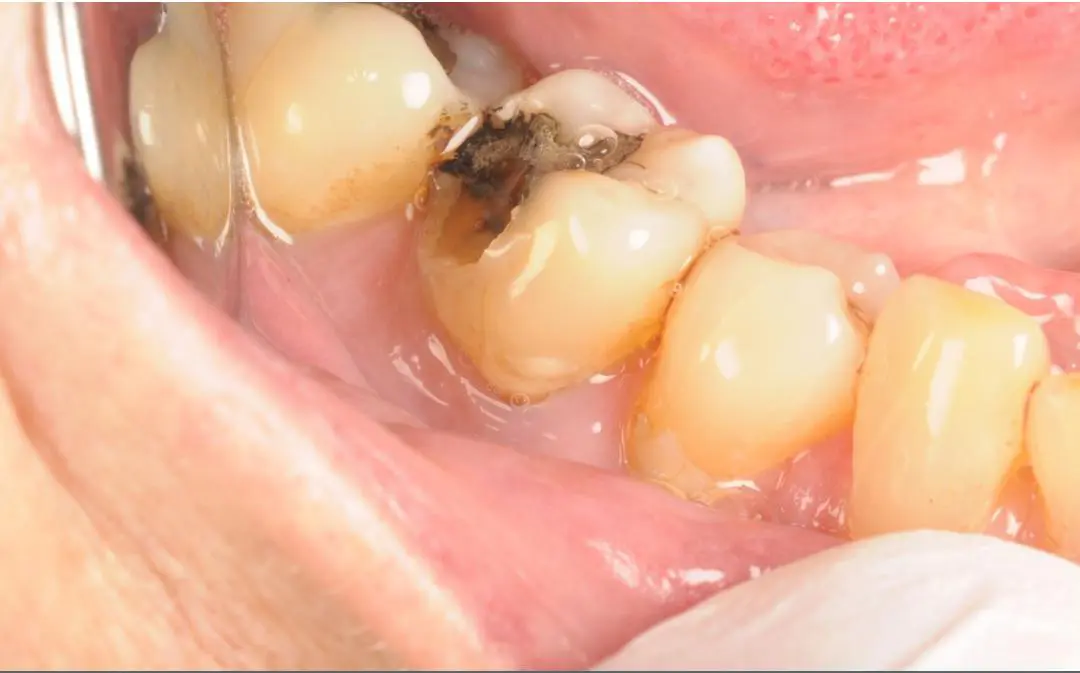
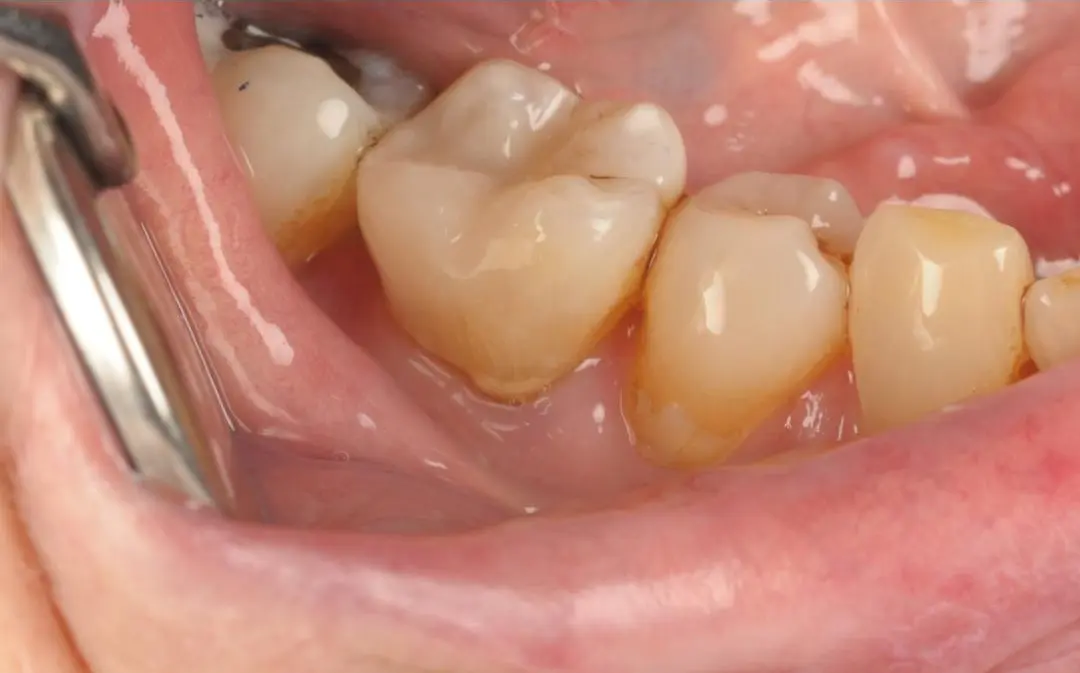
Real Patient Result: Emergency White Filling
Treatment by Dr Kamran
Common Symptoms When Decay Approaches the Nerve
The symptoms associated with deep decay reaching the nerve can vary between individuals, but several signs are commonly reported by patients.
Spontaneous pain is one of the most notable indicators. Unlike sensitivity triggered only by eating or drinking, this type of pain can occur without any apparent cause — sometimes waking patients during the night. The pain may be sharp, throbbing, or persistent, and it can range from moderate to severe.
Prolonged sensitivity is another common symptom. While brief sensitivity to hot or cold drinks can occur with less advanced decay, sensitivity that lingers for several seconds or longer after the trigger is removed may suggest that the nerve tissue is becoming affected.
Some patients report pain when biting or chewing, which may indicate inflammation around the root tip of the tooth. Others notice a dull, continuous ache in the jaw area that is difficult to localise precisely.
In cases where infection develops, additional signs may include swelling of the gum near the affected tooth, a bad taste in the mouth, or the appearance of a small pus-filled swelling (sometimes referred to as a dental abscess).
It is important to note that symptoms alone cannot confirm a diagnosis. A thorough clinical examination, including appropriate imaging, is needed to determine the extent of decay and the condition of the nerve.
If lingering sensitivity is one of your main concerns, our guide on how long dental nerve pain lasts explains why pain can continue after hot or cold triggers once the pulp becomes inflamed.
Why Pain Often Starts Without Warning
One of the most unsettling aspects of deep decay is the abruptness with which pain can begin. Patients often describe feeling completely fine one day and experiencing severe toothache the next.
This sudden onset is largely explained by the anatomy discussed earlier. While decay is confined to the enamel and outer dentine, the nerve may remain unaffected and unstimulated. The tooth functions normally, and there is little or no discomfort to act as an early warning.
However, once the bacterial front reaches a critical proximity to the pulp — or breaches it entirely — the situation can change rapidly. The nerve tissue becomes inflamed, a condition known as pulpitis. In the early stages, this inflammation may be reversible, meaning the nerve can potentially recover if the source of irritation is removed promptly. If the inflammation progresses, it can become irreversible, meaning the nerve tissue is unlikely to heal on its own.
Irreversible pulpitis often presents as intense, spontaneous pain that does not settle with over-the-counter pain relief alone. The transition from no symptoms to significant pain can feel sudden, but in reality, the decay has usually been developing for a considerable period beneath the surface.
This is one of the key reasons dental professionals recommend routine check-ups — to identify and address problems during the earlier, often painless stages.
How Deep Decay May Be Treated
Treatment for deep decay depends on the extent of damage and the condition of the nerve, which can only be determined through a proper clinical dental examination. Several approaches may be considered.
Dental fillings may be suitable when decay is detected before it has reached the pulp. The decayed tissue is carefully removed, and the cavity is restored with a filling material. This approach aims to preserve the natural tooth structure and protect the nerve from further damage.
When decay has reached the pulp and caused irreversible damage to the nerve, root canal treatment may be recommended. This procedure involves removing the infected or inflamed pulp tissue, cleaning and shaping the internal canal system, and sealing the space to prevent reinfection. A crown or restoration is often placed afterwards to protect the treated tooth. Root canal treatment has a well-established evidence base and can allow patients to retain a tooth that might otherwise need extraction.
If a clinician suspects irreversible pulpitis, our guide to emergency root canal needs in irreversible pulpitis explains why pain can escalate quickly once the nerve is no longer able to recover.
In cases where a tooth is too extensively damaged to be restored predictably, extraction may be the most appropriate clinical option. Following extraction, replacement options such as dental implants, bridges, or dentures can be discussed based on individual circumstances.
It is important to understand that the most appropriate treatment varies from patient to patient. Factors such as the location of the tooth, the extent of decay, overall oral health, and individual medical history all influence clinical decision-making. Treatment suitability is always determined during a professional dental assessment.
When Professional Dental Assessment May Be Needed
Certain symptoms may indicate that it is advisable to arrange a dental appointment sooner rather than later. Being aware of these signs can help you make informed decisions about seeking professional guidance.
You may wish to consider contacting a dental practice if you experience:
- Persistent or worsening toothache that does not settle within a day or two
- Spontaneous pain that occurs without an obvious trigger
- Prolonged sensitivity to hot or cold that lingers after the stimulus is removed
- Swelling in the gum, cheek, or jaw area
- Pain that disrupts sleep or daily activities
- A bad taste or discharge from around a tooth
- Discolouration of a single tooth compared to surrounding teeth
These symptoms do not automatically confirm that decay has reached the nerve, as several dental conditions can produce similar signs. However, they do suggest that a clinical evaluation would be helpful in identifying the underlying cause and discussing any appropriate next steps.
If you are experiencing dental discomfort that is severe, worsening, or accompanied by facial swelling, seeking private emergency dental care promptly is advisable, as these symptoms may require timely professional attention.
Prevention and Oral Health Advice
While it is not always possible to prevent every dental problem, there are practical steps that can significantly reduce the risk of tooth decay progressing to the point where it affects the nerve.
Brush twice daily with fluoride toothpaste. Fluoride helps strengthen enamel and can reverse the very earliest stages of decay. Using a toothpaste containing at least 1,350 parts per million (ppm) fluoride is generally recommended for adults.
Clean between your teeth daily. Interdental brushes or floss help remove plaque and food debris from areas your toothbrush cannot easily reach — particularly between teeth where cavities frequently develop.
Limit sugary and acidic foods and drinks. Bacteria in plaque feed on sugars to produce acids that erode enamel. Reducing the frequency of sugar intake throughout the day is often more beneficial than simply reducing the total amount.
Attend regular dental check-ups. Routine examinations allow your dentist to detect early signs of decay, often before you notice any symptoms. Early intervention typically involves simpler and less invasive treatment.
Consider dental sealants if recommended. In some cases, your dentist may suggest fissure sealants — thin protective coatings applied to the biting surfaces of back teeth — to help prevent decay in vulnerable areas.
Stay hydrated and be mindful of dry mouth. Saliva plays a natural protective role in neutralising acids and washing away food particles. If you experience a persistently dry mouth, discussing this with your dentist or GP may be helpful.
Taking a preventative approach to oral health can make a meaningful difference in reducing the likelihood of dental problems requiring complex treatment in the future.
Key Points to Remember
- Tooth decay can progress through enamel and dentine without causing noticeable symptoms, which is why pain from deep decay often feels sudden.
- Deep decay reaching the nerve triggers inflammation of the dental pulp, potentially causing intense, spontaneous toothache.
- Treatment options depend on the extent of decay and nerve involvement and are determined during a clinical dental examination.
- Persistent toothache, prolonged sensitivity, swelling, or spontaneous pain are signs that professional dental assessment may be appropriate.
- Regular dental check-ups, good oral hygiene, and a balanced diet are key factors in reducing the risk of decay reaching an advanced stage.
- Early detection and timely treatment generally lead to more straightforward and less invasive dental care.
Frequently Asked Questions
Can deep decay heal on its own without treatment?
Once tooth decay has progressed through the enamel into the dentine or pulp, it cannot reverse or heal on its own. The very earliest stage of enamel demineralisation — sometimes visible as a white spot — may be remineralised with fluoride and improved oral hygiene. However, once a cavity has formed, professional dental treatment is needed to remove the decayed tissue and restore the tooth. Delaying treatment may allow the decay to progress further, potentially affecting the nerve and increasing the complexity of treatment required. If you suspect you may have a cavity, arranging a dental examination is a sensible step.
How long does it take for decay to reach the nerve?
The timeline varies considerably depending on individual factors such as oral hygiene habits, diet, saliva flow, fluoride exposure, and the location of the cavity. In some cases, decay may take months or even years to progress from the enamel surface to the pulp. In other situations, particularly where oral hygiene is poor or sugar intake is frequent, progression can be relatively rapid. Because the early and middle stages of decay are often painless, many patients are unaware of the problem until it reaches an advanced stage. This underscores the value of routine dental examinations for early detection.
Is root canal treatment painful?
Root canal treatment has an outdated reputation for being painful, but modern techniques and effective local anaesthesia mean that the procedure is generally well tolerated by patients. Most people report that the experience is similar to having a filling placed. The aim of root canal treatment is to relieve the pain caused by an inflamed or infected nerve, so many patients actually feel significant relief following the procedure. Some mild tenderness around the treated tooth may occur for a few days afterwards, but this typically settles with standard over-the-counter pain relief. Your dentist will discuss what to expect before treatment begins.
What happens if I ignore a toothache caused by deep decay?
If deep decay affecting the nerve is left untreated, the condition may worsen over time. The inflammation within the pulp can progress to infection, which may spread beyond the tooth into the surrounding bone and soft tissues. This can lead to the formation of a dental abscess — a collection of pus that may cause significant pain and swelling. In rare cases, dental infections can become more widespread and may require hospital treatment. Seeking timely dental advice when you experience persistent toothache is important to allow appropriate assessment and management of the underlying problem.
Can I prevent decay from reaching the nerve?
While no preventative measure offers an absolute guarantee, maintaining good oral hygiene practices, using fluoride toothpaste, reducing sugar consumption, and attending regular dental check-ups significantly reduce the risk of decay progressing to the nerve. Your dentist can identify early signs of decay during routine examinations and recommend appropriate preventative or restorative measures. Addressing small cavities early — before they become deep — is one of the most effective ways to avoid the complications associated with advanced decay. A proactive approach to dental care supports long-term oral health.
Should I go to A&E for severe toothache?
Hospital accident and emergency departments are generally not equipped to provide definitive dental treatment such as fillings, root canal treatment, or extractions. If you are experiencing severe dental pain, contacting an emergency dental service or your regular dental practice is usually the most effective route to receiving appropriate care. However, if you have significant facial swelling that is affecting your ability to breathe or swallow, or if you have a high temperature alongside dental swelling, attending A&E is advisable as these may be signs of a more serious infection requiring medical attention.
Conclusion
Deep decay reaching the nerve is a common dental issue that can cause sudden and significant pain, often catching patients off guard. As this article has explained, tooth decay frequently develops without symptoms during its earlier stages, which is why the onset of pain can feel so unexpected. Understanding the structure of a tooth, how decay progresses, and the symptoms associated with nerve involvement can help you recognise when professional dental advice may be beneficial.
Maintaining good oral hygiene, limiting sugary foods and drinks, and attending regular dental check-ups are practical steps that support long-term oral health and help reduce the risk of decay advancing undetected. When symptoms such as persistent toothache, prolonged sensitivity, or swelling do occur, seeking timely professional assessment allows for appropriate evaluation and discussion of treatment options.
Dental symptoms and treatment options should always be assessed individually during a clinical examination.
If you have concerns about tooth pain or suspect you may have a cavity, speaking with a dental professional is the most reliable way to understand your individual situation and explore the options available to you.
Disclaimer
This article is for general educational purposes only and does not constitute professional dental advice, diagnosis, or treatment. Every patient's circumstances are unique; dental symptoms and treatment options should always be assessed during a clinical examination by a qualified dental professional. No specific outcomes are guaranteed. This content has been prepared in line with GDC, CQC, ASA CAP Code, and GMC communication standards. If you have concerns about your oral health, please contact a registered dentist.