
Discovering that a tooth has broken at the gum line can be a deeply unsettling experience. Whether it happens suddenly whilst eating, as a result of an accident, or following gradual weakening over time, many people find themselves searching online for reassurance and guidance about what to do next. Understanding what a tooth broken at the gum line means, why it happens, and what treatment options may be available can help you feel more informed and prepared when seeking professional dental care.
A tooth that fractures at or below the gum line presents a different clinical situation compared to a chip or crack higher up on the crown. The remaining tooth structure, the health of the root, and the condition of the surrounding bone and gum tissue all influence how a dentist may approach the problem. This is why professional assessment is so important — no two cases are exactly alike.
In this guide, we explain the common causes, what happens beneath the surface when a tooth breaks this way, the treatment approaches a dentist may consider, and the steps you can take to protect your oral health. Whether you are dealing with this situation right now or simply wish to be better informed, this article aims to provide clear, practical dental health information for patients in London.
Experiencing these symptoms?
Delaying treatment can lead to tooth loss. We have slots available today.
What Does It Mean When a Tooth Breaks at the Gum Line?
A tooth broken at the gum line is a fracture where the visible crown of the tooth has broken away at or near the level of the gum tissue, leaving the root and possibly some tooth structure beneath the gums. Treatment depends on the extent of the fracture, the health of the remaining root, and the surrounding bone and gum condition. A clinical dental examination is needed to determine the most appropriate course of action.
Common Causes of a Tooth Breaking at the Gum Line
There are several reasons why a tooth may fracture at the gum line. Understanding these causes can help patients appreciate why this type of break occurs and how future risk may potentially be reduced.
Extensive dental decay is one of the most frequent contributing factors. When decay progresses deep into the tooth structure, it undermines the strength of the crown. Over time, even normal biting forces can cause the weakened tooth to give way, often breaking at or near gum level where the structure is thinnest.
Meet Dr. Yasha Shirazi
Principal Dentist at Emergency Dentist London
"We treat hundreds of dental emergencies every month. The sooner you come in, the easier the fix usually is."
Book an appointment with our team →Previous large fillings or restorations can also play a role. A tooth that has been heavily restored may have less natural tooth structure remaining to support it. Years of normal function can eventually lead to fracture, particularly if the filling is old or the surrounding tooth has developed further decay.
Trauma or injury — such as a blow to the face during sport, a fall, or biting down unexpectedly on something very hard — can cause an otherwise healthy tooth to break at the gum line.
Bruxism, or habitual teeth grinding and clenching, places excessive force on the teeth over prolonged periods. This repetitive stress can weaken teeth and contribute to fractures, particularly in teeth that are already compromised.
Finally, root canal treated teeth that have not been protected with an appropriate restoration such as a crown may be more susceptible to fracture, as the tooth can become more brittle over time without its vital nerve and blood supply.
Symptoms and Signs to Be Aware Of
A tooth broken at the gum line may present with a range of symptoms, depending on the severity of the fracture and whether the inner structures of the tooth are exposed.
Visible damage is often the first sign. You may notice that the crown of a tooth has partially or completely broken away, leaving a rough or sharp edge at the gum line. In some cases, the break may not be immediately visible if it occurs towards the back of the mouth.
Pain or discomfort can vary considerably. Some patients experience sharp pain, particularly if the fracture has exposed the inner dentine layer or the nerve (pulp) of the tooth. Others may feel a dull ache or sensitivity to hot, cold, or sweet substances. In certain cases, particularly where the nerve was already compromised, there may be surprisingly little pain initially.
Swelling or tenderness around the affected area may develop, especially if an infection is present or if the gum tissue has been irritated by the fractured tooth edge.
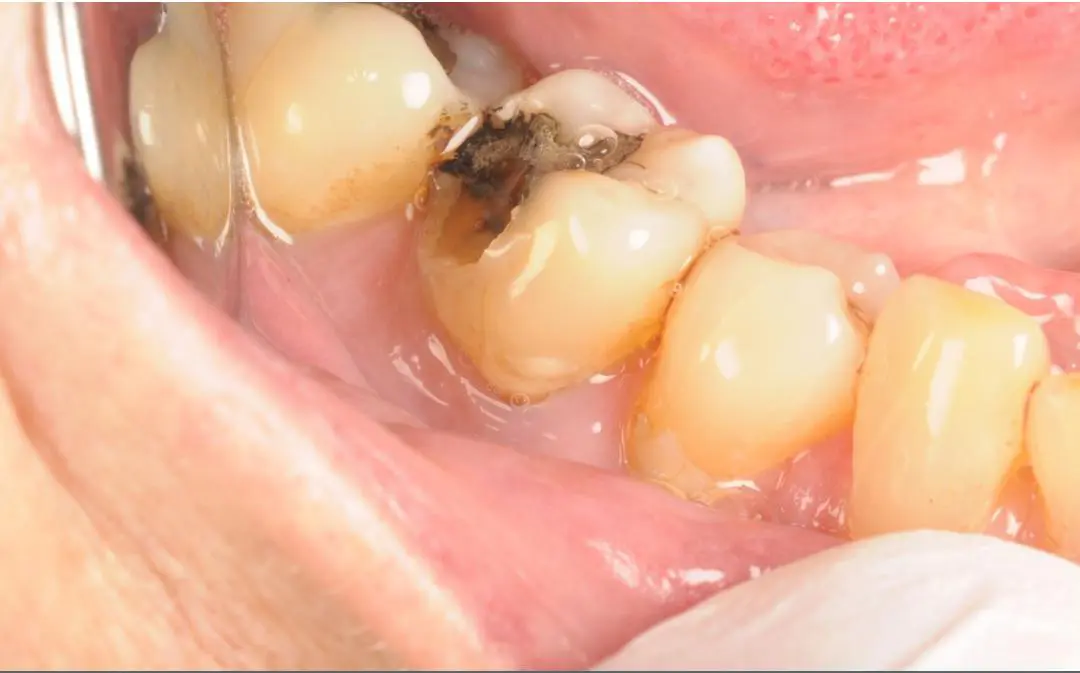
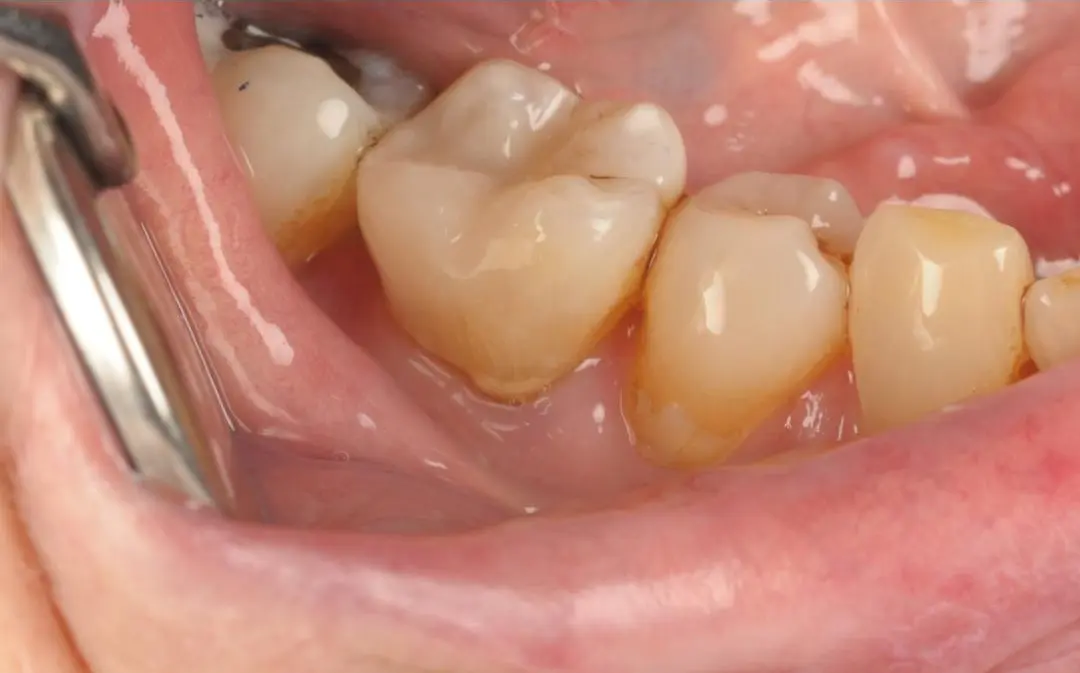
Real Patient Result: Emergency White Filling
Treatment by Dr Kamran
Bleeding from the gum near the broken tooth is also possible, particularly if the fracture extends below the gum line or if sharp edges are causing trauma to the soft tissue.
It is worth noting that the absence of significant pain does not necessarily mean the situation is not serious. A clinical examination is the most reliable way to assess the full extent of the damage.
Understanding the Dental Science: What Happens When a Tooth Breaks at Gum Level
To appreciate why a tooth broken at the gum line requires careful clinical assessment, it helps to understand basic tooth anatomy.
Each tooth consists of several layers. The outermost layer of the crown is enamel, the hardest substance in the human body. Beneath the enamel lies dentine, a slightly softer but still resilient layer that makes up the bulk of the tooth. At the centre of the tooth is the pulp chamber, which contains the nerve, blood vessels, and connective tissue that keep the tooth alive. Below the gum line, the root of the tooth is covered by a thin layer called cementum, and it is anchored into the jawbone by the periodontal ligament.
When a tooth breaks at the gum line, the fracture typically passes through the dentine and may extend into or very close to the pulp. This is clinically significant because exposure of the pulp can lead to bacterial contamination, which may result in infection or an abscess if left unaddressed.
The position of the fracture line relative to the bone is also critical. If the break extends below the level of the surrounding bone, it can be considerably more challenging to restore the tooth. The dentist needs to evaluate whether there is sufficient healthy tooth structure above the bone to support a restoration such as a crown. In some cases, additional procedures may be considered to expose more tooth structure, whilst in others, extraction may be the most appropriate option.
This is why radiographic imaging (X-rays) and a thorough clinical examination are essential — they allow the dentist to see what is happening beneath the gum and within the bone, providing the information needed to recommend suitable treatment.
Treatment Approaches Your Dentist May Consider
The treatment for a tooth broken at the gum line depends on several factors, including the extent of the fracture, the health of the root, the condition of surrounding tissues, and the patient's overall oral health. Below are some of the approaches a dentist may discuss following a clinical assessment.
Root Canal Treatment and Crown Restoration
If the fracture has exposed the pulp but the root is healthy and there is sufficient tooth structure remaining above the bone, root canal treatment may be considered. This involves removing the damaged or infected pulp tissue, cleaning and shaping the root canal system, and sealing it. A post may then be placed within the root canal to help support a new crown restoration. This approach aims to preserve the natural tooth root.
Crown Lengthening
In cases where the fracture line sits at or just below the gum line, a procedure called crown lengthening may be discussed. This involves carefully reshaping the gum tissue and sometimes a small amount of bone to expose more of the remaining tooth structure. The goal is to create enough healthy tooth above the gum line to allow a crown to be fitted securely. This procedure is not suitable in every case and requires careful assessment.
Extraction and Replacement Options
Where the fracture extends significantly below the bone level, or where the root is damaged, weakened, or infected beyond practical repair, extraction may be the most clinically appropriate recommendation. Following extraction and healing, there are several options for replacing the missing tooth, including dental implants, bridges, or dentures. Your dentist can discuss which replacement option may be most suitable based on your individual circumstances.
Emergency Stabilisation
If you attend as an emergency, the initial appointment may focus on managing pain, addressing any infection with antibiotics if clinically indicated, and stabilising the area. A definitive treatment plan is often developed once the full clinical picture has been assessed, which may include further imaging or specialist referral.
It is important to understand that every case is unique, and treatment suitability is always determined through individual clinical examination.
When Professional Dental Assessment May Be Needed
If you suspect that a tooth has broken at the gum line, it is generally advisable to arrange a dental assessment as soon as is practically possible. Certain signs may suggest that more prompt attention could be beneficial.
Persistent or worsening pain that is not adequately managed with over-the-counter pain relief may indicate that the nerve of the tooth is involved or that an infection is developing. This warrants professional evaluation.
Swelling of the gum, cheek, or face near the affected tooth could suggest the presence of an abscess or spreading infection. Swelling that is increasing or accompanied by a raised temperature should be assessed promptly.
Sensitivity to temperature — particularly lingering pain after exposure to hot or cold food and drinks — may indicate pulp involvement and is worth mentioning to your dentist.
A sharp or rough edge that is cutting into your tongue, cheek, or gum tissue can cause soft tissue injury and discomfort. A dentist can smooth or temporarily cover the edge to provide relief.
Bleeding that does not settle, or signs of the tooth becoming loose, are also reasons to seek professional advice without undue delay.
If you are experiencing a dental emergency in London, prompt assessment can help to manage discomfort and determine the best way forward. The video below provides further information about accessing emergency dental care in London:
What to Do Immediately After a Tooth Breaks at the Gum Line
Whilst arranging a dental appointment, there are some practical steps that may help manage the situation in the short term.
Rinse your mouth gently with warm salt water. This can help to keep the area clean and may provide some soothing relief to irritated gum tissue. Avoid vigorous rinsing, as this could disturb the area further.
Manage discomfort with over-the-counter pain relief such as paracetamol or ibuprofen, following the dosage instructions on the packaging. If you have any medical conditions or take other medications, check suitability with your pharmacist or GP.
Protect the soft tissues. If the remaining tooth edge is sharp, you can use dental wax or even sugar-free chewing gum as a temporary cover to prevent it from cutting your tongue or cheek. These are available from most pharmacies.
Avoid chewing on the affected side to minimise further damage and discomfort. Stick to softer foods and avoid very hot or cold items if the tooth is sensitive.
Do not attempt to extract the remaining tooth yourself. This can cause further injury, excessive bleeding, or infection. Leave any intervention to a qualified dental professional.
If you have recovered a piece of the broken tooth, you can keep it clean and bring it to your appointment, although in most cases where the break is at gum level, the fragment may not be reattachable.
Prevention and Oral Health Advice
Whilst not every tooth fracture can be prevented, there are steps that may help reduce the risk of a tooth breaking at the gum line.
Maintain regular dental check-ups. Routine examinations allow your dentist to identify early signs of decay, weakened restorations, or cracks before they progress to a more serious fracture. Early intervention is often simpler and may help preserve more of the natural tooth.
Practise good oral hygiene. Brushing twice daily with fluoride toothpaste and cleaning between your teeth with interdental brushes or floss helps to prevent the decay that can weaken tooth structure over time.
Address teeth grinding. If you grind or clench your teeth, particularly at night, speak to your dentist about whether a custom-made night guard might be appropriate. This can help to distribute biting forces more evenly and protect vulnerable teeth.
Protect teeth during sport. A professionally fitted mouthguard can significantly reduce the risk of dental trauma during contact sports or high-risk physical activities.
Be mindful of what you bite. Avoid using your teeth to open packaging, and take care when eating very hard foods such as ice, hard sweets, or unpopped popcorn kernels, particularly if you have teeth with large restorations.
Consider timely restoration of weakened teeth. If your dentist has recommended a crown for a root canal treated tooth or a heavily filled tooth, arranging this in a timely manner may help to prevent future fracture.
Key Points to Remember
- A tooth broken at the gum line requires professional dental assessment to determine the extent of the damage and appropriate treatment options.
- Common causes include extensive decay, large or failing restorations, trauma, teeth grinding, and previously root canal treated teeth that have not been crowned.
- Treatment depends entirely on the individual clinical situation — options may range from root canal treatment and crown placement to extraction and tooth replacement.
- Prompt dental assessment is advisable, particularly if you are experiencing pain, swelling, or signs of infection.
- Good oral hygiene, regular dental visits, and protective measures such as mouthguards can help reduce the risk of tooth fractures.
- Every patient's situation is different, and a clinical examination is needed to provide personalised advice.
Frequently Asked Questions
Can a tooth broken at the gum line be saved?
In some cases, a tooth broken at the gum line can be saved, depending on the position of the fracture, the health of the remaining root, and the condition of the surrounding bone and gum tissue. If there is sufficient healthy tooth structure above or near the bone level, treatments such as root canal therapy combined with a post and crown, or crown lengthening surgery, may be considered. However, if the fracture extends deep below the bone or the root is significantly compromised, extraction may be the most appropriate clinical recommendation. Only a thorough dental examination, including X-rays, can determine whether a particular tooth can be preserved.
Is a tooth broken at the gum line a dental emergency?
A tooth broken at the gum line can often be considered a dental urgency, particularly if it is accompanied by significant pain, swelling, bleeding, or signs of infection. Whilst it may not always require immediate out-of-hours treatment, it is advisable to contact your dental practice as soon as possible to arrange an assessment. Prompt evaluation allows the dentist to manage discomfort, address any infection, protect the remaining tooth structure, and begin planning appropriate treatment. If you are unable to reach your regular dentist, an emergency dental service in London may be able to provide initial assessment and stabilisation.
How much does it cost to treat a tooth broken at the gum line in London?
The cost of treatment varies depending on the complexity of the case and the type of treatment required. A straightforward extraction will typically be less costly than root canal treatment combined with a post and crown, whilst procedures such as crown lengthening or dental implant placement involve additional fees. Private dental practices in London will usually provide a treatment plan with a clear breakdown of costs following your initial examination. It is always worth discussing fees and any available payment options with your dental practice before proceeding with treatment, so that you can make an informed decision. Please note that all prices may vary depending on individual clinical needs, and a full treatment plan with confirmed costs will be provided at consultation.
What happens if I leave a broken tooth untreated?
Leaving a tooth broken at the gum line untreated may lead to several complications over time. The exposed inner tooth structure can become infected, potentially leading to a dental abscess — a collection of pus that can cause pain and swelling. Sharp edges may cause ongoing trauma to the tongue, cheeks, or gums. The remaining root may continue to deteriorate, and infection can spread to the surrounding bone and adjacent teeth. Whilst not every broken tooth causes immediate severe symptoms, seeking dental advice in a timely manner helps to manage risk and may preserve more treatment options than delaying.
Can I eat normally with a tooth broken at the gum line?
It is generally advisable to avoid chewing on the side of the mouth where the tooth has broken. Hard, crunchy, very hot, or very cold foods may cause discomfort or further damage. Sticking to softer foods and chewing on the unaffected side can help manage the situation until you are able to see your dentist. If the broken edge is sharp, take care to avoid lacerating your tongue or cheek whilst eating. These are temporary measures, and a dental assessment should be arranged so that a proper treatment plan can be discussed.
Will I need an X-ray for a tooth broken at the gum line?
In most cases, yes. Dental X-rays (radiographs) are an important part of assessing a tooth broken at the gum line. They allow the dentist to evaluate the position of the fracture line, the health of the root, the condition of the surrounding bone, and whether any infection is present. This information is essential for determining the most appropriate treatment approach. Your dentist will discuss the need for any imaging with you as part of your clinical assessment.
Disclaimer
This article is for general educational purposes only and does not constitute professional dental advice, diagnosis, or treatment. Every patient's circumstances are unique; dental symptoms and treatment options should always be assessed during a clinical examination by a qualified dental professional. No specific outcomes are guaranteed. This content has been prepared in line with GDC, CQC, ASA CAP Code, and GMC communication standards. If you have concerns about your oral health, please contact a registered dentist.